


Page 20 - Spring2012
P. 20
The larger      of this study themselves concluded as follows:   but it is only fair to have the warning that
                      question,     “. . . we consider our own trial, with or without   with the use of polyunsaturated fats the
                                    the support of other published data, to have fallen
                                                                                  gun probably contains live ammunition.
                                                                                                                   23
                      however,      short of providing a definitive and final answer
                   is whether,      concerning dietary prevention of heart disease.”  MYTH 2: ARACHIDONIC ACID
                                        These studies leave many questions to be  IS A "BAD FAT"
                  given all this      answered. Are the effects of vegetable oils with     The second myth is that animal fats pro-
                  uncertainty,      different proportions of omega-6 and omega-3  mote inflammation because they contain a small

                    we should       fatty acids different from one another? What  amount of the omega-6 PUFA arachidonic acid,
                          make      is the effect of vegetable oils over a lifetime,  found primarily in liver and egg yolks with
                                    beginning in youth? Are there certain dietary  smaller amounts in butter and meat fats. This
                      ourselves     contexts that make vegetable oils harmful, and  hypothesis emerged in the scientific literature
                   guinea pigs      others that make them safe? The larger question,  in the 1980s and 1990s as researchers began

                      for these     however, is whether, given all this uncertainty,  attributing the low rate of heart disease among
                                    we should make ourselves guinea pigs for these  traditional Inuit to their consumption of large
                  newfangled        newfangled foods. No one has yet offered a better  amounts of omega-3 fatty acids from marine
                          foods.    summary of the issue than that offered by the late  oils.  Researchers argued that these omega-3
                                                                                  24
                                    endocrinologist Broda Barnes in his 1976 book,  fatty acids were protective precisely because
                                    Solved: The Riddle of Heart Attacks:       they counteracted the inflammatory effects of
                                                                               arachidonic acid. Barry Sears popularized this
                                        Everyone should have the privilege of   idea in his best-selling 1995 book The Zone
                                        playing Russian Roulette if it is desired,
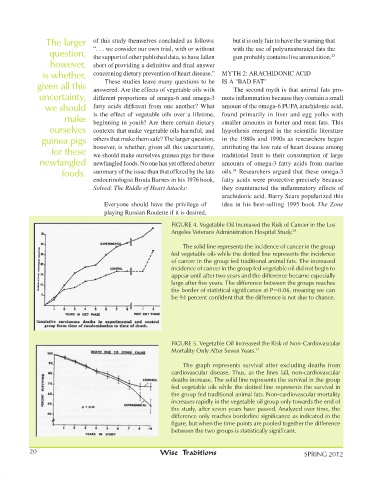
                                                              FIGuRe 4. Vegetable Oil Increased the Risk of Cancer in the Los
                                                              Angeles Veterans Administration Hospital Study. 19

                                                                  The solid line represents the incidence of cancer in the group
                                                              fed vegetable oils while the dotted line represents the incidence
                                                              of cancer in the group fed traditional animal fats. The increased
                                                              incidence of cancer in the group fed vegetable oil did not begin to
                                                              appear until after two years and the difference became especially
                                                              large after five years. The difference between the groups reaches
                                                              the border of statistical significance at P=0.06, meaning we can
                                                              be 94 percent confident that the difference is not due to chance.


                                                              FIGuRe 5. Vegetable Oil Increased the Risk of Non-Cardiovascular
                                                              Mortality Only After Seven Years. 17

                                                                  The graph represents survival after excluding deaths from
                                                              cardiovascular disease. Thus, as the lines fall, non-cardiovascular
                                                              deaths increase. The solid line represents the survival in the group
                                                              fed vegetable oils while the dotted line represents the survival in
                                                              the group fed traditional animal fats. Non-cardiovascular mortality
                                                              increases rapidly in the vegetable oil group only towards the end of
                                                              the study, after seven years have passed. Analyzed over time, the
                                                              difference only reaches borderline significance as indicated in the
                                                              figure, but when the time points are pooled together the difference
                                                              between the two groups is statistically significant.


               20                                         Wise Traditions                                 SPRING 2012                    SPRING 2012                                Wise Traditions


         89494_text.indd   20                                                                                        3/13/12   1:46 AM

