



 🖨️ Print post
Translations: Spanish | French
The science of nutrition seems to take a step backwards for every two steps it takes forward. When the study of vitamins was in its infancy, researchers realized that white flour lacked the nutrients that nature put into whole grains. One of these researchers was Dr. Weston Price who noted in his studies of isolated, so-called “primitive” peoples that when white flour and other devitalized foods were introduced into these communities, rampant tooth decay and disease of every sort soon followed. But defenders of the new refining process argued that phosphorus in whole grains was “too acid” and was the true cause of bone loss and tooth decay. Warnings against the use of white flour went largely ignored.
Only in recent decades has Dr. Price been vindicated. Even orthodox nutritionists now recognize that white flour is an empty food, supplying calories for energy but none of the bodybuilding materials that abound in the germ and the bran of whole grains. We’ve take two important steps forward—but unfortunately another step backward in that now whole grain and bran products are being promoted as health foods without adequate appreciation of their dangers. These show up not only as digestive problems, Crohn’s disease and colitis, but also as the mental disorders associated with celiac disease. One school of thought claims that both refined and whole grains should be avoided, arguing that they were absent from the Paleolithic diet and citing the obvious association of grains with celiac disease and studies linking grain consumption with heart disease.
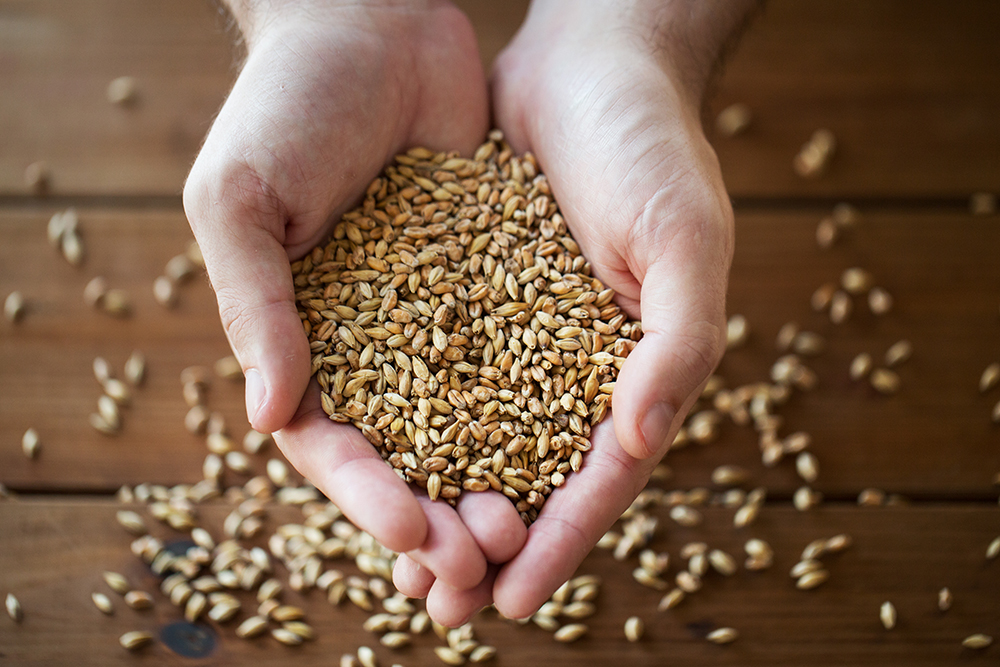
But many healthy societies consume products made from grains. In fact, it can be argued that the cultivation of grains made civilization possible and opened the door for mankind to live long and comfortable lives. Problems occur when we are cruel to our grains—when we fractionate them into bran, germ and naked starch; when we mill them at high temperatures; when we extrude them to make crunchy breakfast cereals; and when we consume them without careful preparation.
Grains require careful preparation because they contain a number of antinutrients that can cause serious health problems. Phytic acid, for example, is an organic acid in which phosphorus is bound. It is mostly found in the bran or outer hull of seeds. Untreated phytic acid can combine with calcium, magnesium, copper, iron and especially zinc in the intestinal tract and block their absorption. This is why a diet high in improperly prepared whole grains may lead to serious mineral deficiencies and bone loss. The modern misguided practice of consuming large amounts of unprocessed bran often improves colon transit time at first but may lead to irritable bowel syndrome and, in the long term, many other adverse effects.
Other antinutrients in whole grains include enzyme inhibitors which can inhibit digestion and put stress on the pancreas; irritating tannins; complex sugars which the body cannot break down; and gluten and related hard-to-digest proteins which may cause allergies, digestive disorders and even mental illness.
Most of these antinutrients are part of the seed’s system of preservation—they prevent sprouting until the conditions are right. Plants need moisture, warmth, time and slight acidity in order to sprout. Proper preparation of grains is a kind and gentle process that imitates the process that occurs in nature. It involves soaking for a period in warm, acidulated water in the preparation of porridge, or long, slow sour dough fermentation in the making of bread. Such processes neutralize phytic acid and enzyme inhibitors. Vitamin content increases, particularly B vitamins. Tannins, complex sugars, gluten and other difficult-to-digest substances are partially broken down into simpler components that are more readily available for absorption.
Animals that nourish themselves on primarily on grain and other plant matter have as many as four stomachs. Their intestines are longer, as is the entire digestion transit time. Man, on the other hand, has but one stomach and a much shorter intestine compared to herbivorous animals. These features of his anatomy allow him to pass animal products before they putrefy in the gut but make him less well adapted to a diet high in grains—unless, of course, he prepares them properly. When grains are properly prepared through soaking, sprouting or sour leavening, the friendly bacteria of the microscopic world do some of our digesting for us in a container, just as these same lactobacilli do their work in the first and second stomachs of the herbivores.
So the well-meaning advice of many nutritionists, to consume whole grains as our ancestors did and not refined flours and polished rice, can be misleading and harmful in its consequences; for while our ancestors ate whole grains, they did not consume them as presented in our modern cookbooks in the form of quick-rise breads, granolas, bran preparations and other hastily prepared casseroles and concoctions. Our ancestors, and virtually all pre-industrialized peoples, soaked or fermented their grains before making them into porridge, breads, cakes and casseroles. A quick review of grain recipes from around the world will prove our point: In India, rice and lentils are fermented for at least two days before they are prepared as idli and dosas; in Africa the natives soak coarsely ground corn overnight before adding it to soups and stews and they ferment corn or millet for several days to produce a sour porridge called ogi; a similar dish made from oats was traditional among the Welsh; in some Oriental and Latin American countries rice receives a long fermentation before it is prepared; Ethiopians make their distinctive injera bread by fermenting a grain called teff for several days; Mexican corn cakes, called pozol, are fermented for several days and for as long as two weeks in banana leaves; before the introduction of commercial brewers yeast, Europeans made slow-rise breads from fermented starters; in America the pioneers were famous for their sourdough breads, pancakes and biscuits; and throughout Europe grains were soaked overnight, and for as long as several days, in water or soured milk before they were cooked and served as porridge or gruel. (Many of our senior citizens may remember that in earlier times the instructions on the oatmeal box called for an overnight soaking.)
Bread can be the staff of life, but modern technology has turned our bread—even our whole grain bread—into a poison. Grains are laced with pesticides during the growing season and in storage; they are milled at high temperatures so that their fatty acids turn rancid. Rancidity increases when milled flours are stored for long periods of time, particularly in open bins. The bran and germ are often removed and sold separately, when Mother Nature intended that they be eaten together with the carbohydrate portion; they’re baked as quick rise breads so that antinutrients remain; synthetic vitamins and an unabsorbable form of iron added to white flour can cause numerous imbalances; dough conditioners, stabilizers, preservatives and other additives add insult to injury.
Cruelty to grains in the making of breakfast cereals is intense. Slurries of grain are forced through tiny holes at high temperatures and pressures in giant extruders, a process that destroys nutrients and turns the proteins in grains into veritable poisons. Westerners pay a lot for expensive breakfast cereals that snap, crackle and pop, including the rising toll of poor health.
The final indignity to grains is that we treat them as loners, largely ignorant of other dietary factors needed for the nutrients they provide. Fat-soluble vitamins A and D found in animal fats like butter, lard and cream help us absorb calcium, phosphorus, iron, B vitamins and the many other vitamins that grains provide. Porridge eaten with cream will do us a thousand times more good than cold breakfast cereal consumed with skim milk; sourdough whole grain bread with butter or whole cheese is a combination that contributes to optimal health.
Be kind to your grains. . . and your grains will deliver their promise as the staff of life. Buy only organic whole grains and soak them overnight to make porridge or casseroles; or grind them into flour with a home grinder and make your own sour dough bread and baked goods. For those who lack the time for breadmaking, kindly-made whole grain breads are now available. Look for organic, stone ground, sprouted or sour dough whole grain breads (we have many brands listed in our yearly Shopping Guide) and enjoy them with butter or cheese.
Copyright: From: Nourishing Traditions: The Cookbook that Challenges Politically Correct Nutrition and the Diet Dictocrats by Sally Fallon with Mary G. Enig, PhD. © 1999. All Rights Reserved. To order Nourishing Traditions, go to www.newtrendspublishing.com.
SIDEBAR
THE DANGERS OF MODERN BREAKFAST CEREALS
Modern cold breakfast cereals are made by a process called extrusion. The grains are mixed or mashed with water to make a slurry and then forced out a tine hole under very high temperatures and pressures. The shape of the die on the hole determines whether the final product will be a flake, a little O, a puffed grain or a shredded grain (for shredded wheat or triscuits). Extrusion represents extreme cruelty to our grains.
The industry has convinced the FDA that high-temperature, high-pressure extruded grains are no different from non-extruded grains and has contrived to ensure that no studies have been published on the effects of extruded foods on either humans or animals. However, two unpublished animal studies indicate that extruded grains are toxic, particularly to the nervous system.
One study was described by Paul Stitt in his book Fighting the Food Giants: Stitt worked for a cereal company and found this study locked in a file cabinet.
Four sets of rats were given special diets. One group received plain whole wheat, water, vitamins and minerals. Another group received Puffed Wheat, water and the same nutrient solution. A third set was given water and white sugar, and a fourth given nothing but water and the chemical nutrients.
The rats that received the whole wheat lived over a year on the diet. The rats that got nothing but water and vitamins lived for about eight weeks, and the animals on a white sugar and water diet lived for a month. But the company’s own laboratory study showed that rats given vitamins, water and all the Puffed Wheat they wanted died in two weeks.
It wasn’t a matter of the rats dying of malnutrition; results like these suggested that there was something actually toxic about the Puffed Wheat itself. Wrote Stitt: “Proteins are very similar to certain toxins in molecular structure, and the puffing process of putting the grain under fifteen hundred pounds per square inch of pressure and then releasing it may produce chemical changes which turn a nutritious grain into a poisonous substance.”
The other study, also not published but described over the phone to Sally Fallon Morell by the researcher, Loren Zanier, was performed in 1960 by researchers at the University of Michigan at Ann Arbor. Eighteen rats were divided into three groups. One group received cornflakes and water; a second group was given the cardboard box that the cornflakes came in and water; and the control group received rat chow and water. The rats in the control group remained in good health throughout the experiment and lived over a year. The rats receiving the box became lethargic and eventually died of malnutrition. But the rats receiving cornflakes and water died before the rats that were given the box – the last cornflake rat died on the day the first box rat died.
Before death the cornflake rats developed schizophrenic behavior, threw fits, bit each other and finally went into convulsions. Autopsy revealed dysfunction of the pancreas, liver and kidneys and degeneration of the nerves in the spine – all signs of “insulin shock.”
The startling conclusion of this study is that there is more nourishment in the box that cold breakfast cereals come in than in the cereals themselves.
Millions of children begin their day with a bowl of extruded breakfast cereal. Do the toxic protein fragments in these cereals explain why so many of our children cannot concentrate at school?
Although there are no published studies on the effects of breakfast cereals on the health of humans or animals, there is one published study which looked at the process of extrusion on the proteins in grains (Cereal Chemistry. American Association of Cereal Chemists. Mar/Apr 1998 V 75 (2) 217-221). The study looked at zeins—grain protein– which are located in spherical organelles called protein bodies, found in corn. The researchers found that during extrusion, the protein bodies are completely disrupted and the zeins dispersed. The results suggest that the zeins in cornflakes are not confined to rigid protein bodies but can interact with each other and other components of the system, forming new compounds that are foreign to the human body. The extrusion process breaks down the organelles and disperses the proteins, which then become toxic. When the proteins are disrupted in this way, they can adversely affect the nervous system, as indicated by the cornflake experiment.
By the way, health food stores also carry extruded grain cereals. These cereals are made by the same process, and often in the same factories, as the cereals sold at the supermarket. Usually these cereals are made with organic grains. Organic grains contain more protein than non-organic grains. . . Which means that these health food store cereals probably contain MORE toxic protein fragments than supermarket cereals.
Breakfast cereals are a bad deal, all the way around. They are very costly in terms of food dollars spent and their effects on our health. So much better to have eggs and bacon for breakfast, or soaked and cooked porridges with butter and cream.
🖨️ Print post
I have been studying up on grains because I am determined to eat and live more wholesomely. This was informative and brought to mind many things I had never considered before. Thank you for taking the time to write this up for others to consider!
What about cream of wheat? Does it need to be soaked too?
Yes it’s a coarsely chopped up grain but still a grain
Will someone please help answer this question? I am now learning of the dangers of grains and how most are improperly prepared, which is anti-nutritional. I have read several articles on the importance of soaking grains, using acid neutralizers,buying fresh organic grains and making your own hot cereal, bread, etc. However, I am having some confusion as to whether or not the in-store organic stone ground or sprouted bread is worth the convenience or not. I read some articles that seemed to say that this stone ground and/or sprouted organic bread in store was fine, and other articles through the WAPF that claimed that these breads that are in store and are stone ground organic and possibly sprouted, are rancid, still full of preservatives(especially if the bread is not in the refrigerated section), and is anti-nutritional because of the grains not being properly prepared. Can anybody clarify for me whether or not these store bought breads are healthy?
I am wondering the same thing about the “whole sprouted grain” loaf breads found in the freezer section of the store.
So would cooking something in a pressure cooker also disrupt the proteins, potentially causing them to split and become toxic?
You have to read the labels/know about the company making them.
Nothing beats fresh/home-made.
Fresh ground/milled flour loses nutrients pretty fast and the natural oils become rancid after a few days. Fresh milled flour is “good” for 7-10 days if refrigerated after milling. Each day it loses nutrients but the cold helps prevent the natural oil from oxidizing.
I’ve read different takes on the frozen breads. Without knowing the details and handling or origination of the grains, I believe fresh milled organic ancient grains is best option for my family. The bread freezes beautifully and tastes like day it was baked toasted. Night & day better than store frozen breads.
Fresh milled breads will lose anti nutrients during it’s rise s before baking. It will also lose anti nutrients as it bakes. Some let it rise 1x to 3x before baking. It neutralizes more each rise. AI can answer a lot of specific questions and provide links to research.
Most mills cannot grind soaked & sprouted grains unless they’ve been dehydrated afterwards.. why many let dough rise more than once.
Side note, Ezekiel’s bread described in the Bible did not specify soak or sprout. That is a key detail to leave out.
Hi, just wondering if stone ground corn is safe to consume/has low levels of phytic acid?? Thank you! I can’t seem to find any other articles online that mention stone ground corn or it’s level of phytates.
In reference to corn – google nixtamalization – its the term for properly preparing corn for maximum nutrtion.
Why not whole? Why lose any nutrients?
Rye berries that are soaked in pure water till they sprout – sometimes there is a little fermentation – then liquified with water-salt-couple of dates in a Vita Mix Blender – then poured thinly on sheets and dehydrated – then broken up into little bits and eaten with home make coconut milk. Would the liquifying be too ‘cruel’ to the rye berries/proteins/vitamins etc? This type of cereal is in keeping with a raw diet that keeps all processing below the temperature that would kill enzymes.
100% good. I wish I could have some now…
I use a masticating juicer instead of a blender. And I don’t bother dehydrating, so not to lose any nutrients. However, I confess, it taste good, especially crapes made with coconut or bananas, etc.
First off! find out where it comes from, and who supplied the grains!!,as there are way too many GMO’S out there!!through cross contamination.
Especially stay away from CORN!!,TOTAL GARBAGE!!ALL CORN IS NOW GMO COMPROMISED! What a shame!!
Organic flour from sprouts are the best!,but are the most expensive to buy!.Flax seed is a waste of time and money!this grain goes rancid fast!use only the flax from sprouts,as this has the highest benefit,both in nutrition,and minerals.
What is worse? White bread or whole wheat that still have anti-nutrients from not being sprouted or fermented? When going out to eat it’s hard to find sprouted bread so should I choose the whole wheat or white? Both are bad but what’s the lesser of the two evils?
Why eat bread at all?
It takes 10 hours to digest, and blocks your digesting other food.
Discover foods which are beneficial for you, and taste so much more flavorful.
White bread is complete garbage. At least whole wheat has some benefits.
However, I would still eat neither.
I’ve been without bread for a long time, and truly don’t miss it anymore. Even though, I was raised where bread is eaten with every meal, by itself, with butter, etc. And we had one of the most delicious breads.
First. ‘Science is myopic and has a very bad case of tunnel-vision. It is very costly-expensive & controlled by Big Money, & like any dog, cannot bite the hand that feeds it. It is a moron by morons & for morons. It takes two steps backwards for every step forward. The science reporting in the magazines, papers, TV & Internet is even worse. The phrase ‘medical science’ is oxymoronic. There is no such thing as medical science – ‘medicine’ is a grab bag of Big Drug, Big Food, High Tech artifice.
Secondly. Try Ezekial or Essene brands, or other artisan crafted whole grain-seed-legume breads.
So what’s your most delicious bread? I’d love to know…thx…🌷🌈🌟
Bread is mentioned in the Bible Many times. Bread of Life, spiritually and literally. There has been quite several white papers and studies on all the vitamins and minerals in grain berries. Bread has been a staple since ancient times. Soak, ferment, stone ground =low heat. Research has shown that si many are gluten intolerant because all we’ve been taught to eat the endosperm. All the nutrients are separated from the wheat flour which leaves only all starch. Research it. I did. Grains are really good for us but only when all of it is eaten together. By using autolyse method and soaking fresh milled flour in some water into shaggy dough over night then add some sourdough and make bread. No its not fast food but is highly nutritious.
March 31, 2016 @ 4:20 p.m.
All I need to say is,”WOW,WOW, and it’s hard to tell people these TRUTHS.” I have been reading
such studies for YEARS ! Confirmation of your findings is witnessed by the failing health of
my relatives who ignored me when told to stop buying white bread, frosted (sugary) cereal etc., etc.,.
eliminate HFCS (high fructose corn syrup) from their kids’ and their diets. Of course, THEY
always brought CANDIES and Junk foods to MY kids to make me look foolish .
Thanks a million times and continue to get this info out to us. It’s REAL !!Much appreciation…! B.C.
Such an excellent info, covering so many aspects of food preparation.
I have been raw since 2012, and grew up eating a lot of raw foods.
Living foods is the key!
When you say you have been raw 100 per cent raw – does that mean you are vegan ? Or do you eat properly prepared raw fish & meats?
What raw foods do you eat?
Please help! I am just learning about soaking, souring, and sprouting. My question is why didn’t Weston Price write about this in his book “Nutrition and Physical Degeneration”? All I can find is information on using freshly milled grains. Did Dr. Price write about soaking, souring, and sprouting somewhere else? If so, where can I find it? Also, within this article, it states that many traditional foods are soaked/fermented for long periods of time: idli and dosa for “at least 2 days”, ogi for “several days”, injera bread for “several days”, pozol for “several days or as long as 2 weeks”, and European grains “for as long as several days”. But then the article states to only “soak them overnight”. “Nourishing Traditions” typically calls for a 12-24 hour soak, at most. What does extra soaking/fermenting do? How does it change the digestibility and nutrition of the grain? Why doesn’t WAPF promote this longer soaking/fermenting? Why isn’t there more information about it on the WAPF?
I have been wondering the exact same thing. Also, why doesn’t Sally reply to these questions? I’m not poking. I just need to know for validity.
I really appreciate this article and have changed how I prepare grains because of it.
I don’t think Sally Fallon is involved with this website. She does however, have a Nourishing Traditions website where she has recipes listed.
Claudia, please see my response to Annett, which addresses your comments.
Annett, Sally does occasionally answer some questions here, but I can assure you there are far, far too many for her to monitor; with thousands of articles and comments/questions, there are too many for even one or two people to handle. Therefore, we have a team of people working in concert to address questions. We do not get every single question answered, but do our best to answer most.
Meanwhile Sally checks in, handles foundation business, travels to speak here and there, and of course, makes her beautiful award-winning raw milk cheeses while managing her and Geoffrey’s farm!
I’ve never seen a copy of Price’s original publication, but the various soaking processes are detailed in a number of ways in Nourishing Traditions, the Weston Price Foundation book that relatively recently followed the original writings.
Was Price’s book more of a Study report than a Contemporary Nutritional Guidebook? It seems that may not have been his focus as much as examining the observations and the implications of these international and historic diets.
I did read it, years and years ago, when a university professor recommended it for my masters degree. It was entirely a study of indigenous diets and health. I don’t remember any detailing of how to change the Western diet, other than noting the ill effect on teeth of most food processing (especially flour and sugar).
What I don’t see mentioned, is Weston Prices’ assertion (in Nutrition and Physical Degeneration) that when flour is ground and left on the shelf for a long time, the B vitamins oxidize and become less potent. This is why he fed freshly-ground whole wheat gruel to at least one person severely lacking in nutrition.
In reading all this Information it tells what not to do and eat But doesn’t tell you how to properly soak or fix the grains. No concrete instructions for first time readers
Where do I begin and what about gluten free bread bought in stores? How do we now how it’s made? Or if it’s healthy?
My problem, too. I recently read a blog where the author, a specialist in nutrition and particularly Ayurvedic diet, told a story about a woman who had a magnesium deficiency despite including large amounts of brown rice in her diet. He had her ferment the rice, and then her deficiency cleared up, but he gave no instructions about how to do this except for saying that the juice from something naturally fermented should be used in the soaking liquid. I checked my copy of *Nourishing Traditions*, and there was nothing at all in there about fermenting grains.
Commercial gluten-free bread is generally not at all healthy, nor is the one brand of Ezekiel bread available at my supermarket, which contains wheat gluten as one of the major ingredients. Home bread-making isn’t all that tough though with a bread machine, and I’ve had success with letting brown rice flour mixed with water sit until it started to bubble for a sourdough starter. (The proportions are 1 Cup of flour to 1 Cup water; mix and leave uncovered; and follow a basic recipe for sourdough bread when the starter is ready. Leftover starter should be refrigerated (covered) and occasionally refreshed with a handful of flour. This part isn’t exact, so just eyeball it until it seems to be close to the original consistency). Fermentation takes several days, possibly a week depending on the warmth of the surroundings.
I also want to warn about completely omitting grain from the diet, as in the Paleo diet. I developed a magnesium deficiency after about a year of avoiding grains and nearly ended up crippled from it. Our muscles and many important biological systems need magnesium to function, and grains are a major source of this mineral.
Oh no! I’ve been relying on Ezekiel bread. Why do you say that it is not healthier?
I also have been relying on Ezekiel bread! Let us know why it is not good please.
Ezekiel bread is problematic because of the addition of wheat gluten, and soy. Soy takes a much longer time to break down the anti-nutrients, as well as containing more photo-estrogens than most of us need!
Here is how to make fermented rice. Boil rice the normal way, preferably brown or red rice. Then, once cooled to room temperature, keep the boiled rice in a bowl, preferably in an earthen bowl, and add enough non chlorinated water to rice cover it. Keep it on your shelf for about 14 hours. After that, remove the water which would be smelling a bit. Eat that rice, cold. Best to eat with some pickles, shallots/onions, buttermilk etc.
You may also consume the water so discarded.
You can get your magnesium from avocado, dark green leafy vegetables, cashews, pumpkin seeds and tuna.
I make magnesium oil
Instructions online
Make is strong solution and mix with a carrier oil for massage and disk in ebson salts
This soothes pain I have from chronic illness
And replaces magnesium deficiency
I take 500 mg orally too
Vey important on elimination diet
I love my bread! The staff of life. I have digestive issues from MFI’s and Morgellons, HOWEVER,
I mill my own non-gmo, organic spelt, rye, kamut and then use recipes from Peter Reinhart’s Whole Grain Breads…new techniques, extraordinary flavor….Only let me tell you that these techniques were utilized many, many years ago. you begin this bread about 24 hours in advance; the biga and soaker and it helps break down the enzymes. And, of course, with everything I eat I do take digestive enzymes. Breads UP!!!
I absolutely love having cereal with milk. Are there any alternatives that I can use? Is muesli ok? Or granola? Any brands out there that dont go through the excrusion process? Thanks
In the UK I sometimes buy good organic sugar free muesli, but really, cannot beat organic porridge oats and these can be eaten cold using the overnight oats method. Here is my favorite version: All organic. In a jar add 1 cup of oats, add milk to cover. Top with some blueberries or other soft fruit and top all off with a generous amount of full fat yogurt. Put the lid on and leave overnight in the refrigerator. Can be eaten from the jar or tipped out into a bowl, simply stir to mix the ingredients up a bit and enjoy. This is great for taking breakfast with you to eat later, so tasty and easy.
I still love my oatmeal. I soak my organic oatmeal overnight in water with a tablespoon of apple cider vinegar. Rinse, then cook as usual.
Is there anything wrong with fermenting the grain after it is soaked and sprouted — and fermenting it as a grain before making flour out of it?
In making cookies, one cannot always use whey or kefir or some other souring agent to make the flour more digestible. So I’m wondering if the grain, itself, might be fermented when it is a grain and not when it is in the form of flour (as in making bread).
Thank you.
I appreciate the humanity and reverence to all things, grains included, that the writer displays. The amount of manipulation, extrusion, hot temperature and intense pressure processing that is used for the grains to make breakfast cereal seems hardly a way to honor grain and the life force that it wants to provide available to us.
Wishing the best.
Cat
Soak and sprout the grains. Put in a blender / Ninja. Add a little water, a little salt, some herbs. Blend up in the Ninja. Put in pyrex bowl. Let ferment for a day or two. Then put in a bake ban, the ‘porridge’ about 3/4” thick and nicely spread out on the bake pan. Bake for 45 minutes or so at 320F to 300F. See what works.
Oats and Barley as typically available don’t sprout, but they can be soaked of course, and can be nicely ‘moderating’ with sprouted wheat, rye, and buckwheat, all which are more ‘zingy’ in character. Oats and Barley are more ‘bass’ in character.
Non-hull oats (genetically without the more challenging hull as with most oats) can be bought online and do sprout.
Also non-hulled Barley is also available online.
The mechanical process of making oat groats and barley as typically available from natural food stores damages the germ, and so they don’t sprout.
Sproutable and sprouting is best,… and then the fermenting,… then baking,… ikn order to get optimum and very satisfying nutrition from grains, without gunking your body. Grains can be rather gunking to the body, devitalizing to the body, if they’re not adequately prepared by soaking, sprouting, fermenting, and baking. If you wanna go raw,… go for it,… I don’t though,… but, with a good process, it may be great.
All the above is more so true for optimum vitality especially when you get beyond late 30’s/age 40.
Stay vital throughout your life by prudent dietary,… of which results are the proof. If you’re not getting the results,… then you’ll need to make adjustments.
Today’s grains are full of glyphosate (Roundup herbicide). Corn is the worst – even organic is susceptible. I have chosen cardiologist Dr. William Davis’ grain free way of eating for over 7 years and in that time, have eliminated prescriptions for acid reflux, lactose intolerance, inflammatory pain and asthma. I have had no illness since eliminating grains. I sleep better, have no brain fog, have permanently lost 40 pounds (in first year), and I am happier and healthier than ever in my late 60’s. Eating whole, organic foods and grass fed meats with all of the fat and marrow, roots, vegetables, unsalted raw nuts, fruits and dairy is all I need. Also dark chocolate every day! I would not risk eating another grain no matter how well it was prepared. I should mention that the following vitamins and minerals are part of this plan to replace additives to grains: Vitamin D, B12, Zinc, Magnesium, Iodine and Cod liver oil. Instead of yogurt, we make a fermented probiotic “yogurt” from Lactobacillus Reuteri, half & half cream and prebiotic which colonizes the gut with friendly bacteria. Best decision I have ever made and implemented to improve my life!
Wow..Amazing information, Thank you so much!
I get wheat from a farmer friend and hand grind it to flour. I usually take 4 hours to make bread. Are you suggesting I wet & soak the flour over night before I make it into bread dough and go through raising it twice?
Any advice on getting the outter covering off of oats. I have a couple of 5 gal buckets or raw oats and haven’t found a way to get to the oat frost. (I think the farmer friend that gave it to me is still laughing?)
very interesting information that i am only learning at age 70.in short what is the best food toeat to have a balance diet.vegetable group,meat and fish group and what will be my grains/cho group please advice thanks
I have read many books on nutrition by now and all comes to one thing – if you can get all natural pure food, eat it. If it is grass fed outdoor chicken eggs, eat eggs, if you have neighbor selling raw milk, then drink that, if you can hunt wild moose then eat that and so on … NEVER eat sugar again and you will loose wait while never going hungry.