

 🖨️ Print post
Slow Fashion and the Fabric Wisdom of the Past
Once upon a time—and for millennia— people wore clothing made from a handful of time-honored natural materials: linen, cotton and hemp from plants, and leather, wool and silk from animals and insects. Using gradations of technique, color and embellishment, civilizations from Mesopotamia to ancient Greece had no trouble creating garments that spanned the gamut from everyday wear to luxurious “elite display.”1
If visitors from those times were to time-travel to the present day, they would likely be astonished by the complexified twenty-first-century textile landscape. Beyond merely synthetic fabrics—polyester, nylon, acrylic, rayon, spandex and more—and beyond 1970s-era innovations such as waterproof Gore-Tex2 or the polyester fleece made from recycled plastic water bottles that outdoor companies rolled out in the 1990s,3 there are now “biofabricated”4 materials (produced using the same bioreactor technology as lab-grown “meat”) and—generating considerable buzz—invasive “smart” fabrics that use “conductive yarn” and “digital knitting” technology to embed pressure sensors that “recognize [the] wearer’s activities, like walking, running, and jumping.”5
One of the forces both driving and benefiting from the continued development of newfangled chemical fibers is “fast fashion”— fashion characterized by “ultralow prices and condensed production cycles.”6 The global clothing industry produces one hundred billion new garments each year—roughly fourteen items “for every person on the planet.”7 The “disposable” mindset encouraged by fast fashion has many consumers discarding clothing items after as few as seven wears,6 and the “equivalent of a garbage truck full of textiles” gets dumped in landfills every second.8 According to strategy firm McKinsey, fast fashion encouraged a 60 percent increase in per capita clothing purchases between 2000 and 2014, with consumption of apparel predicted to rise another 63 percent over the next five years.6
Fortunately, fast fashion and non-natural fabrics may contain the seeds of their own eventual demise. As Rebecca Burgess and Courtney White documented in their 2019 book Fibershed,9 and as organizations like the related nonprofit Fibershed are working to support,10 there is a growing movement of “farmers, ranchers, designers, sewers, weavers, knitters, felters, spinners, mill owners, and natural dyers” inspired to create a new textile economy—one that emphasizes high-quality, locally grown materials.11 Studies also indicate that more consumers are becoming interested in turning their back on unhealthy and environmentally destructive artificial fabrics in favor of natural fabrics.12
FROM HOMESPUN TO MASS-PRODUCED
It goes without saying that the history of fabrics and their manufacture is “interwoven” with other historical, economic and cultural developments. In the eighteenth-century American colonies, for example—and particularly before and during the Revolutionary War—it was both common and strategic for family farms to be fabric self-reliant, planting flax and processing, spinning and weaving their own linen. According to one account, “the Daughters of Liberty would hold spinning bees in town squares to not only display their skill but also their independence.”13
This practical homespun ethos took a significant hit with the late-eighteenth-century invention of the cotton gin in 1793, which not only set cotton on the path to becoming “the go-to inexpensive fabric”13 but set the stage for some of the economic realities embedded in the Civil War and Reconstruction. As many historians have documented, though the cotton gin was labor-sparing as concerned the process of separating cotton fibers from seeds, by dramatically lowering the cost of cotton production, it led to more large-scale cotton plantations, thereby increasing the demand for slave labor. From seven hundred thousand slaves before the invention of the gin, the Southern slave population increased to over three million as of 1850.14 Less often acknowledged is the inconvenient fact that the North’s textile mills—as well as textile manufacturers across the pond in Britain—fueled the plantation boom with their seemingly insatiable demand for Southern cotton. Over the twenty-year period from 1790 to 1810, Southern cotton production went from one and a half million pounds to eighty-five million pounds.15
By the time of the Civil War, cotton had become the South’s most valuable export and the second most significant source material for clothing other than wool.16 In a fascinating two-part examination of the complex “geopolifinancial” interests that drove the War Between the States and Reconstruction, author Joseph P. Farrell emphasizes, “Our contemporary perceptions of the war tend to downplay the importance of cotton as a commodity in the financial and economic world of the mid-nineteenth century, so it is important to recall that cotton formed the absolutely necessary basis of virtually all clothing manufacture in the industrialized nations,” and, Farrell adds, “Southern cotton constituted the bulk of that world market. It was thus, by the standards of that day, an essential and life-sustaining commodity. Everyone needed clothes, and cotton was the means to it” [emphasis in original].17
THE RISE (AND FALL?) OF SYNTHETICS
The late-nineteenth-century discovery of the first “semi-synthetic” fabric—made from chemically processed cellulose and marketed as “artificial silk”—represents another milestone in the history of textiles, changing the clothing landscape in dramatic ways. Rayon came about as the inadvertent result of a collaboration between “Father of Rayon” Count Hilaire de Chardonnet and none other than “Father of Germ Theory” Louis Pasteur.18 The French silk industry had called on Pasteur to solve its silkworm disease problem, and wealthy chemist-industrialist Chardonnet joined Pasteur in the investigation. A fortuitous laboratory accident led Chardonnet to develop and later commercialize rayon—reportedly given that name “because it seemed that the sun’s rays frolicked gayly on its surface”—although it turned out that the earliest versions of the fabric were also highly flammable.19 Subsequent generations of rayon have included viscose, modal and lyocell.
The next man-made fabric to make major waves was DuPont’s fully synthetic nylon, which revolutionized polymer chemistry and claimed for itself “a novelty no other product could match.”20 S ynthetic fi bers c ombine c hemicals and petroleum products into a “viscous substance that is forced through a ‘spinneret’ to make the thread.”21 DuPont began generating publicity about its novel creation in 1938, and when nylon hit the national market in the form of ladies’ stockings on May 15, 1940, most of the inventory sold out by noon.20 According to Philadelphia’s Science History Institute, DuPont chose not to trademark the name “nylon,” cleverly seeking “to encourage consumers to think of nylon as a generic preexisting material, like wood or glass.”20
Although chemist-made synthetics have experienced steady success—with natural fibers falling from half of global textile production in 1990 to just 27 percent today22—the appeal of synthetics seems to be dwindling as public awareness grows about the harmful effects of the microfibers that are permeating the air and the world’s waterways. According to one estimate, 35 percent of the microplastics found in oceans come from synthetic textiles.23 Once in our waterways, microfibers absorb other pollutants, meaning that when humans or animals ingest the fibers in food or water, they are ingesting those pollutants as well.23
Synthetic clothing releases microfibers during the manufacturing process as well as the wearing and the washing.7 In a study commissioned by Patagonia—one of the companies most responsible for the proliferation of plastic-derived fleece—a research team found that a new synthetic garment, when washed, releases more than 0.3 percent of its mass, or up to two grams of microfiber shedding; as a result, the company “encourages not washing artificial clothes too frequently.”24 Estimates of the number of microfibers released into wastewater from one full load of synthetic laundry range from seven hundred twenty thousand24 to eighteen million.23 The Public Interest Network (PIRG) recommends using external microfiber filters attached to a washing machine’s drain hose or laundry bag filters; though only partially effective, they are “better than doing nothing.”23 Unfortunately, microfibers break down over time into even smaller nanosized pieces, and “the smaller they get, the more difficult they are to remove from the environment.”24
BACK TO BASICS
To date, polyester remains the world’s most popular textile. Communicating what this means for the wearer, author-homesteader Tara Couture describes dressing in polyester and other synthetic fabrics as akin to “encasing the magical marvel of creation, known as ‘the body,’ in…a ziplock bag.”25 Still worse, research published in 2023 described the “dermal bioaccessibility” of chemicals like phthalates and bisphenols,26 which are some of the chemicals present in synthetics like polyester, nylon and spandex; the oil in sweat “encourages the chemicals in plastic to dissolve and diffuse,” making them available for absorption through the skin.27 Polyester fabrics also use a family of dyes known to be skin irritants.27
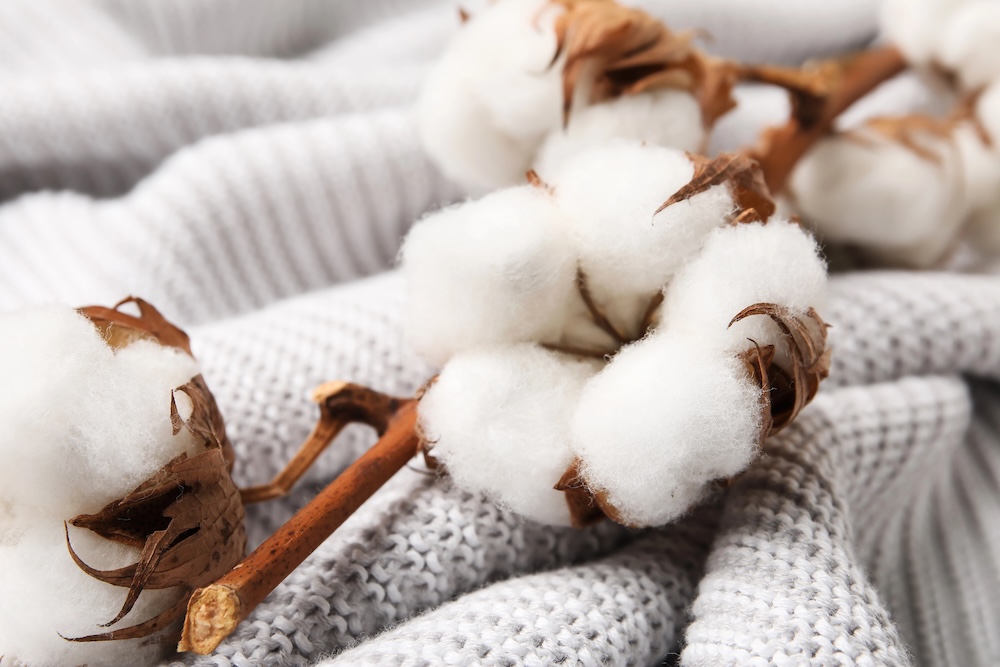
For similar reasons, Couture shuns cotton clothing unless it is certified organic. She describes conventional cotton as “one of the most toxic, environmentally disastrous fibers in the worldgenetically modified and absolutely saturated with chemicals that remain in the fibers that get wrapped around and absorbed by the bodies of your children and you.”25 The clothing industry concedes that those chemicals—pesticides, chlorine bleach, solvents, perfluorinated chemicals and ammonia—“remain in the cotton fibers for an indeterminate period of time.”28
From an environmental standpoint, conventional cotton is “the world’s ‘dirtiest’ crop—using more chemical pesticides than any other major crop.”29 As of 2023, 25 percent of all pesticides—pesticides that “tend to be stronger than those used on food crops”—went to conventional cotton crops, even though cotton occupies only 3 percent of global farmland.28
One solution is organic cotton, which uses no pesticides and requires just 10 percent of the water used to grow “thirsty” conventional cotton.28 However, while organic cotton production increased by 31 percent from 2018 to 2019,30 it still accounts for just 1 percent of global cotton production. Organic Pima cotton—the “softer, stronger, and longer-lasting” type of cotton favored by some organic clothing manufacturers—represents a tiny 0.05 percent of the cotton produced annually.28
What is a consumer interested in non-synthetic fabrics to do? The biotech industry is hoping that public disillusionment with artificial materials and concerns about fast fashion’s destructive environmental impact will drive customers toward nanocellulose clothing created with synthetic biology, but startups in this space acknowledge that it may be a tough sell.31 Moreover, “[a]lthough the commercial exploitation of nanocellulose has already commenced, little is known as to [its] potential biological impact.”32 Nanotoxicology researchers admit that “human health studies remain scarce,” with “significant uncertainties remaining” and some evidence that bioengineered nanocellulose materials pose pulmonary risks.33
Couture recommends a return to the basics of wool, linen and silk, with linen being at the top of her list. When cultivated in cooler, temperate European climates (such as in northern France, Belgium and the Netherlands), flax “grows well without synthetic fertilizers, pesticides, or irrigation.”34 For the wearer, linen is “light and breathable” in the summer and also works as an inner layer in wintertime.25
Historical accounts describe linen as a “sacred” fabric, with “a unique crystalline structure” that provides a “purity and high frequency believed to protect and uplift the wearer, enhancing spiritual clarity.”35 Other special properties of linen include the fact that it is hypoallergenic, antibacterial, radiation-resistant and retains moisture without feeling damp.35 Couture recommends avoiding Chinese linen and sticking with European linen that comes with Oeko-Tex certification (also available for organic cotton), which means that the textile has been tested against over one thousand harmful substances and is certified to be “harmless to human health.”36 Others agree that Chinese linen may be more likely to be of inferior quality.37
Couture also has interesting comments to share about the “intangible” qualities of linen and other natural fabrics as opposed to the “hollow, lifeless, disregarding” feeling of “cheap products meant to meet the demand of mass consumption.” She writes:
“There is an energy that all things carry, a message we can’t hear or see, but is delivered all the same. When our bodies are wrapped in the energy of life’s creation, there is resonance. Harmony. When we encase ourselves in manmade extractions made as quickly and cheaply as possible, the messages create static. [W]hen we are in environments, and that most certainly includes what’s closest to our skin, made of natural materials, we feel calm and enveloped.”25
As it happens, a few researchers willing to swim against the tide of mainstream science—figures like Dr. Royal Raymond Rife, Bruce Tainio and Dr. Heidi Yellen—developed or used devices to measure the bio-frequency or vibrational energy of the human body and different substances, and their findings have been extended to fabrics (see Table 1).38 This work suggests that “certain frequencies could disrupt the balance of the body, while others could enhance it.” From an energetic perspective, linen and wool have the highest vibrational frequency (5,000 MHz), facilitating physical comfort, temperature regulation, emotional and mental well-being and “energetic harmony,” whereas synthetics like polyester and rayon vibrate at or below 15 MHz, creating “a sense of stagnation or heaviness.”39

Couture has a ready answer for those who object to the higher pricetag of natural and organically grown garments: Buy less! She says, “We don’t need 50 shirts, we need a couple so we can take all those dollars and streamline them into a few, well made, timeless items we won’t need to throw away.” This approach, she adds, is not only pocketbook-sustainable but “fun” and “liberating”: “The sustainable benefit of this approach is obvious, building a wardrobe of what we love, clothing made with care of quality materials, means we don’t have to keep buying like slaves in a turn-style.”25
If one adopts a big-picture perspective, fast fashion and related mass production represent mere blips—and perhaps aberrations—in a human history timeline in which textiles have often woven “stories of cultural richness and craftmanship.”41 As people become more aware of the tradeoffs of fake fabrics, traditional fabrics look poised to experience a renaissance. Those who are optimistic about the renewed interest in traditional textiles suggest that values of “cultural preservation, sustainability, and ethical fashion” are motivating consumers to value “quality over quantity, favoring garments that stand the test of time both in style and environmental impact.”41 Each of us can make choices that support these favorable trends.
SIDEBAR
WHAT ABOUT HEMP?
Like linen and wool, hemp fabric dates back to ancient times (by some estimates, as early as 8,000 BC), but textile watchers say that it is ready to make a serious comeback. Many consider hemp ideal for clothing because it is lightweight, breathable, biodegradable and softens with washing, yet it is also strong and extremely durable—two to three times more durable than cotton. Moreover, hemp is not just for textiles—its properties also make it highly suitable for rope, paper, canvas and more.
To make hemp fabric, hemp stalks are harvested and bundled; in a process called “retting,” the bundled stalks are left in the field for four to six weeks, letting bacteria and moisture separate the inner layer (the stem) from the outer layer (the fibers). Next, the retted stalks must be smashed to further separate the fibers, which then are combed (this is called “scutching”). After the fibers are carded to draw them into strands, they are ready for spinning and weaving.
Growing hemp organically can be genuinely sustainable. Because it is fast and grows densely, it does fine without herbicides, nor are pesticides necessary (the plant does not appeal to most pests). At the same time, the hemp plant encourages biodiversity and makes a good rotation crop, attracting pollinators. In addition, its deep root system lessens water loss and erosion. However, buyer beware—the same is not true for non-organic hemp, which can be just as reliant on industrial fertilizers as any other conventionally grown crop. Moreover, when it comes time to turn hemp into fabric, many companies are taking shortcuts and using toxic chemicals that differ little from those used in “dirty” cotton. For hemp as well as other natural fabrics, it pays to investigate the chain from seed to fabric to clothing. Make sure that what you are purchasing is the real deal rather than the clever result of greenwashing.
REFERENCES
- O’Rourke C. Textiles in motion: production, social identity, and dyes. Chapter 2 in A. Glazebrook (Ed.), Dress and Adornment in Ancient Greece. Pressbooks, 2025. https://ecampusontario.pressbooks.pub/dressandadornmentancientgreece/chapter/textiles/
- Robert W. Gore. Science History Institute, n.d. https://www.sciencehistory.org/education/scientific-biographies/robert-w-gore/
- Doemland C. Six companies using ocean plastic to make clothing. USD News Center, Jun. 24, 2019.
- Fernández CR. Biotechnology is changing how we make clothes. Labiotech, Feb. 25, 2020 (updated Jun. 24, 2022).
- Zewe A. Smart textiles sense how their users are moving. MIT News, Jul. 7, 2022.
- What is fast fashion? McKinsey & Company, December 2023 (updated Jan. 23, 2025).
- Dethmers K, Spek H, Kraaijeveld B. Do Clothes Make Us Sick? Fashion, Fibers and Human Health. Plastic Soup Foundation, October 2022.
- Salfino C. Consumers want more natural fibers. Here’s how to innovate & give them what they want. Sourcing Journal, Feb. 8, 2024.
- Meyer P. Fibershed by Rebecca Burgess [book review]. Wise Traditions. 2019 Winter;20(4):61-62.
- https://fibershed.org/
- https://fibershed.org/programs/regional-textile-economies/
- Salfino C. This is the fiber Gen Z prioritizes while embracing authenticity & sustainability. Sourcing Journal, Apr. 21, 2025.
- Couvillon C. Threads of ingenuity: linen – how it’s made and its origins. LSU Rural Life Museum, 2021.
- The disaster of innovation: What was the effect of the cotton gin on slaves? TeachingHistory.org, n.d. https://teachinghistory.org/history-content/ask-a-historian/24411
- Jo T. The cotton gin: revolutionizing agriculture and industry. Fadfay, Oct. 7, 2024.
- Farrell JP. The Rialto in Richmond Reconstructed: Confederates, Canada, and Carpetbaggers. Adventures Unlimited Press, 2025, p. 105.
- Farrell JP. The Rialto in Richmond: The Money War Between the States & Other Mysteries of the Civil War. Adventures Unlimited Press, 2025, p. 242.
- https://en.wikipedia.org/wiki/Hilaire_de_Chardonnet
- Schwarez J. What was meant by “Chardonnet Silk”? McGill Office for Science and Society, Mar. 20, 2017.
- Wolfe AJ. Nylon: a revolution in textiles. Distillations Magazine, Oct. 3, 2008. https://www.sciencehistory.org/stories/magazine/nylon-a-revolution-in-textiles/
- Social fabric: land, labor, and the world the textile industry created. Cornell University Library, n.d. https://exhibits.library.cornell.edu/social-fabric-land-labor-and-the-world-the-textile-industry-created/feature/synthetic-fibers
- Tapsuwan S, MacMillan C, Moglia M, et al. The price of sustainability: consumer preferences for natural fibres over polyester. Journal of Cleaner Production. 2025 Nov 20; 533:146921.
- Nye P. Do microfiber filters actually work? PIRG, Oct. 14, 2025.
- Suran M. A planet too rich in fibre: microfibre pollution may have major consequences on the environment and human health. EMBO Rep. 2018 Sep;19(9):e46701.
- Couture T. Next to skin, into the body. Slowdown Farmstead [Substack], Nov. 27, 2021.
- Abafe OA, Harrad S, Abdallah MA. Novel insights into the dermal bioaccessibility and human exposure to brominated flame retardant additives in microplastics. Environ Sci Technol. 2023 Jul 25;57(29):10554-10562.
- Matei A. Thread carefully: your gym clothes could be leaching toxic chemicals. The Guardian, Nov. 2, 2023.
- Sober C. What is organic cotton, and does it really make a difference? Fair Indigo, Jul. 2, 2023.
- The casualties of cotton. Environmental Justice Foundation, 2017.
- https://agrilifeorganic.org/wp-content/uploads/2021/11/ota-organic-cotton-fact-sheet-110620final.pdf
- Thread lightly: biofabrication and the end of fast fashion. SynBioBeta, Nov. 12, 2024.
- Endes C, Camarero-Espinosa S, Mueller S, et al. A critical review of the current knowledge regarding the biological impact of nanocellulose. J Nanobiotechnology. 2016 Dec 1;14(1):78.
- Stoudmann N, Schmutz M, Hirsch C, et al. Human hazard potential of nanocellulose: quantitative insights from the literature. Nanotoxicology. 2020 Nov;14(9):1241-1257.
- What is the difference between linen and cotton? The Modern Dane, Mar. 28, 2020.
- Linen frequency: the healing power of natural textiles. Shāntima, Dec. 24, 2024.
- https://www.oeko-tex.com/en/our-standards/oeko-tex-standard-100/
- Which country makes the best linen? The Modern Dane, Jan. 21, 2025.
- Linen & light science. Frequency Fabric, n.d. https://www.frequencyfabric.com/about
- The vibrational frequency of synthetic vs. natural fibers: understanding the energy impact of your fabric choices. Luca-S Yarns, n.d.
- What is the frequency of silk fabric? Sino Silk, Dec. 9, 2024.
- Singh V, Singh B. The resurgence of traditional textiles in 21st century fashion design. International Journal of Home Science. 2024;10(3):32-36.
Leave a Reply