





 🖨️ Print post
| Bequerels on the Brain – Mark Purdey
An eco-detective’s journey into the centre of neuro-degenerative disease. For several years now, a US lead research team has ascribed the cause of the world’s most intensive cluster of neuro-degenerative disease on the isle of Guam onto the traditional consumption of ‘natural toxins’ found in the fruit of the cycad tree (1)(2) – a rather innocuous looking miniature palm tree that has outlived the dinosaurs and provided a staple flour product for the indigenous people who populate the South Pacific islands.
|
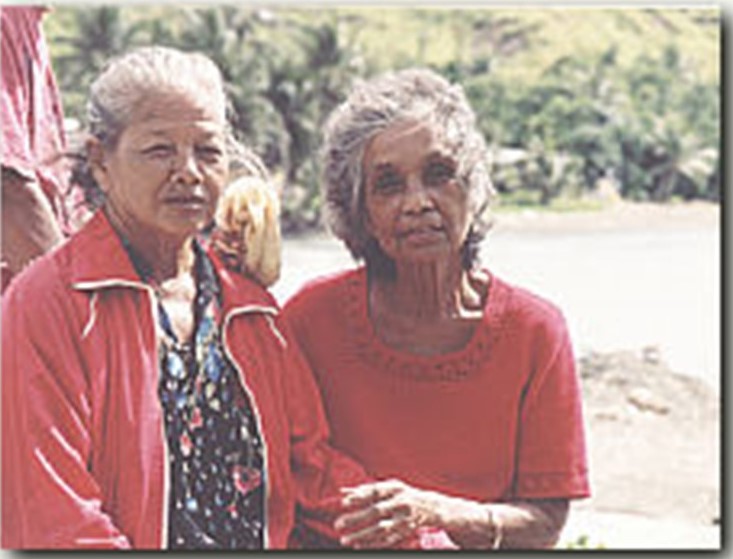
| Two of my ‘Chamorro’ friends | I remember watching a BBC2 documentary “Poison in Paradise” featuring Oliver Sack’s own investigation (3) into this mysterious epidemic of Parkinsons, Alzheimer’s and Motor neurone based neuro-degenerative conditions amongst the Chamorro natives.
|
The majority of cases were confined to three adjoining coastal villages on the southern tip of Guam (See map) |
| Since no cases of the disease had surfaced prior to the 1950s, and few cases have as yet appeared in any person born after the mid 1950s, the key epidemiological factors suggest that this cluster represents a delayed neuro-toxic reaction to the introduction of some alien toxic agent into the local environment during the 1940s/1950s.
But the only ring of truth that resonated from Sack’s 50 minute programme, was peeled out by the wife of one of the Chamorro victims exhibited on the film. I inspect a Cycad Tree! |
| In a 30 second sound bite that had surprisingly escaped the cutting room floor, Mrs Santos challenged the ‘cycad’ dogma head on; protesting that they had been eating this fruit for eternity, so why the sudden emergence of this crippling disease during the 1950s? She went on –
“My husband’s auntie said it was during the American invasion of Guam when they were bombing the waters. There was something in the bomb that was polluting the water. The children at that time were bathing in it and drinking it.” |
| So I travelled to Guam in September 2003 to carry out a total environmental analyses and eco-detective investigation of the environment supporting the three neighbouring coastal villages of Umatac, Merizo and Inarajan – the epicentre of this neuro-degenerative cluster (2). |
Hocus Cocus
Some more of my ‘Chamorro friends’!
| With guidance from the Chamorro people, I rapidly found my investigations focusing upon the history of Cocus island – an eerie, elongated islet rising out of the coral reef and located a couple of miles off shore from the mainland villages of Umatac and Merizo (See map). |
|
Cocus Island from the mainland |
|
I sailed out to the once upon a time tropical ‘paradise’ island, and quickly realised that the health of the coral reef, at the former naval owned western sector of the island, was way below standard. It was kind of cankered and decrepit, like a derelict moonscape devoid of any life. The only evidence of activity was the solitary skeleton of a juvenile crab that appeared to have been frozen ‘mid scuttle’ across the top of a coral block – as if some powerful poison had compelled the poor crustacean to terminate its life force prematurely. The ecosystem of this part of the island was no better. It supported little more than a rag bag ecology of sickly looking vegetation. The previous evening I had attended an enlightening meeting with ex serviceman and atomic veteran, Robert Celestial and colleagues.
Although I was initially suspected of being a ‘CIA plant’, I convinced them to the contrary and spent the rest of the evening listening intently to Robert’s catalogue of nuclear exposure incidents during the clean up of the US atomic bomb test sites out at Bikini atoll (4). He had subsequently survived a series of grotesque cancers, which motivated him to devote the rest of his ‘half life’ to campaigning. He handed me the sworn statement of another ex serviceman, Vancil Sanderson (5), that offered a plausible explanation for the ‘leukaemic’ state of the life on Cocus isle.
|
| Vancil had been stationed at the former mini naval station on Cocus island, and his statement told the tale of a continuous stream of small naval ships entering Cocus lagoon – the waters that lay between the Cocus isle coral reef and the diseased coastal villages on mainland Guam. Disturbingly, these boats had all been involved in monitoring the atomic bomb tests on the atolls between 1946 and 1963. After each detonation, they were sailed back to Cocus for decontamination of their radioactive fall out.
Acidic detergents and sand blasting was used in the decontaminating procedure, and the resulting radioactive debris was discharged directly off the decks and into the open sea (6). The life of the coral reef was subsequently exterminated (5) due to the infiltration of the marine food-chain with a radioactive cocktail of strontium 90, barium 137, caesium 137, etc. A high peak of radioactivity was detected in the surface waters around Guam during a radio-ecological study carried out by the University of Washington in 1959 (7). The naval boats had left a toxic legacy of radioactive decay in their wake; a fall out effect that could last for up to 60 years plus. More disturbingly, the radioactive alkali earth metals that were involved, eg; strontium and barium, are readily incorporated into the calcium of the coral beds, since the atomic arrangement of these metals is near identical to that of calcium (8). My inspection of Cocus – albeit forty years later – seemed to confirm the statements made in Sanderson’s report about the annihilation of the coral beds. I found that the ratio of sand to coral on the local seabed was still only about 9:1 – clearly abnormal, since reports written before the US navy arrival in the late 1940s referred to a blanketing of coral across the Cocus seabed (5).
I even witnessed a rusting bulldozer blade, slumped up at the top of the old naval section of Cocus beach – presumably one of the last remnants of the military tackle used to push the contaminated waste into the hollow that had been hewn out from the backbone of the coral island. Despite the tropical heat of that afternoon, I felt a chilly shiver down my spine as I watched the arrival of yet another boatload of ‘uninformed’ Japanese tourist girls onto the newly developed ‘Cocus Island Resort’. I wondered whether they would still be so eager to sprawl themselves out along the sand or water ski around the lagoon if the toxic secrets of this island’s murky history had been publicly unveiled? But the very real danger posed by the decontamination of the boats in Cocus lagoon was concentrated into the period when the highest levels of radioactive contamination existed fifty years ago – the window period of toxic exposure that precisely fits the model prediction of the ‘experts’ who have been studying the origins of this epidemic (1-3).
So the Chamorros had continued to draw their mainstay foods from the last remaining morsels of marine life that had survived the toxic contamination. More disturbingly, they continued to pulverise the chunks of local coral into a fine powder for mixing up with the betel nut and papula leaf – a traditional concoction that is habitually chewed for its sedative effects. The Chamorros’ unwitting use of the radioactive coral with the betel could represent the most concentrated source of strontium 90 contamination that has ever been endured by the human race?
|
The Biochemistry of Neuro-degeneration.
My environmental analysis confirmed the findings of other teams that the traditional food chain of the Chamorro folk is markedly deficient in magnesium (9). This problem was further exacerbated by the customary practise of adding large amounts of salt to their meals – since sodium disrupts the uptake of magnesium across the gut wall(10). Once magnesium is deficient in the bio system, then these rogue radioactive metals such as strontium 90 or barium are able to substitute at the vacant magnesium sites on enzymes.(since these metals possess a similar atomic arrangement to magnesium/calcium (8)) thereby disrupting the healthy function of these enzymes. The free radicals generated by the rogue replacement radio-nuclides could cause mutations. In this respect, it is interesting that these neuro-degerative diseases stem from specific mutations in the enzymes that mediate the metabolism of cholesterol/lipids (12) the guanosine triphosphate cell signalling (13) – enzyme systems that are magnesium regulated in the healthy mammal (8).
Another magnesium activated enzyme is glutamine synthetase(8), and once its activity is knocked out of action during magnesium deficiency, then the highly neuro-toxic glutamate molecule builds up in the brain, thereby triggering the whole downward spiral of these types of neuro-degenerative diseases (14).
Irrespective of the levels of magnesium in the tissues, exposure to strontium or barium atoms will also lead to a loss of free sulphate in the bio-system (15)(16). For the reactive forms of these metals are well recognised to couple up with sulphur, thereby starving the nervous system of one of its most crucial structural caretakers – the sulphated glyco-aminoglycan (GAG) heparin molecules (8). Once deprived of their sulphur co partners, GAGs will cease to perform their function in the growth and maintenance of the complex infrastructure of neuronal networking(17). Neuro-degenerative wasting ensues.
Interestingly, loss of GAG activity has been shown to be responsible for the cornerstone mechanisms underpinning the cause of neuro-degenerative wasting conditions such as Alzheimer’s, Parkinson’s, multiple sclerosis, Motor Neurone Disease, BSE, etc. Whilst individual genetics determines which particular type of neuro-degenerative disease will emerge at the end of the day, it is the environmental exposure to these sulphur-capturing pollutants, such as barium, strontium, etc, that represents the common causal component shared by all of these diseases.
Barium and strontium are employed widely in industries manufacturing paper, munitions, zinc refining, welding, rubber, glass, paint pigments, ceramics, fabrics, TV components and as additives into aeroplane fuels for creating aerosols that enhance the efficiency of radio signal communications (15)(16),
‘Guamogeddon’
With two major US airbases and a nuclear submarine naval base in operation since World war two, the former paradise isle of Guam has become one of the most explosively contaminated nuclear hellholes on this earth – well evidenced by that fact that Guam was christened the ‘coconut curtain’ during the pre-1962 period when the isle was out of bounds to any foreign visitors who were not approved by the US military.
The Chamorro elders remember the multitude of bombs that were dropped in the bays during the US invasion of Japanese occupied Guam towards the end of world war two. Whilst the US liberation of Guam was unanimously welcomed, one of the downsides of the conquest involved the toxic liberation of barium based explosives into the marine ecosystem following the detonation of so many bombs. Wherever the warplanes from the US Hornet aircraft carrier were involved in heavy bombardments during June /July 1944 – eg; along the coasts of Guam, Rota island, Irian Jaya (New Quinea) and Southern Japan – the clusters of neuro-degenerative disease have subsequently emerged (1-3). And ever since the war, the US navy have been carting waste munitions – eg; gone beyond their expiry date – up to the central mountainous backbone of the island and then disposing them within an extensive spread of sealed off wilderness under military occupation.
Ironically, the former Senator of Guam, Angel L.G Santos, had only just launched the publication of a major action report on the radioactive contamination of Guam (18)- on behalf of the ‘Blue Ribbon Panel Committee’- when he plunged into a rapid attack dementia/neuro-degenerative wasting condition which tragically killed the poor man within two months. Hearsay has it that the Senator had been earthing up discarded US ordnance on his own small farm; suggesting that his home grown fruit and vegetables had become contaminated, which, in turn, had contaminated him, leading to his rapid demise health-wise.
Considering the clear cut correlation that exists between the distribution/timing of the cluster of neuro-degenerative disease on Guam and the distribution/timing of nuclear contamination ( See map), one wonders why all of the ‘expert’ teams of US scientists visiting Guam have failed to recognize such a blatantly obvious causal association?
Apart from the raft of research teams who have ended up promoting the widely held theory of cycad consumption as the cause of the epidemic (1)(2), a fresh research team was dispatched more recently to the ‘atomic frontline’ from the US Dept of the Interior. This research was lead by William Miller and Richard Sanzolone who conducted a professional geo-chemical survey of the environment around the epicentre of the cluster (19). But all of the positive ground gained in their excellent geo-chemical study was blown apart by the bizarre conclusion arrived at in this paper. The authors had plumped for the assumption that Guam syndrome had been caused by yet another ‘natural toxin’ – the toxic blooms of blue green algae; a phenomena which they had only casually noticed along the estuaries of the three rivers where the three affected villages are sited.
Not long after this study was finished, the natural water supplies to the villages were abruptly terminated and replaced by the mains supply that fed the rest of the island – no reasons given. When the Mayor of Umatac pressed for an explanation, the US governing authorities supplied him with papers that included a copy of the unpublished paper by Miller et al (19) which made anecdotal reference to these blue-green algae toxins as the source of the problem. But how could such a circumstantially derived explanation provide a sufficiently watertight basis for cutting off the water? Furthermore, no actual analysis had been carried out to determine the presence of this toxin in the drinking water, plus all three villages had been drawing their drinking waters from the mountain springs and not from the estuary stages of the rivers where the toxic blooms were purportedly spotted. One is tempted to believe that this was a cover story for a much more serious contamination of the springs that could have resulted from the long term disposal of munitions in the mountains above the villages (See map).
The ‘free radical’ legacy of radioactive metal contamination – DNA damage and deformed proteins.
During my last evening on Guam, I attended the sad and moving funeral ceremony of a young leukaemia sufferer – one of many such cases amongst the Chamorro population in Umatac, I was told.
Whilst It is widely recognised that the toxic mechanism of radioactive contamination is based upon the radio-nuclide’s ability to initiate free radical chain reactions that damage DNA – causing a bizarre array of cancers – , It is not so widely recognised that these free radicals can also deform the molecular shape of proteins (20)(11). Once a protein gets malformed, it can no longer perform its proper function in the body metabolism. Nor can it be degraded by enzymes at the end of its working life. The resulting ‘rogue’ proteins accumulate and clump together to form abnormal tombstone features that choke up the neuronal networks, thereby initiating the progressive, self perpetuating sequence of neuro-degeneration that is common to all of these diseases (21). Each condition is hallmarked by its own distinctive ‘tombstone’ feature (22); so much so that neuro-pathologists actually seek out the type of tombstone – eg; neuro-fibrillary tangle, lewy body, bunina body, prion fibril – in order to diagnose the specific type of neuro-degeneration ( eg; Alzheimer, Parkinson, Motor Neurone disease, transmissible spongiform encephalopathy (TSE)) responsible for the death.
I have written previously about the involvement of rogue metals binding to the prion protein (23)(24) in place of its normal copper co partners (43), and how this aberrant substitution of metals induces the malformation of the prion protein (23)(24), which, in turn, causes the infamous TSE group of ‘rapid attack’ neuro-degenerative disorders – scrapie, CJD, BSE, CWD, etc. But my most recent observations in the TSE cluster ecosystems indicate that these rogue replacement metals could also carry a radioactive facet to their atomic armoury; thereby offering a plausible explanation for the virulent, resistant properties of the deformed prion protein and the causal enigma of BSE.
In this respect, the malformed prion protein becomes much like a Trojan horse that trucks around the circadian mediated circuits of the brain carrying its lethal radioactive cargo of metallic missiles on board – a fire power capacity that is potentially capable of detonating a chain reaction of free radical mediated neuro-degeneration.
“The Atomic Fawns”
Whilst browsing through the vaults of PHD theses stored in the basement of the Colorado State University in Fort Collins, I stumbled upon a raft of chilling studies that provided the initial clue (25-34). A series of carefully designed experiments had been carried out back in the 1960s/ 1970s, where the US atomic energy agency and US government had funded the Colorado department of wildlife and Colorado State Uni’s (CSU) Department of radiology and radiation biology at Fort Collins to monitor the exposure of deer to plutonium, strontium 90 and caesium 134 at every level (25-34).
One of the trials involved transporting deer fawns back and forth between the deer pens at the Department’s Foothills wildlife facility at Fort Collins and the plutonium contaminated pastures of the Rocky Flats Nuclear Weapons Factory at Boulder 60 kilometres away (30). The objective was to monitor the health effects and eco-dynamics of leaked plutonium (and its daughter radio-nuclides) through the bio-system of the deer and within the general ecosystem.
A wild deer with CWD at Poudre Canyon
| A series of radioactive leaks from rusting barrels that stored plutonium contaminated oil at the Rocky Flats Plant ( combined with a fire ) had enabled plutonium and its daughter radio-nuclides to become airborne, contaminating a wide area of the Colorado section of the Front Range (30)(31)(33) – a copper deficient area (35) that has become the CWD endemic area today (36). The peak of contamination was during the 1967-1969 seasons when the air sampler detected Plu as high as .35 pCi /M3 (31).
A program of environmental monitoring had picked up significant levels of plutonium as far a field as the Pawnee Butt plains NE of Fort Collins and Roxy Ann mountain (31). |
Disturbingly, the levels of plutonium were higher in the livers of the wild deer that roamed the Cache le Poudre canyon at .042 dpm/gm than in the deer that roamed near to Rocky Flats itself (.033 dpm/gm ) (33).
Environmental contamination due to The Rocky Flats radioactive leak was probably exacerbated by the emissions from the kiln chimneys of the local cement factory at nearby Lyons; where, according to a 16/12/92 report in the South West Sage by John Dougherty, the EPA’s Division of solid waste made an emergency response on cement kiln dust, stating that they had found radioactive plutonium and caesium in the kiln dust at Lyons, and at two other plants near to weapon’s factories in the USA. The Lyon’s contamination was presumed to be the result of utilising low level nuclear waste material from the nearby Rocky Flats Weapons plant as fuel for the cement kiln (37).
During the 60s/ 70s, it seems that the entire operation of the Fort Collins wildlife facility was geared towards a raft of radiation experiments – including the direct injection of strontium 90 and caesium 134 into the deer – in order to monitor the biological effects of these potentially lethal ‘cold war’ compounds (25)(26).
But it seems that one of the major biological repercussions of these unique experiments was not reported until 13 years later, when a 1980 paper by Williams and Young (38) reported on the first ever recorded case of chronic wasting disease (CWD) in a deer in 1967- the BSE equivalent in deer. The delay before publication is mysterious, since most scientists would normally be tripping over themselves to achieve the ‘prestige’ of getting important novel discoveries into the academic press. Whilst the authors made no mention of possible causal factors, they merely stated that the TSE affected deer were resident at the Fort Collins facility – eg; in the very same deer pens that had been involved in these radioactive experiments at that time. Putting two and two together, it is unlikely that the space/time correlation between these novel radioactive experiments and the emergence of a novel neuro-degenerative disease is a mere coincidence.
And later I stumbled upon a study by Dr Randolph Crom on a small cluster of CJD amongst the workforce engaged in the assembly of missiles at the former Hughes Missile Plant at Tucson in Arizona (39). The workers had no doubt been working with these same radioactive metals. In this respect, It is also relevant that CWD has erupted in deer grazing across the copper deficient White Sands missile range in the New Mexico desert, the tundra terrain of NATO’s Cold Lake air weapons range and the tank shelling range at Camp Wainwright in the Sandhills on the Alberta/Saskatchewan borders – environments that are chronically bombarded by the test firing of similar types of missile and munitions, as well as playing host to the fast expanding oil and gas drilling industry – another major source of natural radioactive metal contamination (40).
In fact, exposure to high intensities of both naturally occurring and man made radioactive metals seems to explain the emergence of every cluster of TSE that has reared its ugly head around the world – like the tiny Aspromonte mountain village in Calabria that was abruptly evacuated for no ‘apparent’ reason during the 1980s. Since 1995, twenty five cases of CJD have subsequently erupted amongst the former inhabitants of this village (41). When I trekked up that rocky road to their former village, I got to hear of an illegal dumping of radioactive waste on the mountainous slopes immediately above the old houses – an area that represented the main catchments area for the spring waters that supplied the village.
Chernobyl and BSE ?
But what about the more aggressive, new strain of TSE – the massive epidemic of BSE/vCJD that suddenly blighted the UK’s young cattle and human population post November 1986? Did this big time epidemic result from an overexposure to the artificial sources of the eco-prerequisites that we are talking about here?
In this respect, it seems likely that the UK’s BSE and vCJD epidemics were caused by the simultaneous exposure of cattle, cats, humans and zoo animals to a toxic combination of factors – the widely used copper-chelating organo dithiophosphate (OP) insecticides (35) and the fall out of radioactive metals from the Chernobyl eruption (20).
During the 1980s British cattle herds and humans were exposed to exclusively high doses of these insecticides for warble fly and head lice control respectively (42), whereupon the prion proteins of the OP treated animals were starved of their copper co partners (35). This rendered the prion protein vulnerable to binding up with certain rogue replacement metals, such as the radioactive strontium 90, which were rained down at high concentrations onto the soils of NW Europe after the Chernobyl accident (20) – the precise region that later became the world’s most intensive hotspot of BSE.
Political Perspectives.
The developed nations are only too keen to brandish the rogue states as irresponsible for their clandestine development of nuclear and chemical weapons. But they are not so keen to open the secret pages of their toxic history books when it comes to answering their own public’s demands for data that may help them understand the true causes of their ill health.
A substantial number of helpless human and animal populations were deliberately subjected to high doses of radioactivity without their knowledge or consent. The all too powerful politicians and scientific institutions who enacted these atrocities have made damn certain that they can never be brought to account.
The only difference between the positions of the developed vis-à-vis the undeveloped nations regarding their handling of weapons of mass destruction, is that the less sophisticated rogue states have not yet developed a sufficiently watertight infrastructure of secrecy and mass media spin to keep their various acts of human and ecological barbarism under wraps. On the other hand, the developed nations have successfully suppressed their shameful track record; and in so doing they have committed further crime against humanity by deliberately duping their populations with disinformation – a bibliography of bogus science that has successfully misappropriated the cause of so many pollutant induced modern day ailments onto an assortment of genetic weaknesses, viruses, naturally occurring toxins, or – as in the case of BSE – the sheep scrapie agent.
It seems that governments and corporations are deliberately conjuring up and capitalising upon this phenomena of ‘natural’ scapegoats’ for their own self protection. It guarantees them a foolproof exemption from the flood of compensation claims that could pop up if the catalogue of ill health effects resulting from their bygone atomic antics and compulsory pesticide policies were ever allowed to see the light of day.
| The wasting lands | If the western governments had permitted the toxic secrets of their atomic backwaters to permeate the public domain, then we might be a lot further forward in understanding the true causes of these neuro-degenerative conditions today.
If you can understand the cause of a disease, then you are better equipped to work out the best means of curing, controlling or preventing that disease – a cache of knowledge that would prove extremely beneficial in the current world where neuro-degenerative disorders are beginning to reach epidemic proportions. |
Acknowledgements
| With my gratitude to
Robert Celestial and and all of my ‘Chamorro |
References
1. Fowler S.,
Plant toxin linked to Guam Dementia. New Scientist, 1987,
August 13, p31.
2 Perl DP.,
ALS-Parkinsonism-dementia complex of Guam;
In; Esire MM, Morris JH, Eds, Neuropathology of Dementia, Cambridge University Press, Cambridge,
p 268-292. 1997
3. Sacks O.
The island of the colourblind and cycad island; Alfred Knopf, New York, USA. 1997.
4. Celestial, Robert N. Perez WC,
Radiation Fall Out Guam.
5. Sanderson, Vancil I.
Sworn Statement. Tori Kae Nigro. Notary Public- State of Nevada.
Recorded in Washoe County. No 99-37452-2 August 30 2001.
6. ‘Operation Crossroads’
DNA6032F; United States Atmospheric nuclear weapons tests.
Nuclear test Personnel review. 1946.
7. Donaldson LR, Seymour AH, Nevissi AE.
University of Washington’s Radioecological studies in the Marshall islands. 1946-1977.
8. Frausto Da Silva, Williams RJP.
The Biological chemistry of the elements 2rd edition. Oxford University Press, Oxford. 2001.
9. Gajdusek DC.,
Foci of motor neurone disease in high incidence in isolated populations of East Asia and the Western Pacific:
in Rowland LP. Ed., Human Motor Neurone Disease, New York, Raven Press p 363-393. 1982.
10. Bara M, Guiet-Bara A, Durlach J;
1993, Regulation of sodium and potassium pathways by magnesium in cell membranes.Magnesium
Res 6 (2) 167-177.
11. Free radicals in Biology and Medicine. Halliwell B, Gutteridge JMC,
Eds 1989 2rd Edition. Clarendon Press, Oxford, UK
12. Cutler RG, Pederson WA, Camandola S, Rothskin JD, Mattson MP.
Evidence that accumulation of ceramides and cholesterol esters mediate oxidative stress induced
death of motor neurones in ALS, Annals of Neurol 52 2002.
13. Siddique T et al.
Nature Genetics, October 3 2001.
14. Schwarcz R, Meldrum B.
Excitatory amino acid antagonists provide a therapeutic approach to neurological disorders.
The Lancet; 1985 July20th, 140-143.
15. Barium; Environmental health Criteria 107. International Programme on chemical safety.
WHO, Geneva.1990
16. Experimental and Clinical neurotoxicology;
2rd edition. Eds Spencer PS, Schaumburg HH. Oxford Uni Press. 2000.
17. Kan M, Wang F, Kan M, To B, Gabriel JL, McKeehan WL.
Divalent Cations and heparin/Heparan Sulphate cooperate to control assembly and activity of
the fibroblast growth factor receptor complex.
The American Society for Biochemistry and Molecular Biology 1996, 271 (42) p 26143-26148.
18. Briscoe CLS.
Blue Ribbon Panel Committee Action Report On Radioactive Contamination in Guam Between
1946-1958; Ed; Castro WM. From the offices of Senator Angel LG Santos and Senator Mark Forbes,
Agana, Guam. November 12, 2002.
19. Miller WR, Sanzolone RF.
Investigation of the possible connection of Rock and soil geochemistry to the occurrence of
high rates of neurodegenerative diseases on Guam and a hypothesis for the cause of the diseases.
Open-file report 02-475. US Dept of the Interior, US Geological Survey, Denver, CO 80225. 2002.
20. Eisenbud M, Gesell T.
Environmental Radioactivity, 4th Edition. Academic Press, London . 1997.
21. Gajdusek DC.
Hypothesis: interference with axonal transport of neurofilament as a common pathogenetic
mechanism in certain diseases of the CNS. New England J Med; 1985, 312 (11) 714-718.
22. Calne DB, Eisen A, McGeer E, Spencer P.
Alzheimer’s disease, Parkinson’s disease, and motor neurone disease:
abiotrophic interaction between ageing and environment. A Hypothesis.
Lancet 1986 November 8th, 1067-1070.
23 Purdey M,
BSE; Are we being fed a lie?
Ecologist, 2002, 32 (9) 33-37
24. Purdey M,
Does an infrasonic acoustic shock wave resonance of the manganese 3+ loaded/ copper
depleted prion protein initiate the pathogenesis of TSE. Medical Hypotheses 2003 60 (6) 797-820.
25. Alldredge AW, Whicker WF, Hakonson TE.
Retention of intravenously administered Cs 134 in mule deer 10th Annual Progress report on AEC
contract AT(11-1)-1156.Dept Radiol Radiat Biol, Colorado State Uni, Fort Collins. p14-17, 1972.
26. Hakonson TE.
Tissue distribution and excretion of Cs134 in the mule deer. MS thesis. Colorado State University.
Fort Collins pp121. 1967.
27. Alldredge AW, Lipscomb JF, Whicker FW. Forage intake rates of mule deer estimated with fall out
Cs-137. J Wildlife Management 38 508-516. 1974.
28. Whicker FW, Farris GC, Dahl AH.
Concentration patterns of Sr 90, Cs 137, I 131 in a wild deer population and environment.
Eds; Aberg B, Hungate FP. Radioecological concentration processes. Pergamon Press, New York.
p621-633 1966.
29. Hakonson TE, Whicker FW.
Tissue distribution of radiocesium in the mule deer. Health Physics, 1971, 21 (6) 862-866.
30. Arthur WJ 111.
Plutonium intake by mule deer at Rocky Flats, Colorado. MS Thesis.
Colorado State Uni, Fort Collins, Co. pp123 1977.
31. Little CA.
Plutonium in a grassland ecosystem. PhD thesis. Colorado State Uni, Fort Collins, Co. pp170 1979.
32. Whicker FW, Farris GC, Remmenga EE, Dahl AH. Factors
influencing the accumulation of fallout Cs 137 in Colorado mule deer.
Health Physics 1965, 11: 1407-1414.
33. Hiatt GS,
Plutonium dispersal by mule deer at Rocky Flats,
Colorado. MS thesis. Colorado State Uni, Fort Collins. pp143 1977.
34. Arthur WJ, Alldredge AW.
Soil Ingestion by mule deer in North
Central Colorado. Journal of Range Management 1979 32 (1) 67-71.
35. Purdey M,
Ecosystems supporting clusters of sporadic TSEs
demonstrate excesses of the radical generating divalent cation, manganese and deficiencies
of antioxidant co factors Cu, Se, Fe, Zn.
Does a foreign cation substitution at Prp’s Cu domain initiate TSE?
Medical Hypotheses 2000 54 (2) 278-306
36. Spraker TR, Miller MW, Williams ES, Getzy DM, Adrian WJ, Schoonveld GG, Spowart RA,
O’Rourke KI, Miller JM, Merz PA.
Spongiform encephalopathy in free ranging mule deer, white tailed deer and rocky mountain elk
in Northcentral Colorado. J Wildlife diseases 1997 33(1) 1-6.
37. Dougherty J.
EPA finds plutonium, dioxin in cement dust.
Concrete Facts 1993 2 (4) 1-4 (PO Box 58, Laporte, Co 80535.
38. Williams ES, Young S.
Chronic wasting disease of captive mule deer; a spongiform encephalopathy.
Journal of Wildlife Diseases; 1980, 16: 89-98.
39. Crom R,
Cluster of CJD cases in Tucson. Report; The epidemic Intelligence Service of the
Arizona Department of Health Services, Pheonix. 1990.
40. Underhill PT.
Naturally Occurring Radioactive Material.
Advances in Environmental Series. St Lucie Press, Florida. 1996
41. D’Alessandro M, Petraroli R, Ladogana A. Pocchiari M.
High incidence of CJD in rural Calabria. Lancet 1998; 352: 1989-1990
42. Purdey M,
High dose exposure to systemic phosmet insecticide modifies the phosphatidylinositol anchor
on the prion protein; the origins of new variant transmissible spongiform encephalopathy?
Medical Hypotheses 1998 50 (2) 91-111
43. Brown D,
Prion and prejudice; normal protein and the synapse.
Trends in Neurosciences 2001 24 (2) 85-90.
🖨️ Print post
Leave a Reply