




No GLP-1 Shots Needed: Support Your Body’s Systems Naturally
HILDA LABRADA GORE: A popular new class of drugs called “GLP-1 agonists” (including Wegovy and Ozempic) promise to deliver weight loss by decreasing appetite and curbing cravings—but these injectable medications have serious side effects. Colleen Flynn, a functional nutritionist and gut health specialist, argues that there are natural ways to improve nutrient absorption and optimize the body’s hormones for lower inflammation, better gut health and healthy weight loss. Bile, polyphenols and sunlight all play important roles.
Colleen, please describe the experience that one of your clients had with these drugs.
COLLEEN FLYNN: A client came to me who had been on Wegovy for five months. He was definitely “overprescribed”; he was at the point where he literally could not force down more than four hundred calories per day. He could not even drink water because the GLP-1 drug, which affects gut motility, had paralyzed his stomach. His hair was falling out. He had lost a significant amount of muscle mass—losing more muscle than fat—and he was an older man. As we age, building that muscle back is really hard. He spoke without energy, in a slow monotone, because, at four hundred calories, his nutrients were not getting in. He also was severely constipated, with a bowel movement only every two weeks. This may sound like an extreme example, but this is happening—and it is not being talked about.
HG: Why not?
CF: There are many reasons. First, GLP-1 is “hot” right now. If you go on TikTok, it is like the Wild West. It is shocking—everyone feels like they have to be on it, and everyone talks only about the positive benefits. “I am skinny. Look at me, I have lost weight.” In the wellness world, we know that there is good and bad to anything that comes out. In this case, there are some potential benefits (for example, I believe GLP-1, if used properly, can help some people whose metabolism is shot from years of abuse), but the negatives are not talked about as much as they should be. Second, there is the money side of it, with heavy marketing especially to menopausal and perimenopausal women.
HG: Another thing that no one talks about is the fact that our bodies actually make glucagon-like peptide-1 (GLP-1).
CF: Yes. GLP-1 is a natural hormone in our body, a short-chain peptide. I have encountered people who had no idea that GLP-1 was a hormone that our body makes on its own. They thought it was just a medication. To me, the fact that our bodies make it is exciting because that means that we can boost it naturally and do not need to take medications that come with horrible side effects.
HG: Why is GLP-1 important for metabolism, appetite and blood sugar regulation?
CF: When we eat proteins, they are broken apart into amino acids. They reconfigure and make all these cool things in our bodies. One of them is GLP-1, a thirty-amino-acid peptide hormone. It is produced mostly by the L-cells in the gut—in the mucosal lining—and they are nutrient-sensing. When you eat food, the food goes down and hits those L-cells; their response is, “We have nutrition coming in, let’s send out the GLP-1.”
GLP-1 is important because it works throughout the entire body. It is not just for weight loss and appetite control, although appetite regulation is the role that most people know about. (If you inject it, you have no appetite; you do not eat, and you lose weight.) It also works
on blood sugar and metabolism. It works on digestion because it lets the body know when to secrete bile and digestive enzymes. In addition, it works on the mitochondria and energy production. Finally, it works on the brain and nervous system, and there are studies looking into how it could help people with drug and alcohol addictions.
HG: What is making people so desperate to take GLP-1 drugs for weight loss, and what is making healthcare practitioners prescribe them?
CF: In the modern world, people are not living the way we are supposed to. We are not focusing on the essentials: sunlight, a nutrient-dense diet and movement. GLP-1 shots are a “quick fix.” A lot of people just want to get skinny, and they are not thinking about all the other things that they are missing on the journey to get thin. The drugs seem like an easy way to lose weight. As for practitioners, some just want their clients to be happy and want to help them reach their weight-loss goals. I can see why some practitioners use it as a little boost to push their clients along, but they need to focus on the reasons behind why someone’s body is not producing enough of its own GLP-1 in the first place. We should not need to inject it into our bodies.
HG: Why are so many people having trouble making natural GLP-1?
CF: For our body to do anything properly, it needs to have all of the pieces. This includes proper light regulation (getting the right types of light throughout the day), getting good sleep, having a healthy gut microbiome, digesting food properly, living in more of a parasympathetic state (that is, being calm in a rest-and-digest state instead of being stressed out all the time) and eating a nutrient-dense diet. Many Americans are into quick fixes. They do not want to put the time into preparing food and eating the way that we are supposed to.
HG: I have heard some experts say that unless the basics are dialed in first, the synthetic peptides that practitioners are doling out will not help people.
CF: They might help in the short term, but many people plateau. Then, they need to keep raising the dose, which brings more side effects—and then they still plateau. Even if you are choosing to take the injections, you need to work on why your body was not making GLP-1 in the first place, so that you can lower your dose or eventually get off. It is also an expensive drug, and we do not know all the long-term effects yet.
Here is a fascinating difference between natural GLP-1 and GLP-1 medications. Ordinarily, you eat, and within thirty to sixty minutes the L cells are activated, and GLP-1 comes out. It is broken down by enzymes in just a few minutes, and then it is done. When you take the injections, it is alive in your body for up to one hundred eighty-three hours [its half-life in humans], which is approximately one week. You have to think about how that is throwing off the normal domino effect. In the body, something happens and is supposed to trigger the next thing. If GLP-1 is there for one hundred eighty-three hours, what is going on there? This is a big deal.
HG: I have heard that just like with antidepressants, which often flatline a person’s mood—the lows are not as low but the highs are also not as high—the same thing happens with the GLP-1 drugs. Apparently, the emotions get flatlined. You referred to your client and how his voice had become slow and monotone.
CF: People are noticing that when they do the GLP-1 injections with a higher dose, their cravings for alcohol or gambling go down, but it also takes away their drive. It takes away the desire for the dopamine hit, and that is necessary for a person to want to take action, be interested and connect with people. There are studies showing how GLP-1s are actually interfering with people’s relationships as well, because their whole personality and their drive to do things shifts. Some people have said that it makes them just “not care.” Not only do they not care about eating, they do not care about anything, which makes sense, because food gives life. The desire to eat is the desire to be alive. People think that it is great that they are not hungry. But I love hunger. It means my body is telling me, “Let’s go! Fuel me up. Let’s go do things.” This complete subversion of appetite is not normal, and it is not healthy mentally or physically.
HG: What are the common side effects of GLP-1s?
CF: The one you just mentioned—the effect on mood—is a big one that many people do not know about. There’s also brutal nausea, vomiting and constipation. I hear that a lot. Gallbladder issues. The muscle loss is a big one. There are potential thyroid concerns. Nutrient depletion because you cannot eat enough, and you cannot absorb. Hair loss is huge. Many women are losing their hair because they’re not eating enough. Loose skin, dehydration, bone loss, and possible gut microbiome disruption as well.
HG: How many people do you see who are on these drugs?
CF: Luckily, we do not have many in my practice. Many people come to us knowing that I am all about doing things naturally. However, I see it with my friends, with people I grew up with, family, just out and about in Austin. Sometimes, if the weight loss is a little too dramatic, you can tell who is on them. I hear it marketed as “the skinny shot.”
HG: Let’s talk about how we can naturally support our production of GLP-1. How can we support our digestion so that we are absorbing the nutrients that we need for a healthy, stable weight?
CF: The gut is the biggest player here because GLP-1 is produced in the gut. Again, it is nutrient-sensing. This is where we go back to how we are eating. It is as simple as chewing your food and eating in a calm state. If your body is rushed, the nutrient signaling is going to be off. GLP-1 is also very dependent on the health of your gut mucosal lining because that is where the L cells are.
This is where it is important to make sure that you have a gut free of toxins. Make sure you are not taking in toxic foods, pesticides, fake sugars or too much sugar and alcohol. Those are going to weaken the gut mucosal lining, which means less production of GLP-1. Gut irritation plays a role as well. If we have small intestinal bacterial overgrowth (SIBO), irritable bowel syndrome (IBS) or food sensitivities, all of these are going to come into play. We want to make sure we are focusing on having a really diverse gut microbiome.
In my practice, we often run a “GI Map” to assess the microbiome. Akkermansia muciniphila is one of the key players in the production of GLP-1, but perhaps half the people come back with less than detectable levels of Akkermansia and other keystone bacteria. If you do not have the right bacteria, you are not going to have a healthy gut mucosal lining. The L cells are not going to work properly. You are not going to produce a sufficient amount of GLP-1.
HG: Where do you get more Akkermansia?
CF: Akkermansia is actually not in foods, which makes it a little more difficult to get. It is one where you could benefit from taking supplementation, but you also need to feed it. Like any bacteria, it needs food, or it is going to work its way out. That is where polyphenols come into play. They are beautiful makers and supporters of GLP-1 production. Overall, making sure your gut does not have a lot of dysbiosis is key because that will affect the short-chain fatty acids, especially butyrate, and all of these come into play for a healthy gut and sufficient GLP-1 production.
HG: Let’s talk about polyphenols.
CF: Polyphenols are like precision prebiotics, and they help reshape the entire gut ecosystem. They are found in plant foods. Some examples would be berries, dandelion, citrus, walnuts, cranberries, pomegranate, olives, cinnamon and green tea. They are huge feeders of the beneficial species like Akkermansia and Bifidobacteria, and butyrate-producing bacteria. They strengthen the gut barrier integrity—the gut mucosal lining—which means that we have much better metabolic and hormonal signaling. In addition, they help reduce gut inflammation and remove some of the barriers for GLP-1 release that come into play when the gut is inflamed.
Polyphenols are really great for helping with bile flow. Bile is one of my favorite things in the body, and it does not get enough credit. It does so many beautiful things. It is like our detox river, but it is a really big player in GLP-1 production. It activates the TGR5 receptors on the L cells, which triggers GLP-1. The release of polyphenols helps with the bile flow, keeping it flowing and keeping it from becoming stagnant.
Polyphenols also help mitochondrial function. The mitochondria are where you get your energy from, and if your mitochondria are stunted, nothing is going to work well.
Finally, polyphenols play a role in glucose control, blunting glucose spikes. This slows carbohydrate absorption, supports pancreatic beta cell function and then reduces those post-spike meals that weaken GLP-1 pathways. All of these are going to help with the production of GLP-1.
HG: Do we also get polyphenols from fermented foods?
CF: Yes, there are some in there as well, but berries, pomegranate and cranberry are the key players.
HG: Now let’s talk a bit about circadian rhythm.
CF: There is nothing easier and more critical for health than getting morning sunlight. Allowing the first light that hits your eyes to be sunlight, and then eating within thirty to sixty minutes after, is a game-changer. This comes into play with the production of every hormone, and GLP-1 specifically, because everything in the body follows that circadian rhythm. GLP-1 is very reliant on the circadian rhythm clock of the gut, because the gut is what is producing it.
The gut clock is going to control motility, the movement of food through the body, the nutrients that signal the release of GLP-1, GLP-1 secretion, microbiome activity and all of that. GLP-1 is strongest in the morning to early afternoon. This is when we should be in the sun. When the sun hits our eyes, the body responds, “I am awake.” GLP-1 starts to get produced, you eat your food and you are satiated for a longer time. GLP-1 actually goes to sleep or stops working after sunset. By having those later meals, you are really doing a disservice to your body, because you’re not going to digest as well at all.
We should be doing all of our eating in the daylight hours, but understandably, it is difficult when we want to eat with our family, and have to work or go to school. For the women I work with who are stuck in terms of weight loss, just eating within the sunlight hours turns the dial really quickly. Their gut heals faster, and their memory comes back. We are not nighttime creatures.
HG: I have heard that the prescribed GLP-1 is synthetic.
CF: It is. I think it is supposed to be 94 percent equivalent to natural GLP-1, but it is not a perfect match. Again, the thing that stands out the most is its extended half-life. Natural GLP-1 is broken down within minutes, whereas the injections stay for up to one hundred eighty-three hours.
In some people, GLP-1s affect their sleep as well. When you think about it, all hormones are supposed to work together. When we think about the metabolic hormones or circadian rhythm, we have insulin, GLP-1, cortisol, leptin (which makes us know we are full) and ghrelin (which lets us know that we are hungry). All of those should be working in conjunction. If you have just one that is stealing the show, what is going to happen to the others? How are they going to feed off of each other? These are the deeper questions that I think about. How is this going to interfere with how everything else is working?
HG: When eating, you said it is important to be calm and in parasympathetic mode. How does the nervous system relate to peptides?
CF: The nervous system relates to everything in our health. When we are in a stressed fight-or-flight state, we do not digest optimally. That leads to the big problem of the nutrients not reaching the L cells. In that situation, GLP-1 is not going to be produced. We will have gut
issues from having massive chunks of food going down and not being digested optimally. That causes leaky gut, which causes inflammation, which interferes with GLP-1 production. We are not going to be pulling the nutrients that we need out of our food if they are not being broken down or we’re not secreting enough stomach acid or digestive enzymes.
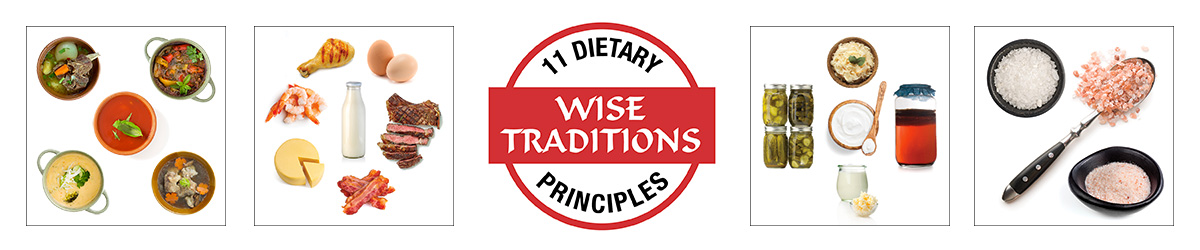
HG: So, even if you are eating a Wise Traditions diet, if you are in a stressed situation, your body will not be able to access the nutrients that you are taking in?
CF: That is the problem. Also, when we are stressed, we are constantly secreting cortisol. Ordinarily, that should again be another one where your body pumps it out because you need to run, and then you are done, and your body goes back to normal. When cortisol remains high, it suppresses everything. Bile flow is suppressed, and we already noted that bile is a major factor in the production of GLP-1. Cortisol also thickens the bile and slows down gallbladder motility. Nutrient-sensing does not happen. GLP-1 is not produced. In addition, when you are stressed, your vagus nerve is not doing what it is supposed to do. The vagus nerve normally boosts GLP-1 secretion. If your vagus nerve is not doing what it is supposed to do, less GLP-1 is being made naturally.
HG: What practical suggestions can you offer for people to lower their stress state so that they can take in the nutrients that will feed the natural peptides in their body?
CF: I tend to attract very high-stress, Type A clients who are overworking, so I do have some suggestions. It is critical to get yourself in a calm state for eating and throughout the day. If you can only do one thing, set up your morning time to be for you, even if it is just ten minutes. Wake up, and do not touch that phone. Get outside in the morning light, breathe, and connect. That is one of the best things you can do. Going for walks is also helpful. Before you eat, go for a short walk, even just two minutes, do some deep breathing and calm your body. Another easy thing is to put headphones on and listen to binaural beats [two tones with slightly different frequencies]. They work very quickly. If you need to jam it all in, listen to binaural beats while you go for a walk out in the sun. That is a good starting place.
HG: What about eating while standing versus sitting? Someone told me that if you stand, that is not rest-and-digest. Is that true?
CF: I don’t know. Whenever I go to Europe, everyone stands and eats. Sometimes I feel better standing and eating because it elongates my entire torso, so everything can just move through. A better question may be, how are you breathing? Are you looking at your phone or the TV or listening to a stressful conversation while you are standing? When you eat, you should really try to just focus on eating. Easier said than done.
HG: Getting back to nutrition, what foods support GLP-1 production in the body naturally?
CF: The polyphenols, as already mentioned, are one of the biggest players. Protein also does the job, and it keeps you satiated, so you will not need to eat as much food. I feel like it is really important to have a high-protein breakfast because that is when GLP-1 is most effective. Lots of variety to keep your gut diverse. Real food in its whole form. Raw milk, grassfed proteins and plenty of healthy animal fats. No seed oils!
Another one is fiber. People are not eating enough, and it is very important. Bitter foods, for example—foods like arugula or the pith (white stuff) on the inside of oranges—but you want to make sure you have variety as well.
HG: What does fiber do? Why is it important?
CF: Fiber is important because it is one of the nutrients that is sensed by the L cells and will help with the GLP-1 release. It helps with constipation, so it is going to help move things through the body faster, which is good to help with the nutrient sensing. Fiber is beautiful for the gut microbiome. You have to feed the bacteria in there, and many of them, especially Akkermansia, live on fiber. If they do not have the fiber, you are not going to have enough of those keystone bacteria. Your gut mucosal lining is not going to be healthy. The L cells are not going to thrive. You are not going to produce enough GLP-1.
HG: Which high-fiber foods would you recommend?
CF: All your vegetables, of course, but we want to eat things more on the raw side, like crunchy. You could cook them a little. [Editor’s note: WAPF recommends that highly fibrous vegetables like kale and other rough leafy greens be thoroughly cooked.] Asparagus, onions, garlic. If you choose to eat potatoes, you want to refrigerate them first and cool them down. It will change it to inulin, which is a better fiber. Eat them that way. Fruit, all of the green-tipped bananas, you can buy green banana starch. There are a lot of varieties to choose from.
HG: If someone told you that their doctor prescribed Ozempic or Wegovy, what would you advise them?
CF: First, I would advise them to use it as a tool. That is how we should use it. I understand “food noise”—I come from a history of eating disorders and have been there—so I know that it can be truly debilitating and makes change harder. If you are going to take a medication that shuts the “food noise” off, it can allow you to be more in control of what you are eating. Use it as a tool and start to do all of the things to help your body produce GLP-1 naturally, which means focusing on nutrient-dense food. You are not going to want to eat as much, so what goes into your body has to be very specific. All of the natural foods we just listed—processed stuff has to go.
Second, I would advise working on circadian rhythm. It is critical. It will change every hormone in your body. It will change your mood. It will change your life.
Third, start lifting. You have to build muscle. If you are going to lose weight, muscle is going to go, too. You have got to make sure you are rebuilding that muscle.
Finally, use it as a time to tune into yourself. We should not have to weigh or measure our food. We are very intuitive beings. If you are going to inject this substance to calm your brain and lessen your appetite, it is a good time to figure out what really works for you. Which foods make you feel amazing? Which foods do not? Which movements work for you? Which movements do not?
HG: I would be tempted to suggest that they do those other things for two weeks before starting. If you can dial in those basics, you might not need the medication.
CF: I do not think you would. As someone who had extreme “food noise,” we did not have this medication back then, and I got through it. It just takes work and being intentional. You do not have to take them. However, because the medications are being so heavily promoted—all anyone talks about is the GLP-1 shots—people don’t know that they can say no. I have had a lot of calls where people ask if they have to take them. It is very sad to me that people feel the pressure and feel like they have to take these weight-loss shots when they do not.
HG: Do you think seeing “perfect” bodies on social media affects our perception of our own body’s shape and size?
CF: Yes. It is horrible. That is why I am very fearful now, looking at Hollywood as well. I feel like the “heroin chic” thing is back [an aesthetic that glamorized malnourished-looking bodies], and all these young girls are looking at it. Meanwhile, I’m thinking that this is not the way it is supposed to be. Some people are naturally thin, but there is a shrinking happening with women right now.
HG: I have noticed that. It is so alarming. They look sickly, like ghouls instead of people.
CF: The muscle is going. I love a strong, juicy woman. We’re supposed to be strong and juicy! I feel like we are going the opposite way. It is hard because many people look up to Hollywood stars and influencers, and we are shrinking again. It does not feel good to me at all.
HG: You have shed a lot of light on how our bodies can naturally create GLP-1, and how dialing in the basics will help us. Is there something we’ve overlooked that we should touch on?
CF: To me, it is just important to reinforce the message, that you do not have to take the shots. You can accomplish everything just by giving your body what it needs. It can seem overwhelming, but it is not. Once you get there, not only will you produce sufficient GLP-1, but every system in your body is going to be optimized. And if you choose to take the shots, then do the work as well. It is the perfect time to fine-tune your body.
HG: If the audience could just do one thing to improve their health, what would you recommend that they do?
CF: Balance the circadian rhythm. The simplest thing is to get morning sunlight as your first light. It is free and always accessible, even if it is cloudy. The sun is coming through, and your body will sense it.
🖨️ Print post
Leave a Reply