


 🖨️ Print post
Dr. Weston A. Price’s landmark 1939 book, Nutrition and Physical Degeneration, provided powerful evidence that modern diets of refined flour, sugar and vegetable oils were causing nutritional deficiencies that manifested as dental caries and other health issues, including facial deformities, abnormal dental arches and increased susceptibility to acute and chronic disease. On the other hand, Price found that indigenous diets based on seafood, livestock (including organ meats), dairy and fermented foods, with or without plant-based foods, were protective.
Loyola Vikasa Kendra (LVK) is a nongovernmental social action organization operating two centers that run programs in eighty villages. In the spirit of Dr. Price’s research, LVK decided to conduct a study to document the dietary practices of three- to six-year-old children in an indigenous village in the South Indian state of Karnataka, with the aim of correlating children’s diet with their oral and general health. In addition to focus group discussions and key informant interviews, the researchers (with parental consent) collected anthropometric data and conducted oral and physical exams on forty-nine village children. This article summarizes some of the findings.
The study took place in a gowli village of one hundred fifty households. The gowli are a predominantly pastoral group grazing cattle in forest areas in Uttara Kannada, the fifth largest district in Karnataka. (The word gowli, which means “milkmen” or “herdsmen,” derives from gai or gao—the word for “cow.”) With a tradition of herding cattle and selling milk, the community migrated to Karnataka seventy-five years ago following a severe drought in their original state of Maharashtra.
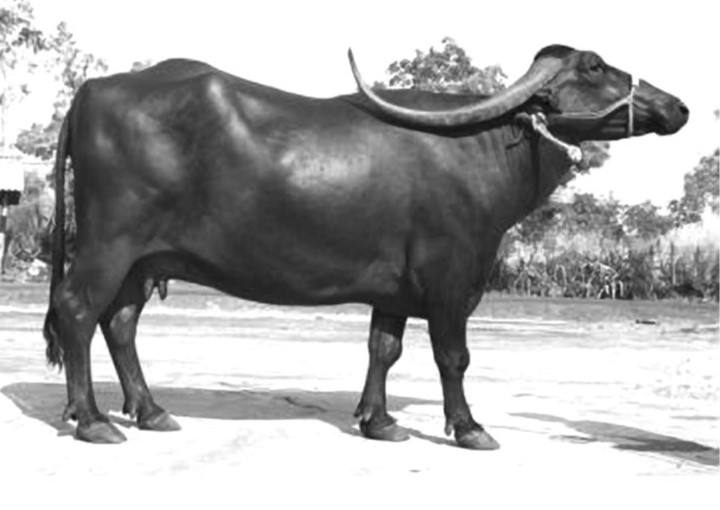
Their dairy livestock include native buffalo breeds from Maharashtra and Karnataka— breeds considered hardier and more resistant to disease. Although some families have replaced the indigenous breeds with Jersey cows, study participants described the Jerseys as less resilient and not well suited to forest grazing, making them more expensive to maintain because they require supplemental feed such as rice and groundnut husks. Reportedly, children think that the milk from the indigenous animals tastes better.
Villagers described the indigenous animals as their “connection with the forest,” explaining that the manure “enriches the soil and makes the plants and trees and grass grow better.” The government’s forestry department has been imposing increasing restrictions on forest grazing, alleging destructive impacts, but focus group participants reported that where grazing is not allowed, the forest areas are “dying.”
Not surprisingly, the gowli community relies heavily on dairy, with a fermented milk-based gruel called amblee forming a staple part of the diet. Many children consume milk, both raw and cooked, three to five times a day, often with added turmeric, and adults drink milk in the morning rather than coffee or tea. One study participant stated, “We depend a lot on milk, curd and ghee. We also consume butter. We have amblee quite often. . . . We are all healthy because of milk. We also make majige saaru [buttermilk curry].”
In addition to dairy foods, the villagers eat fish, chicken, lamb and goat, including offal and blood, as well as some game when available— but they do not eat beef. The diet also includes a variety of seasonal fruits and vegetables, as well as rice, lentils and millet flatbread. Seasonally available ghee, groundnut oil and refined palm oil are the predominant cooking fats. With the restrictions on forest grazing, villagers reported that they are losing access to forest-foraged foods such as tubers, wild honey, herbs and certain leafy greens.
A dry dish called sooka made from blood is given to women five days after delivery. Postpartum women also eat a gruel prepared with dry coconut, ghee or coconut oil, pepper and “broken wheat.” Infants breastfeed anywhere from four months to five years, depending on whether the mother works outside the home. When they begin drinking milk, they start with cow’s milk and do not consume buffalo milk, perceived as “thicker,” until at least six months of age. One villager wisely commented, “Doctors ask us to give powdered milk to the children. We say okay but we don’t listen to them.”
An interview with a six-foot-tall farmer who towered over the other villagers provided insights into recent dietary trends. Recalling how he drank warm milk straight from the cow as a child, he noted that junk food has started appearing in children’s diets and suggested that the increased intake of processed foods was causing heights to come down in his community. Some villagers have complained about the “rancid” and “unappetizing” prepackaged foods and powdered milk served to children at the local preschool. The long-standing demand of “right-to-nutrition” groups has been that school food be prepared by dalit women from the local community using local ingredients. (Dalit women belong to the lowest category in the caste structure of India, often labelled as “untouchable” and not allowed to handle food but rather work related to sanitation.)

The gowli children had better indicators for expected heights and weights for age compared to the national and state averages. Roughly three out of four children assessed (73 percent) had expected height for age, and 88 percent had expected weight for age. Table 1 compares children in India, Karnataka and the study village on indicators of stunting and underweight.
On general physical examination, nearly all (98 percent) had clear eyes and skin, and good cardiovascular and respiratory health. A few children had signs of healed skin conditions.
The majority of village children had sound dentition and good facial structure, as shown in Table 2.
When the study team compared the dietary practices of the children with and without dental caries (cavities), they found that among the children with no dental decay, 74 percent consumed milk three to five times a day, “undiluted” but not necessarily raw; only four of the children had consumed raw milk in the week of the survey. Regular milk consumption among children with one or more cavities was lower (48 percent), with some of those families reporting economic hardships that made it necessary to give the children milk only “as and when possible.”
Three out of four children (74 percent) in the no-cavity group had consumed organ meats (intestine, liver, blood) in the previous month, versus 46 percent of the group with one or more cavities. About the same number of children in each group had eaten some kind of junk food in the week of the survey.
Although the study provided a glimpse into the encroachment of the “displacing foods of modern commerce” into the diet of rural Indian children, including junk foods and powdered or heated milk, overall, the research team found that village children from groups with a strong tradition of dairy consumption—including fermented and raw dairy—appear to drink more milk than their urban counterparts. Comparable survey results from urban preschools would help confirm this. A small number of parents commented that their children did not like the taste of organ meats, but in general, the regular consumption of offal such as liver and blood also still seems to be supporting the dental and physical health of many of these village children.
With acknowledgements to Dr. Svarooparani Patel, Jerald D’souza (director, St. Joseph’s College of Law), Loyola Vikasa Kendra, Mundgod and Kavin Selvaraj.
This article appeared in Wise Traditions in Food, Farming and the Healing Arts, the quarterly journal of the Weston A. Price Foundation, Summer 2025
🖨️ Print post
Leave a Reply