


 🖨️ Print post
Disclaimer: None of the information in this article is intended to diagnose, treat or prevent any medical condition. It is intended for educational purposes only. If you suffer from a medical condition, please consult with a qualified healthcare professional.
The true extent of vaccine injuries is unknown—and, in many ways, deliberately hidden. After over eleven thousand hours of research and fifteen years working with more than a thousand vaccine-injured children and adults, I can, however, state with some confidence that such injuries are far more common than acknowledged—likely even epidemic, particularly among children. These injuries manifest in countless forms, like a thousand-headed hydra, producing a cascade of adverse effects that are often divided into various diagnoses or dismissed as genetic in origin.
In my view, vaccine injuries represent the greatest tragedy of our time. Not only are they rarely acknowledged by the medical establishment, but those affected—along with their families—are too often dismissed, gaslit and left without meaningful support or recognition for what they’ve endured.
Part of the problem lies in how vaccines are regulated. Because they are classified as biologics rather than traditional medications, they are exempt from the long-term, double-blind, placebo-controlled trials that are standard for most drugs.1,2 In fact, none of the childhood vaccines administered in the United States— apart from a partial exception with the HPV vaccines—have ever been tested against inert placebos or studied beyond a brief period of days or weeks. For instance, the hepatitis B vaccine (routinely given to nearly all newborns at birth and again at two, four and six months) was monitored for adverse effects only during a four- to five-day window and without any placebo control.3,4 If a child died on day six, the death was not attributed to the vaccine—because no one looked. Similarly, the MMR vaccine (typically administered at twelve or fifteen months) was studied for only six weeks after injection.5 If a child develops autism at eighteen months, it is declared “unrelated” to the MMR—because, once again, no one is looking for longer-term adverse events.
In my clinical experience, I have observed an overwhelming pattern: at least 90 percent of vaccine injuries have a delayed onset, typically appearing two to four months after the injections and later reaching full expression. Deterioration can continue even beyond that point. Because none of the childhood vaccines has ever been tested for such a duration—and, as noted, not against inert placebos—these delayed adverse effects remain officially unrecognized by the medical establishment.
The lack of proper safety evaluation extends even further. The government has consistently resisted calls to conduct vaccinated versus unvaccinated studies—leaving the true long-term health outcomes between these groups largely unknown and unacknowledged by most medical professionals. Yet parents, independent researchers, and a few courageous physicians, alternative healthcare providers and investigative journalists have noticed the stark contrast firsthand.
Meanwhile, the vaccine industry enjoys sweeping liability protection, insulated from direct lawsuits. The 1986 National Childhood Vaccine Injury Act created the so-called National Vaccine Injury Compensation Program (NVICP)6 as a substitute for accountability, but its limitations are glaring; although the NVICP has paid out billions of dollars, it’s estimated that only about 1 percent of vaccine injuries are ever reported.7,8
Amid this landscape of denial and neglect, homeopathy and its sub-branch tautopathy (energetic remedies prepared from substances that caused problems) emerge as invaluable allies—offering not only meaningful support for the vaccine-injured but also serving as a potential diagnostic tool to help identify which vaccines may have caused havoc.
SNATCHED AWAY FROM THE DEVIL JUST IN TIME
One illustrative case is that of Freddie, a fifteen-month-old boy who first came to my practice on February 1, 2014. Approximately nine weeks earlier on November 19, 2013, he had received four twelve-month vaccines—MMR, varicella, meningococcal and pneumococcal conjugate. Within four weeks, two small red spots had appeared near the injection sites on his upper left arm. By January 9, 2014, these spots had expanded into an unusual eczematous lesion measuring about 2.4 cm in diameter at the injection site. Eleven days later, Freddie’s entire body erupted in widespread, intensely itchy eczematous patches. His physician diagnosed an adverse vaccine reaction and prescribed antihistamines, which not only failed to improve his condition but also caused swelling of his ankles.
By late January, Freddie’s condition had worsened. Around January 25, he began banging his head and rocking violently back and forth. By January 31, he had started toe-walking and reverted to crawling, despite having already walked independently for two months. His behavior grew increasingly erratic—he struck out at people and objects, demanded constant holding, ground his teeth and developed blackish-green diarrhea.
Freddie’s once varied appetite collapsed; he now craved only milk and meat, perspired heavily and stopped babbling altogether. During our first appointment, he was markedly irritable, avoided eye contact and continuously banged his head against his parents.
It was evident to both his parents and me that Freddie was developing autism-like symptoms. The eruptions around the injection sites were an unmistakable clue as to the origin of his condition. Notably, the progression—from vaccination to full expression of symptoms— spanned roughly three months, at that time marking one of the clearest temporal links I had ever observed between vaccination and developmental regression. Since then, I have witnessed hundreds of similar cases, each varying in expression but sharing the same essential pattern of a delayed reaction.
I’m happy to share that this beautiful little boy made a complete recovery—achieved primarily through carefully selected homeopathic remedies prepared from the same vaccines he had received, along with a constitutional remedy and targeted nutritional support. Because we could trace the reaction to the pronounced skin eruptions, the first remedy used was made from the varicella (chickenpox) vaccine. The response was remarkable: Freddie quickly regained eye contact, his skin cleared, and his appetite, digestion and perspiration all returned to normal.
After several months of gradually increasing potencies of the chickenpox vaccine remedy, his progress plateaued, and he began to regress slightly. At that point, we transitioned to a homeopathic preparation of the MMR vaccine, which again propelled his recovery forward. Over the following two years, we continued this systematic process, cycling through homeopathic versions of each vaccine he had received. By the end, Freddie was stable, thriving and fully neurotypical.
At our last appointment, his father looked at me with tears in his eyes and said, “We snatched him away from the devil just in time.” Freddie is now ten years old and completely well.
PROGRESSIVE DEVELOPMENTAL UNRAVELING
Unfortunately, not all children recover as quickly or as completely. In many cases, by the time a child is properly diagnosed—or the parents discover homeopathy—the child is already much older. There is no question that recovery is far easier in a two- or three-year-old than in an older child. Older children usually improve as well, but the process tends to be slower and less complete, as the vaccine-triggered destructive cycle has had more time to take hold and spread within the system.
I have observed the same pattern of gradual, progressive deterioration in nearly all of the over one thousand children with autism I’ve seen, as well as in countless others with a wide range of diagnoses. Other diagnoses include developmental delays, attention-deficit/hyperactivity disorder (ADHD), obsessive-compulsive disorder (OCD), oppositional defiant disorder (ODD), anxiety, extreme shyness, aggression, tics, seizures, every form of language delay or disorder, chronic constipation and diarrhea, celiac disease, insomnia, night terrors, sensory processing disorders, learning disabilities, fine and gross motor delays, feeding and swallowing issues, recurrent ear infections, bronchitis, pneumonia, allergies, asthma and more. The similarity among these cases is striking—eerily consistent, in fact—and it is truly astonishing that so few physicians recognize the obvious common thread.
Almost always, there is a gradual progression of deterioration, often starting subtly—with sleep disturbances or constipation, sometimes alternating with diarrhea—during the first few months of life. Doctors commonly reassure parents that “sleep regression” or difficulty digesting solids around six months are “normal” growing pains. Yet by that age, most infants have already received two to four rounds of vaccines, allowing delayed reactions to unfold unnoticed. In some cases, the onset is more sudden, with acute symptoms appearing initially, followed by delayed symptoms weeks or months after the initial ones.
THINGS DOCTORS SAY WHEN A CHILD IS VACCINE-INJURED
Chris was a sweet, bright little boy whose life changed overnight. Two days after receiving the same twelve-month shots as Freddie—MMR, varicella, meningococcal and pneumococcal—he began screaming inconsolably for hours every night. The doctor told his desperate parents that it was “just night terrors,” but the screaming never stopped.
Within weeks, Chris stopped making eye contact, stopped babbling and developed painful digestive issues. Before long, he was labeled autistic. When I first met him, he was completely nonverbal, aggressive and still couldn’t sleep. I’m convinced that if his doctor had recognized the vaccine injury instead of dismissing it, Chris’s story could have been very different. Thankfully, with the right remedies—made from the vaccines he had received, along with Stramonium for his aggression and night terrors—Chris began to change. The little boy his parents had lost started to come back. This case is a good example of a mixed acute and delayed adverse vaccine reaction response.
Laura, a two-month-old, was brought in by her concerned parents. Their once-alert infant had developed a facial tic, had stopped cooing and had become unusually limp and tired shortly after her two-month vaccines, which included Infanrix Hexa, a six-in-one combination shot, as well as rotavirus and pneumococcal vaccines. When they brought her back to their doctor, they were told, “She’s just going through a normal developmental phase—don’t worry.” But they knew something was wrong.
Laura began improving soon after starting a homeopathic remedy made from the Infanrix Hexa vaccine. Within days, her facial tic resolved, and she became lively again. It took a few more doses of homeopathic Infanrix Hexa and homeopathic versions of other vaccines she had received at two months before she started cooing again, but she fully recovered.
Four-month-old Amelia’s parents brought their daughter to see me not long after the infant’s second round of vaccines. Since then, Amelia had been able to sleep for only thirty to sixty minutes at a time; she had completely stopped growing and gaining weight, would slump over in her highchair and was severely constipated. Her exhausted parents went back to the doctor who had vaccinated her, hoping for help—only to be told, “You have a bad baby. Put her in a room for twelve hours and let her scream it out.” Shockingly, this came from a doctor who had just had a baby herself.
Thankfully, starting with a remedy made from one of the vaccines Amelia had received (the meningococcal vaccine), her sleep began improving within two days and she started to sit up and eliminate again. Over the following months, with careful management, she gradually regained her health. Honestly, had she received any more shots at that point, I don’t think she would have survived—her little body had already stopped growing, eliminating and resting.
VAXXED-UNVAXXED RESEARCH
As I saw more cases of vaccine-injured children over time, I started to piece together the different symptoms vaccines were causing in kids, especially because, as in the cases of Laura and Amelia, some children had received only one or two vaccines. And now, as research finally emerges that compares health outcomes in vaccinated versus unvaccinated children in long-term studies, the results sadly confirm my exact clinical observations of numerous immunological and neurological health challenges in vaccinated children.
The most recent and largest study conducted to date is the Henry Ford study, initiated with encouragement from the Informed Consent Action Network (ICAN) in 2017 (icandecide. org). ICAN’s Del Bigtree had been searching for a scientist who could conduct a vaccinated versus unvaccinated study and found Dr. Marcus Zervos, Division Head of Infectious Diseases at Henry Ford Health as well as Co-Director of the Center for Emerging and Infectious Diseases at Wayne State University and a principal investigator for pharmaceutical companies in vaccine trials.9 Dr. Zervos agreed to conduct a retrospective study so that he could (from his perspective) prove that the claim that vaccines cause harm is wrong. He promised Bigtree to publish the study no matter what the findings ended up showing.
Henry Ford Health is a large, vertically integrated healthcare system, with thirty-three thousand team members, over two hundred fifty locations and access to electronic medical records (considered the gold standard for tracking real-world health outcomes) that made it “uniquely suited” to carry out the largest U.S. vaccinated versus unvaccinated birth cohort study (n=18,468) ever conducted. Roughly 11 percent of the cohort (n=1,957) had not received any vaccines. The investigators retrospectively tracked children from birth over a ten-year period.
In early 2020, Bigtree and ICAN attorney Aaron Siri received a draft copy of the completed study,10 which found that vaccinated children had a statistically significant increased rate of various serious chronic diseases. Over all, 57 percent of the vaccinated children had developed at least one chronic illness compared to 17 percent of the unvaccinated children. The vaccinated displayed 5.53 times the rate of neurodevelopmental disorders (including 3.28 times the rate of developmental delays, 4.3 times the rates of autism and 4.47 times the rate of speech disorders) and 5.96 times the rate of autoimmune disease. All of these findings were statistically significant. There were other conditions (such as ADHD, learning disabilities and tics) for which increased risk could not be calculated because, while many cases existed among the vaccinated children, there were zero cases among the unvaccinated children. The findings confirm those of smaller vaxxed-unvaxxed studies as well as the over one hundred studies described in Vax-Unvax: Let the Science Speak, all showing highly increased rates of allergic, autoimmune and neurodevelopmental conditions in the vaccinated.11-13
Despite their study’s significant findings, Dr. Zervos and his collaborators refused to publish them because, among other reasons, they did not want to make doctors uncomfortable, and Zervos was concerned about losing his job. Bigtree’s subsequent documentary about the study and its non-publication, An Inconvenient Study, is absolutely gut-wrenching. [Watch the film at aninconvenientstudy.com and read the podcast interview with Bigtree in this issue of Wise Traditions.]
POSSIBLE WIDESPREAD IMPACTS OF VACCINES ON COGNITIVE AND SOCIAL ABILITIES
Liam, age eight, had been diagnosed with mild autism. He had regressed after his shots around age one but, through time and care, had recovered beautifully—attending regular school and thriving both academically and socially. Unfortunately, after receiving an MMR booster two months before our appointment, everything changed. He developed severe anxiety, sudden aggression and intense meltdowns both at school and at home. His mother told me he seemed like a different child—panicked, scattered and unable to think clearly. His former confidence and academic ability had simply vanished.
When I saw Liam, he was overwhelmed and emotionally fragile. We began with Stramonium for the fear and agitation, and a homeopathic remedy made from the MMR vaccine itself. Gradually, he began improving. Over the course of several months, as he took the homeopathic MMR remedy in carefully increasing potencies, his calm, focus and brightness returned, and with it, his ability to learn and thrive once again.
Consider this—there has been a notable decline in IQ scores since the early 1990s, particularly in verbal tests, documented in many countries. Up until that time, IQ scores had actually been increasing.14,15 The IQ gains plateaued just as the vaccine schedule began its exponential expansion in the 1980s and ‘90s. The first documented reversals in IQ averages (in Scandinavia and the U.S.) roughly parallel two phenomena: (1) the post- 1986 vaccine explosion; and (2) the simultaneous rise in neurodevelopmental disorders—particularly autism, ADHD and learning disabilities.
Today, nearly one in thirty-one U.S. eight-year-olds is diagnosed with autism,16 up from approximately one in ten thousand in the 1970s. While correlation does not equal causation, such an astronomical increase demands investigation rather than dismissal.
Additionally, over the past two decades, male and female college enrollment and graduation dynamics in the U.S. have shifted dramatically. The turning point (when women first surpassed men in college enrollment) was actually even earlier, around the mid-1980s. Since then, the gap has widened considerably, mirroring the increase in numbers of childhood vaccines given. Starting in the 2010s, the gender gap became a chasm.
By 2015, women made up approximately 58 percent of college students and 65 percent of college graduates and also earned the majority of masters and doctoral degrees. Men increasingly skipped college entirely, pursuing trades or, more often, dropping out without clear direction. As of spring 2025, the National Student Clearinghouse reported that only seventy-three men were enrolled for every hundred women.17 Men accounted for roughly 40 percent of all college students—the lowest ever recorded—and women were nearly 15 percent more likely to complete their degrees on time. This pattern worsened even more during the mid- 2020s.
These trends are important because fewer educated men translates into relationship mismatches, economic instability and frustration among both sexes. Falling marriage rates could be another symptom of widespread vaccine injury. Young women’s main complaints about men include lack of drive and ambition as well as inability to communicate.
Males are biologically far more fragile in early development and more susceptible to autism and other developmental disorders. The official narrative is that the male-to-female autism ratio is five-to-one, but in my practice, I have seen approximately nine hundred fifty males with autism to fifty girls—which is more like a nineteen-to-one ratio. And what about all the subtler impacts? Could it be that increasing numbers of subtle neurological injuries in males are underlying these worrying trends? Moreover, what about the ever-increasing numbers of young people with social anxiety?
Consider Lena, a lovely, thoughtful ten-year-old brought to me by her parents a few years ago because of extreme shyness, anxiety and timidity. She hardly spoke a word in class—to the point that her parents were worried about her progress in school. They described her as slow to do everything, even getting dressed in the mornings, and had affectionately nicknamed her “our little snail.”
When I met her, she looked a bit pale and unwell, with that faint ashen tone I’ve come to recognize in some vaccine-injured children. Her mother explained that Lena had received her first and only vaccine—a combination vaccine called Pentacel containing DTaP (diphtheria, tetanus and acellular pertussis), inactivated polio (IPV) and Haemophilus influenzae type b (Hib) components—at seven months. Her mom had delayed vaccinating her because she’d had a bad feeling about it. Within days of the shot, eczema had appeared on Lena’s face. The parents decided not to vaccinate her again after that.
That clue guided me toward the homeopathic remedy made from the same vaccine. The results were almost immediate. Lena became brighter, more confident, more talkative and far less anxious. Mornings were suddenly easy, and she began expressing a lively curiosity about everything. To everyone’s amazement, she developed a passion for public speaking— even going on to win awards for it. One single vaccine had silenced and slowed this child for years; removing that burden allowed her true spark to shine again. What would seventy-eight doses of eighteen vaccines do? This discussion is long overdue.
ADULTS ARE NOT IMMUNE EITHER
I have also seen numerous adults who were vaccine-injured. Tamara, a very pleasant and highly intelligent fifty-five-year-old, consulted me recently regarding some long-standing health issues, including chronic, constant and unpredictable diarrhea ever since an MMR shot at the age of eighteen, and chronic fatigue since a DTaP booster at age thirty-one. Her health had been altered long-term from these two vaccines received as a young adult. We are currently working through a homeopathic clearing of the MMR vaccine, which caused a temporary aggravation with insomnia and increased diarrhea. I’m hoping that the vaccine clearing will bring her much relief.
Other adults under my care or sometimes parents of vaccine-injured children under my care also have reported long-lasting injuries, including one mother who developed diabetes after a flu shot at age twenty-two and another who totally lost her ability to retrieve words for two years after a round of tropical travel vaccines in her mid-twenties.
How many of us may have chronic health problems possibly stemming from childhood or adult vaccines? Possibly most of us, frankly, and I have not even mentioned the Covid shots, which I covered in a previous article.18
Of course, vaccines aren’t the only factor behind the rising tide of chronic health issues in children or adults. Environmental pollution, toxins in our food supply, poor nutrition, stress, EMFs and the digital age also play roles. However, the vaxxed-unvaxxed studies clearly show a very disturbing pattern.
In my experience, the individuals most vulnerable to vaccine injury often have inherited constitutional weaknesses that increase immune system reactivity, making them more likely to have adverse vaccine reactions. On top of that, today’s children face a perfect storm of other stressors that seem to act synergistically—prenatal ultrasounds, medical interventions during labor, frequent antibiotics, acetaminophen use, toxins in the food supply like glyphosate, and widespread nutritional deficiencies. Each of these may chip away at resilience, and together can create a system primed for overload.
HOMEOPATHIC HELP AND SUPPORT
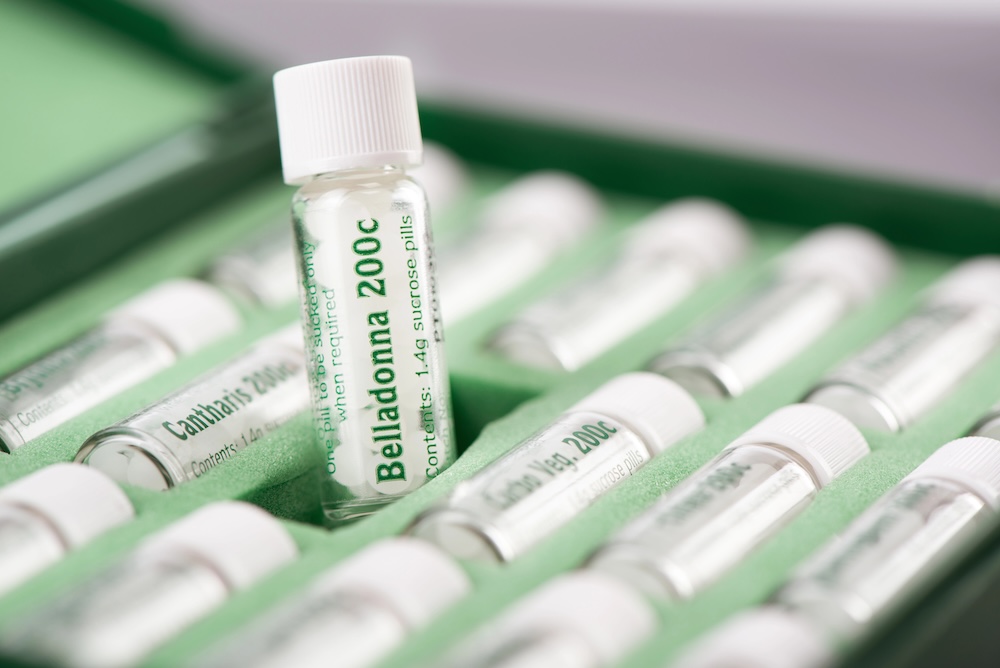
There are several homeopathic approaches to aid those injured by vaccines, including relatively non-specific remedies such as Apis, Silica, Thuja, Ledum and Hypericum, which can be quite helpful in some cases and can safely be tried even by lay people. In cases of acute adverse reactions and even long-term intense inflammatory and post-encephalitic reactions, remedies such as Aconite, Stramonium, Belladonna and Hyoscyamus may be indicated, among others (see sidebar). Tuberculinum and Carcinosin come up frequently as miasmatic remedies (remedies addressing inherited predispositions) that may help to strengthen un derlying weaknesses and nudge the system toward greater homeostasis.
Then, there are the remedies made from actual vaccines, which are by far the most useful but also usually need to be given in conjunction with the acute and miasmatic remedies. They are not only therapeutic, they can also help to identify the culprits; if a remedy made from a vaccine helps, that indicates that the vaccine in question did, in fact, harm that individual. These remedies can be purchased at some homeopathic pharmacies and distributors, including Helios Homeopathic Pharmacy in the UK (helios.co.uk) and, in the U.S., I&E Organics (iandeorganics.com) and PS11 (ps11collective.org). Helios sells to the public directly, but you may need a practitioner to help you with PS11 or I&E, as these remedies are coded, and code sheets are only sent to practitioners.
Vaccine clearings with remedies made from vaccines should be done very carefully and gradually and are best done under the supervision of an experienced practitioner, but if you want to try this at home, it is best to start with two pellets of a 30C potency once a week for two weeks, followed by 200C, 1M and 10M potencies once a week each for two weeks. If your child or you have strong responses (aggravations) to the remedies, you should wait to repeat them, allowing the body to catch up while giving extra vitamin C, fish liver oil, zinc and taking Epsom salt baths. Clearing rounds of the vaccine remedies may have to be repeated several times. For those interested in learning more, consider reading Tinus Smits’ book Autism Beyond Despair.19 However, since its publication in 2010, informed practitioners have amended and slowed down the book’s clearing protocols to reduce the risk of aggravations.
It’s important to find out exactly which brands of vaccines you or your child have received. Different companies produce similar vaccines, but they’re sold under different names. For example, there are multiple brands of the DTaP vaccine, such as Infanrix, Daptacel and Kinrix. Knowing the specific brand helps guide more precise treatment.
Ideally, you’ll want to use remedies made from the exact vaccines that were administered. However, there are also blended options, often called poly-vaccine remedies, which contain energetic imprints of most or all of the common childhood vaccines. I’ve found these mixtures can also be very effective, and in some cases bring about excellent results when brand-specific remedies aren’t available.
THE AGE OF VACCINE INJURY AND THE ROLE OF HOMEOPATHY
We are living in the age of vaccine injury— hidden in plain sight and disguised under a thousand different names. A large share of the population has likely been affected, knowingly or not, through vaccinations reaching all the way back to early childhood. The classification of vaccines as “biologics” has allowed manufacturers to skirt the more rigorous safety testing required for conventional drugs, while liability shields for both manufacturers and medical professionals have opened the door to an ever-growing list of injections offered without true long-term monitoring or accountability for harm.
As we have seen, even when research shows harm in the vaccinated, it is not published for fear of public reprisals and job loss. The result is a silent epidemic—and generations weighed down by chronic illness and neurodevelopmental struggles, all too often brushed aside as “coincidence.” Families are left to pick up the pieces, while the system that caused the harm hides behind immunity and semantics.
But there is still hope. Homeopathy stands as both remedy and revelation—a means not only to heal but also to expose what modern medicine refuses to see. It offers a light in the fog of denial, and a way for the vaccine-injured to reclaim their health, vitality and future.
SIDEBAR
HOMEOPATHIC REMEDIES TO CONSIDER IN VACCINE INJURY
- For acute reactions after a recent vaccination, the following remedies may be helpful:
ACONITUM NAPELLUS: Sudden onset of intense symptoms, including high fever, restlessness, shock, hot, dry skin, bounding pulse. This could be helpful for acute high fevers with shock immediately after vaccinations.
APIS MELLIFICA: Localized swelling around the injection site, heat, redness, restlessness in the child, possible allergic reactions.
BELLADONNA: Also sudden onset of symptoms, possibly high fever, more delirium, throbbing and congestion.
HYPERICUM PERFORATUM: In case of intense, radiating and shooting pains after vaccine injections, radiation along limbs. Area feels hot, sensitive, with painful tingling.
LEDUM PALLUSTRE: Main remedy if the injection site becomes hard, sore or discolored. Can be given prophylactically after vaccines to reduce risk of adverse reactions. Also for deep pain extending upward along the limb. May be helpful for vaccines received in the arm, also in adults.
SILICA: Can help to promote expulsion of foreign matter, may help the body to remove additives in vaccines. Can be given routinely after vaccines in 30C once a day for a few days. Also useful in case of abscesses after vaccines. Can be helpful if never well since a vaccination.
STRAMONIUM: In case of night terrors after vaccines. Child may scream at night inconsolably. This is a remedy with strong affinity for the brain and potentially helpful with symptoms of encephalitis.
- For chronic states after vaccination, some of the above (such as Belladonna and Stramonium) may still apply, especially if a child is still in an acute-appearing, but long-term altered state after a vaccination.
CALCAREA CARBONICA: May be indicated in chubby, sweaty children who recover slowly after vaccinations and/ or develop chronic weakness.
HYOSCYAMUS: Another great neurological remedy, indicated if the child develops strange behaviors after vaccines, such as licking tables, windows, floors, playing with urine and feces, precocious sexual behavior.
NATRUM MURIATICUM: Long-term emotional flattening, feelings of grief or isolation after vaccination.
SILICA: As above, to help eliminate foreign matter. This can sometimes be helpful even years later.
THUJA OCCIDENTALIS: Residual hardness, nodules or lumps that remain after vaccination. Profound fatigue, muscle heaviness, feeling “not oneself” since the injections. Increased perspiration with offensive odor or oily, waxy skin. Sleeplessness, agitation, fixed ideas and repetitive thoughts. Emotional flattening and a sense of internal fragmentation. Recurring sinusitis or ear infections post-vaccination. Skin eruptions like warts or polyps after vaccination.
III. The homeopathic preparations of the vaccines that were given can be most helpful as described in this article.
REFERENCES
- Vaccine Safety: Introduction to Vaccine Safety Science & Policy in the United States. ICAN White Paper (Version 1.0), Oct. 2, 2017. https://www.ankezimmermann.net/uploads/8/2/6/0/82607374/vaccinesafety-version-1.0-october-2-2017.pdf
- None of the vaccine doses the CDC recommends for routine injection into children were licensed by the FDA based on a long-term placebo-controlled trial. ICAN, updated Oct. 18, 2023. https://icandecide.org/wp-content/uploads/2024/03/no-placebo-101823.pdf
- Recombivax HB Hepatitis B Vaccine package insert. (Retrieved Feb. 13, 2026.) https://www.fda.gov/media/74274/download
- Engeʼ;;ʼrix-B Hepatitis B Vaccine package insert. (Retrieved Feb. 13, 2026). https://www.fda.gov/media/119403/download
- M-M-R-II package insert. (Retrieved Feb. 13, 2026). https://www.fda.gov/media/75191/download
- https://www.hrsa.gov/vaccine-compensation
- Lazarus R, Klompas M. Electronic Support for Public Health–Vaccine Adverse Event Reporting System (ESP: VAERS). Submitted by Harvard Pilgrim Health Care, Inc., to the Agency for Healthcare Research and Quality, U.S. Department of Health and Human Services, 2011. https://digital.ahrq.gov/sites/default/files/docs/publication/r18hs017045-lazarus-final-report-2011.pdf
- Stratton K, Ford A, Rusch E, Clayton EW (Eds.). Adverse Effects of Vaccines: Evidence and Causality. Washington: National Academies Press, Aug. 25, 2011.
- Marcus Zervos Biography, Wayne State University Center for Emerging and Infectious Diseases. https://ceid.wayne.edu/profile/ab8188
- Lamerato L, Chatfield A, Tang A, Zervos M. Impact of childhood vaccination on short and long-term chronic health outcomes in children: a birth cohort study. Detroit, MI: Henry Ford Health System, n.d. https://www.hsgac.senate.gov/wp-content/uploads/Entered-into-hearing-record-Impact-of-Childhood-Vaccination-on-Short-and-Long-Term-Chronic-Health-Outcomes-in-Children-A-Birth-Cohort-Study.pdf
- Mawson AR, Ray BD, Bhuiyan AR, Jacob B, Pilot comparative study on the health of vaccinated and unvaccinated 6- to 12-year-old U.S. children. J Transl Sci. 2017;3(3):1-12.
- Mawson AR, Bhuiyan A, Jacob B, Ray BD. Preterm birth, vaccination and neurodevelopmental disorders: a cross-sectional study of 6- to 12-year-old vaccinated and unvaccinated children. J Transl Sci. 2017;3(3):1-8.
- Kennedy Jr. RF, Hooker B. Vax-Unvax: Let the Science Speak. Skyhorse Publishing, 2023.
- Bratsberg B, Rogeberg O. Flynn effect and its reversal are both environmentally caused. Proc Natl Acad Sci U S A. 2018 Jun 26;115(26):6674-6678.
- Dutton E, Lynn R. A negative Flynn Effect in France, 1999 to 2008–9. Intelligence. 2015;51:67-70.
- Lyons-Weiler J. Autism prevalence: a real, accelerating epidemic. The Defender, Apr. 24, 2025.
- Current term enrollment estimates: spring 2025. National Student Clearinghouse Research Center, May 22, 2025. https://nscresearchcenter.org/current-term-enrollment-estimates/
- Zimmermann A. Homeopathy to help mitigate the effects of coronavirus “vaccines.” Wise Traditions. Spring 2022;23(1):53-59. https://www.westonaprice.org/health-topics/homeopathic-remedies-coronavirus-vaccine-side-effects/
- Smits T. Autism; Beyond Despair – CEASE Therapy. Emryss Publishers, 2010. www.emryss.com

Thank you for this article. Everything I have thought and suspected but could not find anybody reporting on the results and stats.