


Interview With Nina Teicholz : The U.S. Dietary Guidelines
HILDA LABRADA GORE: The U.S. dietary guidelines are failing Americans, who have dutifully followed them but have become more unhealthy and obese than ever before. The Nutrition Coalition, the non-profit organization founded by Nina Teicholz, is working to ensure that nutrition policy accurately reflects the best and most current scientific evidence. A science journalist and the New York Times bestselling author of The Big Fat Surprise,¹ Nina explains why the guidelines are doing us a major disservice.
NINA TEICHOLZ: I got interested in the dietary guidelines when I realized that they were the “North Star” on nutrition in America. The guidelines are our nation’s most influential nutrition policy and the key lever determining what Americans think is healthy to eat. They are downloaded to all health practitioners, doctors, nurses, nutritionists and dietitians as the “gold standard.” This means that many doctors in large practices cannot deviate from the guidelines. The guidelines also drive all the federal feeding assistance programs: school lunches; feeding programs for the elderly; the Special Supplemental Nutrition Program for Women, Infants, and Children; food for the military (which has an obesity problem equal to the general population); and even K-12 nutrition education. One in four Americans eats one of those meals every week.
The first guidelines came out of a Senate Select Committee, which in the late 1970s decided to look at the rising tide of heart disease, cancer and other chronic diseases in America. In 1980, the U.S. Department of Agriculture and the Department of Health and Human Services jointly issued their official guidelines, but they didn’t know exactly what to recommend. Strongly influenced by senior scientists from the American Heart Association, they advised a diet reduced in saturated fat, dietary cholesterol and total fat, and literally recommended that everyone eat ten slices of bread every day. That is still largely what we have now.
The National Institutes of Health (NIH) and the American Heart Association have always been very close, with intertwining directorates going as far back as 1948. In some ways, they operated almost as a single entity. Beginning in 1961, the American Heart Association told Americans to cut back on saturated fat and dietary cholesterol to prevent heart disease. That marked the beginning of all the policies nationwide telling us to reduce animal foods and increase grains and other plant foods for optimal health.
HG: How has that recommendation served us?
NT: Not well! In 1960, only 9.6 percent of American adults were obese. As of 2014—which is the latest government number—it was almost 43 percent. Today, if you factor in the Covid lockdowns, obesity alone could be around 50 percent, and obesity plus overweight is easily over two-thirds of American adults.
The dietary guidelines have clearly failed to prevent chronic disease or protect health in America. After their introduction in 1980, the rate of obesity took an immediate, sharp upward turn, and it has continued upwards ever since, as have rates of diabetes, non-alcoholic fatty liver syndrome, polycystic ovary syndrome, cancer and heart disease, which is still the number-one killer in America. Virtually every diet-related disease has continued to go up. According to an estimate made some years ago, 88 percent of American adults had at least one chronic disease. It’s an appalling picture.
HG: How strictly do Americans follow the dietary guidelines?
NT: A common claim that I hear is, “Nobody follows them.” However, I have two charts on the Nutrition Coalition homepage (NutritionCoalition.us) showing that between 1970 and 2014, in every category of food measured by the government, Americans have followed the guidelines. Intake of fruits and vegetables is up by 20 to 35 percent. Whole-grain consumption is up. Refined grains are down. Red meat is down by 28 percent and beef by 35 percent, whereas fish and shellfish intake are up. Whole milk consumption is down by 79 percent. Butter is down by around 18 percent and eggs by a similar amount. Vegetable oils (“seed oils”) are up 89 percent. In addition, there’s a paper on macronutrient intake since 1960, which shows that as a percentage of total calories, carbohydrates (all grains, starches and sugars) are up 30 percent, whereas fat is down by 20 percent. There is not a single category measured by government data where Americans have not followed the guidelines to a “T.”
HG: Please explain the evolution from the food pyramid to MyPlate.
NT: The original pyramid that came out in 1992 prescribed eight to eleven servings of grains a day. Later, they revised that down to six to eleven grain servings per day (including three servings of refined grains) and also recommended five and a half teaspoons of soybean oil every day and up to 10 percent of calories in the form of sugar. In 2011, when the food pyramid started to lose its “cachet,” they switched to MyPlate, a kindergarten-like graphic showing a plate with four brightly colored sections. In the late 1950s, half of a person’s plate would have been animal foods, but MyPlate drops “proteins” to a quarter of the plate—and those proteins are no longer just from animals but also from peas, beans, lentils, seeds, nuts and soy. They shrunk and diluted that entire category. Half of MyPlate is fruits and vegetables, and a quarter of the plate, again, is grains. In other words, plant foods have taken over at least three quarters of the plate, and proteins have been confined to a quarter of it.
There are so many things that are confusing and wrong about the guidelines. Here are a couple of examples. First, in 2015, the expert committee for the guidelines decided that there was no reason to have a cap on dietary cholesterol anymore (meaning that we no longer needed to avoid nutritious shellfish and egg yolks, which we did for so long). However, though they eliminated the numeric cap on cholesterol, they still say that their formal dietary patterns are “lower in cholesterol.” That is confusing and contradictory.
Second, when the results came out in 2006 from the Women’s Health Initiative—the largest nutrition trial ever undertaken on some forty-nine thousand women lasting eight years—the findings showed no benefits of a lowfat diet for preventing heart disease, any cancer, type-2 diabetes or other chronic disease outcomes. At the end of all that time, the women following the lowfat diet weighed a mere two pounds less than the control group. Can you imagine how dispiriting that must have been after eight years of dieting? Following publication of these results, the dietary guidelines dropped their lowfat language, but all of the modeling on dietary patterns remains low in fat according to the scientific definition. Between 31 and 33 percent of calories as fat is still a lowfat diet.
HG: In other words, they are still emphasizing a lowfat diet and promoting more grains, plants and vegetables than ever before, with very little saturated fat and even fewer sources of animal protein.
NT: Yes. There has been a need for reform of the guidelines for decades. For a decade, my group has been one of the only ones sounding the alarm about this, and we’ve helped raise awareness about the guidelines’ problems. We have done a lot of work to try to establish the fact that the guidelines need reform.
For example, we got Congress to allocate two million dollars to get reports from the National Academy of Sciences, Engineering, and Medicine, and those reports produced eleven recommendations. One recommendation was to improve transparency, because there is currently no disclosure of conflicts of interest or disclosure of how the guidelines expert committee is chosen. Another recommendation was to improve the rigor of the systematic reviews, which don’t follow any recognized or validated methodology. For instance, they do not prioritize clinical trial data over observational or epidemiological data, even though observational data are weak and best suited for generating hypotheses. Only clinical trials can reliably show cause and effect, but the expert committee treats all study designs the same. They will even discount clinical trial results and elevate the epidemiology. They do this consistently.
The USDA has not fully adopted any of the eleven recommendations. My group funded a paper by a team of top methodologists from around the world who did a peer review of the guidelines and looked at eight of the most important systematic reviews cited to support the dietary patterns from the 2020 guidelines.² The paper found that the reviews were of critically low quality, with all kinds of problems and shortcomings. For example, in trying to repeat the literature search, the authors found three times more papers than the expert committee had found! Imagine if you were trying to replicate a recipe, but you had three times more ingredients. Replication is the hallmark of good science. We have plenty of evidence to show that the guidelines are not good science and need reform. We don’t have to pause and assess—we have done that.
There are a lot of things that need to change, including the cap on saturated fat at 10 percent of calories. That cap is a rate-limiting factor on animal foods and on how much and what kind of meat and dairy people can eat. That’s why we don’t have whole milk in schools, and it’s partly why people think red meat is bad for their health. That needs to change; it’s based on such outdated science. Another sad and depressing part of the story is that the science supporting the needed changes actually exists, but successive committees have refused to acknowledge it. They either actively suppress it—as they did with the low-carb diet—or they refuse to accept and recognize it.
HG: Why?
NT: That is a complicated question, and I can only speculate. First, there is bureaucratic inertia and cognitive dissonance. There are about thirty-five people in the USDA office that run the guidelines, and most of them have been there for twenty-five or thirty years. They are career “believers.” Related to this, there are a lot of industry and ideological interests lined up behind these guidelines. Many experts do not want to be wrong and do not want to have to reverse their advice, including the American Heart Association. This has been their dominant paradigm for so long. There is a lot of natural resistance to change.
HG: You said earlier that refined grains were included as part of the dietary guidelines. Why is that?
NT: It’s a good question. In the expert committee meetings, when they got to the refined grains recommendation, one committee member piped up and asked, “Why are we recommending this?” The committee chair answered, “Only refined grains are enriched and fortified.” If you do not have refined grains, the dietary guidelines do not meet the nutritional targets for vitamins and minerals. However, our Nutrition Coalition homepage shows that even if you follow the dietary guidelines perfectly, you will not be able to meet the goals for potassium, magnesium, vitamin D and maybe choline. It seems to me that one of the rules should be that the guidelines deliver basic nutrition!
Understand, too, that some of the nutritional targets are bare minimums. For example, the protein standard is the absolute bare minimum to prevent starving to death. The standard is 0.8 grams per kilogram of ideal body weight, but there is a lot of literature to show that what we actually need is almost twice that—1.2 to 1.6 grams per kilogram of body weight—for optimal health, growth, muscle metabolism, development and healthy reproduction. Not only do we need more protein, but ideally we need those proteins to come from animal sources because they are complete and, therefore, more bioavailable. In short, even if you follow the guidelines perfectly, you are still at a deficit. Those are not standards for good health.
HG: You want the guidelines to include more protein and more saturated fats. What other changes would you like to see made?
NT: Here’s what I would do. First of all, the guidelines need to be based on an internationally recognized systematic review methodology, so that they’re credible and trustworthy. Secondly, they need to be designed to meet all nutrition goals—all minerals and all vitamins. That would be my basic framework for all guidelines going forward.
As far as specific recommendations, the cap on saturated fat has to be revisited, as does the sodium cap. The data on sodium have been exclusively on middle-aged hypertensive men. There are no data on children or virtually any other group, yet the sodium cap is applied to one and all and is set at a level shown in multiple large studies to increase the risk of heart disease. There’s a moderate amount of sodium that is ideal. If you go too high, your risk of heart disease increases. If you go too low, your risk increases. There’s a J-shape curve. That has been well established. Finally, as we have already discussed, the protein category needs to be strengthened and probably the level needs to be increased.
Also urgently needed is a dietary pattern for people with metabolic diseases like obesity and type-2 diabetes. Once you have tipped over into metabolic ill health, you can no longer eat the same diet that a nineteen-year-old boy on a football team can eat. That’s because you have developed insulin resistance, which I believe is the root cause of all chronic diseases. Insulin resistance means you can no longer tolerate as many carbohydrates in your diet as you used to. There is an enormous body of literature showing that if you reduce carbohydrates—sugars and starches and high-sugar fruits—you can reverse type-2 diabetes, often within weeks. You also can sustainably lose weight. Hunger is not part of this kind of diet, because protein and fat are more satiating. You can reverse hypertension and the vast majority of heart disease risk factors. Reducing carbohydrates also has been shown to reverse non-alcoholic fatty liver disease and polycystic ovary syndrome. It is the way of eating that has generated the best evidence for reversing disease.
According to Secretary Kennedy, Trump wants us to reverse chronic disease with measurable results within two years. The only way you can get there is by having the government officially recognize low-carbohydrate or ketogenic diets for people with those metabolic diseases. I am the lead author, with eighteen other authors, on a 2025 paper titled “Myths and Facts Regarding Low-Carbohydrate Diets,”³ which addresses common concerns people have about the diet. People ask, “Does it have side effects?” “Is it affordable?” “Is it sustainable?” “Does it cause heart disease?” “Should I worry about my LDL cholesterol?” As part of that paper, we present the first-ever, peer-reviewed, low-carbohydrate/ ketogenic food pyramid, designed for people with metabolic diseases. I didn’t realize until I started working on the paper how much something like that was needed.
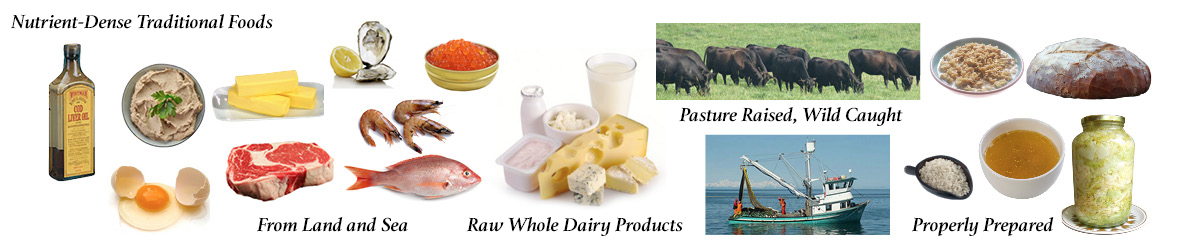
HG: All of this aligns very well with the Wise Traditions diet. We have eleven dietary principles that we point to, based on the work of Dr. Price and some additional research the Weston A. Price Foundation has done. There seems to be growing interest in these topics, and in particular, many people are clueing into the fact that seed oils are bad. Tell us why saturated fat is preferable to seed oils, and why you would remove the cap on saturated fat.
NT: Going back to the American Heart Association’s 1961 declaration, that was the first time Americans were told to reduce saturated fats and replace them with “polyunsaturated vegetable oils.” The research in my book was the original research showing that these oils used to be used as machine lubricants. I talk about how they entered the food supply via Crisco in 1911 and how their use in the U.S. food supply grew through various campaigns. The American Heart Association’s endorsement gave them a tremendous boost, because now they were seen as a medical product. In my book, I have a reprint of an old ad showing Wesson oil, saying, “Take this oil to your doctor,” like a prescription pad.
I also reveal the incredible story about how Procter & Gamble basically launched the American Heart Association in 1948 by donating the equivalent of what today would be $20 million. At the time, heart disease was relatively new and rare, and the American Heart Association was a tiny, sleepy organization. According to the American Heart Association’s own official history, when the Procter & Gamble money floated into their coffers, it transformed them overnight into the national powerhouse that they are today. My book describes a letter later sent by an American Heart Association expert scientist, who accuses the organization’s president, saying, “I can’t believe you’re posing with a bottle of Crisco oil in the promotional video. You look like an advertisement.” The last time I looked, the American Heart Association was still taking money from seed oil manufacturers.
To explain why seed oils are potentially harmful, I need to explain several things. First, in the 1960s and 1970s, researchers all over the world conducted a series of randomized controlled trials (RCTs) on a total of seventy-six thousand people—a huge number—to test the idea of reducing saturated fats and replacing them with unsaturated fats. In these trials, one group would get about 18 percent of their calories as saturated fat (regular meat, dairy and cheese), while the other group got soy-filled burgers, soy-filled milk, imitation ice cream and what we would now consider vegan versions of animal foods.
What were the initial findings of these clinical trials? First, researchers found no effect on heart disease mortality, meaning that switching to a seed oil diet did not spare someone heart disease. The most unequivocal result was that all-cause mortality was the same, regardless of which diet participants were on. However, remembering that RCTs are the most rigorous science we have, capable of demonstrating cause and effect, consider that one of the trials (the Minnesota Coronary Experiment) later found data showing that the more someone lowered their cholesterol, the more likely they were to die from heart disease—and by a rather astonishing amount.
A persistent finding that is not well known— and it may only be in my book—is that in six of the trials, including three NIH studies, the people on the seed oil diet died at higher rates from cancer. This led to high-level meetings at NIH throughout the 1980s, where the top scientists got together and said, “What is going on with seed oils and cancer deaths?” More generally, this finding relates to lower cholesterol. There are quite a lot of data to show that, beyond just seed oils, lower cholesterol is linked to higher rates of death from cancer. Although the meetings were reported and published in journals, ultimately, those scientists decided, “Our public health mission to prevent heart disease via a low-saturated-fat diet is so important that we’re just going to ignore these results on cancer.” That’s where things have stood ever since.
There is a tremendous amount of data on the oxidation effects of seed oils, which are more well-known now. I found out about those effects when doing research for my book. In the beginning, my book was going to focus on trans fats. I spent the first couple of years hanging out with seed oil scientists, including going to their industry meetings and subscribing to their publications. (Everything they do is behind a paywall, so you can’t get to it without joining.) I learned that for them, oxidation is an obvious and well-known effect of these oils. They have all kinds of measures and tools to deal with it. For example, they put nitrogen blankets over fryers in fast-food outlets like McDonald’s and Burger King to prevent the peroxidation products from releasing into the air, because if they get into the air, they solidify like shellac on the walls. They can’t get them off. The peroxidation products also harden and clog the drains of the fryers. These chemicals are so volatile that when they take the workers’ uniforms to be cleaned, they can spontaneously combust in the back of the truck en route to the dry cleaner! Even after they are cleaned, they will spontaneously combust in the dryer because they are still highly volatile.
Let me explain why that happens. The “poly” in polyunsaturated fats means multiple double bonds in a molecule. Each of those double bonds that are between the carbons will open up and attach to oxygen under conditions of heat or even just light (such as when oil sits on your counter for a while). That’s what oxidation is. And because they have multiple double bonds, these fats oxidize a lot. In contrast, the word “saturated” in saturated fats refers to the saturation of those double bonds with hydrogen atoms, meaning that saturated fats have no double bonds and, therefore, no chance for oxidation. In olive oil, the fatty acid only has one double bond, so there is only one chance for oxidation. That’s the chemistry of it. That is why you don’t want to have polyunsaturated fats in your foods.
Polyunsaturated fats are in most nuts and seeds, which is why nuts and seeds go rancid over time, and they are a lot higher in chicken than they are in red meat. However, the main source—the tsunami we are seeing—comes from all of the seed oils. Although new terminology will never take hold, I would note that these oils actually should be called “plant oils,” because while most come from seeds, some of them come from beans. The most common oil used in America is soybean oil.
HG: Does the fact that there’s now a spotlight on the need to reform these guidelines, thanks to the work that your group has been doing for a decade, mean that there is a light at the end of the tunnel in terms of where these guidelines may end up?
NT: I think it’s too early to say. I know that there are good people at USDA, and I know that Secretary Kennedy wants things to change, but I don’t know whether the folks with the best science will rise to the top or be able to prevail over what are enormous forces against change. We’re up against Big Pharma, Big Food, the climate change folks who think there should be no more (or far less) consumption of animal foods and want to eliminate animals from agriculture, the animal rights folks and the Seventh Day Adventist Church, which is surprisingly influential and had a member on the dietary guidelines advisory committee for USDA. The forces that influence nutrition are large. I don’t know what will happen.
HG: Thank you for remaining in the trenches and not giving up. We’re not giving up either. Our message has stayed true for twenty-five years! For my last question, if the reader could just do one thing to improve their health, what would you recommend that they do?
NT: Do not fear fat, and choose natural whole animal fats over seed oils.
REFERENCES
- Teicholz N. The Big Fat Surprise: Why Butter, Meat, and Cheese Belong in a Healthy Diet. Simon & Schuster, 2015.
- Astrup A, Teicholz N, Magkos F, et al. Dietary saturated fats and health: are the U.S. guidelines evidence-based? Nutrients. 2021;13(10):3305.
- Teicholz N, Croft SM, Cuaranta I, et al. Myths and facts regarding low-carbohydrate diets. Nutrients. 2025;17(6):1047.
This was Wise Tradtions podcast #521 (April 7, 2025)
This article appeared in Wise Traditions in Food, Farming and the Healing Arts, the quarterly journal of the Weston A. Price Foundation, Fall 2025
🖨️ Print post
Leave a Reply