

As Covid-19 emerged and developed into a worldwide pandemic, it soon became apparent that underlying health issues in the general population were contributing significantly to the problem. Elderly people with comorbidities—particularly obesity and diabetes along with heart and/or lung disease—were experiencing more frequent and more serious illness, and were significantly more likely to die from their illness. As those familiar with the Wise Traditions diet know, obesity, diabetes and heart disease are all strongly associated with the modern diet of processed, industrialized food.
The Weston A. Price Foundation (WAPF) decided to conduct a survey of our chapter leaders to understand better how people who eat in accordance with WAPF principles have fared during the pandemic.
Why Survey WAPF Chapter Leaders?
Chapter leaders are a very important part of the Foundation, forming a personal link among the Foundation, WAPF members and the general public. Chapter leaders provide information and advice on many aspects of nutrient-dense food, such as where to find raw milk and grass-fed meats, and how to ferment certain foods, soak or sprout others and make homemade broths and breads. Many chapter leaders hold meetings and other events that help bring traditional nutrition to life. Thus, chapter leaders constitute a large group of people who are likely to be regularly consuming the nutrient-dense foods recommended by WAPF.
The completely confidential survey covered five topics:
- background information
- personal health during 2020-2021
- personal dietary details
- electromagnetic frequency (EMF) exposure
- vaccinations
What follows is an overview of what we found out about this group of dedicated and energetic individuals willing to share their experiences. As this was not intended to be a clinical scientific study, I am not presenting columns of statistics but instead focus on what the responses tell us about how consumption of a Wise Traditions diet might influence human health, whether in an emergency or in any other situation.
Background Information
WAPF has three hundred forty-nine chapters. Two hundred eighty-two of those serve the District of Columbia and every state in the U.S. except Arkansas, Delaware, Mississippi and West Virginia. Another sixty-seven chapters serve thirty-two other countries around the world.
Of the three hundred forty-nine chapters, one hundred seventy chapter leaders responded to our survey (49 percent). Nearly half had been members of WAPF for more than ten years. About two-thirds were between the ages of forty and sixty-five, with others ranging in age from twenty to over sixty-five. The vast majority of respondents were female, with less than 15 percent male. (Note: These characteristics do not represent all chapter leaders, only those who responded to the survey.)
We asked where the chapter leaders lived, and here the response was interesting: more than two-thirds live in a suburban or rural area, while less than half live in a small town or in a large urban area. This could have implications that we’ll return to later.
Personal Health During the Pandemic Year
When asked about the presence of pre-existing conditions or comorbidities, these chapter leaders confirmed the results of a healthy diet: over 80 percent reported no pre-existing comorbidities, and more than 97 percent described their health as “excellent” or “good.”
Fewer than 10 percent claimed to have experienced Covid-19; another 25 percent were uncertain but had symptoms that may have indicated Covid-19. In coming to their conclusions about their illness, some respondents took a PCR test (known to be unreliable) and one consulted a physician, while others used alternative methods such as muscle testing or simply relied on symptoms. All but three rated their illness as “mild” or “moderate.” The majority were aware of a particular situation that likely had led to their illness. The most frequently cited reasons were eating poorly, getting inadequate sleep or “experiencing extra stress due to unusual circumstances.”
We also asked respondents if they had experienced any increased exposure to EMFs prior to their illness. Approximately two-thirds said no, with one-third responding yes. We will return to this subject in the summary.
Individual Dietary Details
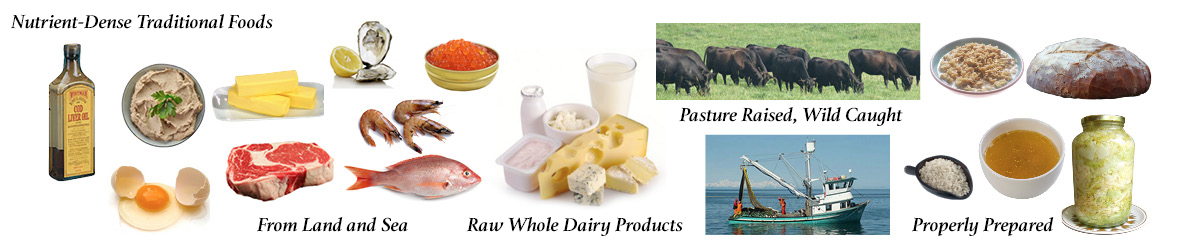
And now we come to the fun part: food! How do our chapter leaders eat? The answer, not unexpected, is that they eat really well. For example, fully 98 percent eat whole, unprocessed foods. Between 80 to 97 percent eat the following:
- Beef, lamb, game, organ meats, poultry and eggs
- Full-fat milk products from pasture-fed animals (raw or fermented)
- Animal fats such as lard, tallow, butter, cream, ghee and egg yolks
- Fresh fruits and vegetables, preferably organic
- Traditional oils such as olive oil
Many chapter leaders also enjoy fermented vegetables, fruits, and beverages; properly prepared whole grains, nuts and seeds; wild fish and fish eggs; and homemade broths.
Only one thing surprised me in this list; just 45 percent of chapter leaders said that they consumed cod liver oil regularly. Cod liver oil is recommended as part of a Wise Traditions diet as a source of balanced vitamin A and D, both of which (in combination with vitamin K2) are very supportive of good health and particularly respiratory health. I wonder why more chapter leaders are not taking it—is it because they do not consider it valuable or they cannot afford it, or is there some other reason?
Exposure to Electromagnetic Fields
This section asked various questions about EMF exposure both inside and outside the home. Sadly but not surprisingly, it seems we are all exposed to a significant amount of EMFs. The survey indicated that the largest source of EMFs inside the home comes from twenty-four-hour-a-day Wi-Fi and cell phones; outside the house, the prominent sources of exposure are power lines and cell phone towers.
The vast majority of respondents characterized their exposure as “moderate,” but it is unclear what that means. It may mean, “Well, my exposure seems similar to that of everyone else I know,” but does that mean it’s a moderate level in terms of safety? More likely, it means that everyone is exposed to way too much EMF, with as-yet-uncertain consequences.
Vaccinations (“The Jab”)
Although many WAPF members are doubtful about the virus theory of Covid-19 and fully understand that the “shots” are not vaccines and do not fit the legal definition of a vaccine, I have chosen to use the terms “vaccine” and “vaccination” because they are terms that all of our readers will be used to seeing.
In this section, we get a sense of chapter leaders’ responses to the sometimes difficult decision of whether to get “the jab.” Here again, most chapter leaders have defied mainstream advice by declining to get inoculated with the Covid vaccines. Ninety-three percent (155 respondents) said they are not vaccinated. Just three chapter leaders reported being fully vaccinated with either the Pfizer or the Moderna version, while eight respondents chose to try homeoprophylaxis (an approach that uses homeopathic “nosodes” to prevent disease).
It is important to keep in mind that it might be hard for any of our chapter leaders to admit to being vaccinated, as they likely assume that most of their colleagues are not. We do not look down on anyone’s decision; it has been an extremely difficult choice for many, and pressures from within and without the individual can only be dealt with by that person alone. For example, two of the vaccinated respondents said their decision was voluntary, but one said it was not. The survey asked about side effects from the vaccines, providing a list of the most common ones. Interestingly, all vaccinated individuals bypassed the common side effects and chose “other.”
Summary
What do our chapter leaders have to tell us? The first thing might be “question authority.” When it comes to food, this is something that WAPF has been doing since its inception, as did the Foundation’s inspirational predecessor, Dr. Price, who questioned the direction industrialized food was taking in his own time. And our chapter leaders do, too: their responses show a clear rejection of mainstream dietary advice.
The personal health questions revealed that chapter leaders are a very healthy group of people, with few to no instances of the chronic diseases that plague our wider society, including individuals who follow mainstream advice. That is not an accident.
The Wise Traditions diet is replete with many of the nutrients that scientists, and even the mainstream media, have recommended as helpful in preventing Covid-19. Take, for just one example, vitamin D. First up is cod liver oil, a powerhouse of nutrients. One or two teaspoons a day provide the daily dose of vitamin D. That vitamin D is balanced by the appropriate level of vitamin A, a crucial factor ignored by those who tell us to take a vitamin D supplement (which usually does not contain an appropriate balance of vitamin A). Vitamin A is well known to help with respiratory illness. The Wise Traditions diet also includes foods containing vitamin K2 such as hard aged cheeses, chicken, duck or goose liver, butter and egg yolks from pastured animals, difficult to find in most conventional diets, and the recommendation to take K2-rich butter oil or emu oil in tandem with cod liver oil. Other foods recommended in a Wise Traditions diet that also provide vitamins D and A are egg yolks from pastured chickens, fish eggs, and raw milk, cheese and butter.
Zinc is another “supplement” being recommended for Covid prevention, which our diet provides via red meat and wild-caught shellfish. Vitamin C is also plentiful in many Wise Traditions foods such as fermented vegetables, sauerkraut, raw milk and others.
Our chapter leaders’ responses show that they have also questioned the mainstream advice to get vaccinated with the experimental Covid- 19 injections. Knowing some of the chapter leaders via email, I am quite certain that our chapter leaders did their own often considerable research on the vaccines before making a personal decision, rather than simply trusting the “experts.”
On a different topic touched upon in this survey, the responses do not provide us with a clear picture of the influence of EMFs on chapter leaders’ health. Certainly, chapter leaders are exposed to many sources of EMFs, and twenty-two of those who experienced possible Covid symptoms reported an increase in EMF exposure prior to their illness; however, thirty-three did not. In order to make more sense of the influence of EMFs on this group of chapter leaders, more detailed information would be required.
Similarly, it would be interesting to explore in more depth the possible impact of geographic location on Covid-19. Given that two-thirds of the chapter leaders who responded to this survey live in rural or suburban areas—places with less population and lower population density—how might this affect disease numbers and intensity of illness compared to individuals living in large urban areas?
Overall, our survey provides a picture of a large group of adults who regularly eat a Wise Traditions diet enjoying very good health during this past year’s international health crisis. Many thanks to the chapter leaders who participated in the survey, and who continue to provide life-saving information to people around the world!
This article appeared in Wise Traditions in Food, Farming and the Healing Arts, the quarterly journal of the Weston A. Price Foundation, Winter 2021
🖨️ Print post
Leave a Reply