



What about Immunizations? Exposing the Vaccine Philosophy
by Cynthia Cournoyer
Better Books, 2010
Many parents invest more time and scrutiny in selecting house paint or a new car than in researching the possible dangers that routine vaccinations pose to the health of their children. Many are not aware that the number of children suffering vaccine damage is escalating exponentially in tandem with the increase in the imposed vaccination schedule. Most also do not consider that a vaccine will inject foreign DNA and toxins into their child’s body, toxins that can play havoc with their sensitive immune systems.
Yet while other medicines and products on the market are held accountable to safety standards, because of the “vaccine philosophy,” a term coined by the author, vaccines do not receive equal scrutiny and instead are a priori deemed safe and effective, their purported benefits believed to outweigh any risks. It is this philosophy that promotes vaccines blindly and undermines honest inquiry into the possible dangers of vaccination. Consequently when parents are told by their doctors that their children must submit to the vaccination schedule they do not hear any disclosure of risks. In addition, schools have become the check point of vaccination compliance, and unless parents know that they can sign a religious or philosophical exemption, their unvaccinated children will not be allowed to attend school.
In this stifling atmosphere it has been entirely up to parents and independent researchers to mount their own inquiries into vaccines and vaccine policy. In its newly revised and updated seventh edition, What about Immunizations? is a thorough guide to the history, efficacy, research practices, policy protocol and political issues surrounding vaccines. Author Cynthia Cournoyer has researched and written about the vaccine controversy for nearly thirty years.
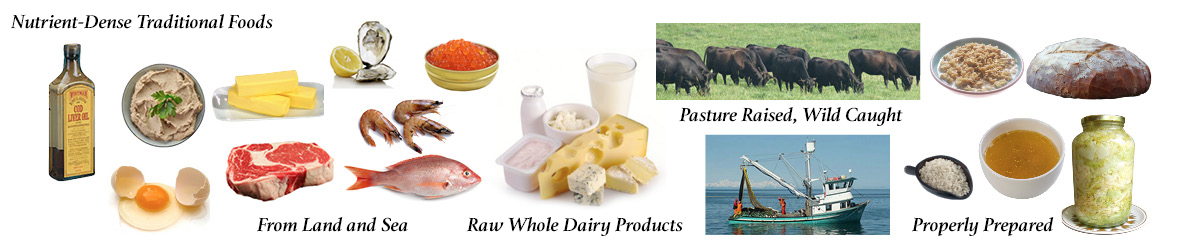
Our society has begun to seriously question the entire conventional medical paradigm, which includes the practice of universal vaccination. Cournoyer points to two opposing health approaches that lead to completely different practices of health care. When Dr. Weston Price studied healthy populations worldwide, he found that their immunity to all disease was due to the nutrient-density of their diets. His findings corroborate the research of nineteenth-century French physiologist, Claude Bernard, who found that germs and disease would only proliferate if the immune system was weakened—that the general condition of the body was the underlying invitation to disease.
In conjunction, Bernard’s contemporary, French biologist Antoine Béchamp discovered that microorganisms are constantly developing in our tissues. If the tissue is healthy, they will provide life support for the cells; if the cells are weakened, they will produce disease. Likewise, Hannah Allen, author of Don’t Get Stuck: The Case Against Vaccinations and Injections, argued that diseased microbes are a product of the poor level of health in the host.
On the other hand, Louis Pasteur believed that germs caused disease, period, and he is primarily credited with establishing the basic hypothesis of modern germ theory. Cournoyer shows us how vaccines were developed in support of Pasteur’s principles. She then points to the poor track record they have displayed in actually preventing disease.
First, the belief that vaccination creates true immunity to disease has never been proven. Historically, epidemics have come and gone naturally, often due to societal changes in sanitation and true herd immunity—immunity created over time, by large groups of people recovering from cases of the actual disease. This was true with diseases like small pox, polio and diphtheria which all declined in unvaccinated populations as fast as they did in highly vaccinated countries. Yet vaccination was credited with the victory over disease. In fact, however, many diseases rebounded when vaccines against them were introduced.
Vaccination was originally embraced because people knew that contracting a mild form of a disease would procure life-long immunity to it. However, this permanent kind of immunity is much different than the mechanism at play via vaccination. A vaccination injects a weakened form of the disease in the body to provoke an immune response. Thus, the reason vaccines are reported to work is that they have the ability to raise antibody levels, and this is acknowledged as an indication of protection from the disease. However Cournoyer provides research proving that this type of immune response may give a false immunity and instead permanently weaken the body’s immune system, an effect amplified by the increase in the number of recommended vaccines administered today. This outcome is blatantly evident through vaccine efficacy records which reveal that some people become ill with the diseases for which they have been vaccinated. Additionally there are more children who have chronic illness of all kinds than ever before in history. Given that vaccines challenge immune function, are we creating a population of children susceptible to lifelong illness?
Not only is vaccine efficacy dubious, today the risk for vaccine damage has significantly increased. While more vaccines are added to the mandated schedule every year, reports of vaccine side effects and injury ranging from fever and rash to heart disorders, encephalitis or even death are becoming more frequent. Encephalitis is the primary cause of autism and autism affects one in one hundred five children in our country today. Yet the FDA, medical authorities, and the media attempt to convince us that vaccines have not played a role in this epidemic. One must ask, can any widespread medical intervention be considered for “the greater good” when the risk for injury is ever increasing and the track record of effectiveness so poor?
Cournoyer points out that in the U.S. we often vaccinate for diseases for which there is little danger. In countries where there are fewer vaccines administered, there is no higher incidence of the diseases for which they do not vaccinate. At the same time, the policy of forced vaccination in other countries documented by Cournoyer has become quite disturbing and makes one question the real motives behind the push for the development of more vaccines. Vaccine policy is riddled with corruption and conflicts of interest. Protecting public health is not its true guiding principle.
Cournoyer persuasively argues that each person should carefully engage in the issues regarding vaccines. Parents are the most knowledgeable advocates for the health of their children and must trust their instincts—bolstered by their research—to know what is the best course of action for their children. If vaccines prove not to be the answer to disease prevention and may in fact cause more harm than good, can we afford the repercussions of a society of severely ill people?
Harry Truman’s statement, “A nation is only as healthy as its children,” presents a chilling warning. We as a nation must heed this wisdom and prepare to make changes in our perception of what truly will build the health of our children.
This article appeared in Wise Traditions in Food, Farming and the Healing Arts, the quarterly journal of the Weston A. Price Foundation, Winter 2011.
🖨️ Print post
Immunity
When Dr. Weston Price studied healthy populations worldwide, he found that their immunity to all disease was due to the nutrient-density of their diets
What about all those Native Indians that died from contagious diseases the white man brought over? Are you saying that they weren’t eating their native diet when that happened?
Dr Cowan explains this point in The Truth About Contagion book starting on page 40.
I would also be very interested to see what WAPF says about deadly epidemics brought to Native Americans by Europeans, in which the Native folk apparently had much higher death rates from those diseases, to the point that there was deliberate biological warfare through infected blankets. Is it a matter of spin that’s been put on popularized history? Vitamin deficiency in Native American diets that other traditional cultures didn’t have? Can we see some references? I’ve been searching the site for anything on the subject and finding absolutely nothing. Seriously, I would really REALLY like to know, and to be able to explain it to others (I’ve been asked about it). But there is silence on this site. Even though mark808 asked the question more than three years ago.
I don’t know about Indians, but I do know that when my grandson got his required vaccinations, he ended up in the hospital or the doctors office with high fevers. He also had lots of allergies. When my daughter took him off of all vaccinations, he has no allergies, not gone to the doctors for high fevers since. I now have a very healthy grandson that is all sorts of sports and tae kwon do.
With regard to the above questions about European diseases devastating Native (not only Indian/Native American) populations, there are a few things I want to remind people of. One is, my understanding is that Weston A Price compared the relative health of various indigenous peoples, and some had better teeth, longer lifespans, etc. than others. That would certainly have been true of the hundreds of pre-contact North American cultures — even if all those diets were still superior to the SAD.
Another point that had a major affect on this continent is that European diseases were bred in filthy city conditions that didn’t exist in the Americas (there were cities here, but they dealt with their sewage better) and Europeans had evolved resistance over generations through natural selection and through social adaptation, by which I mean: Europeans knew about strict quarantine procedures. Native American bodies had never been host to diseases of such magnitude, in part because of their better health, and so they didn’t have (and hadn’t needed) our modern conceptions of how contagions work. So they didn’t know how to prevent the spread of these diseases. And once a plague took hold of a tribe, many people were also lost due to emotional devastation and/or to the tribe’s social structure falling apart with its initial population crash, thereby increasing the death-count-due-to-disease above and beyond the number of people who actually fell sick.
Just some food for thought! I suggest reading 1493 by Charles C Mann to anyone who’s interested in more on this subject.