



A Thumbs Up Book Review
Fiber Menace
By Konstantin Monastyrsky
Ageless Press
Reviewed by Kathryne Pirtle
The striking cover photo of Fiber Menace–a cereal bowl filled with brass hardware screws–primes the reader for its startling message: the USDA-endorsed high-fiber diet creates disastrous effects for the digestive system.
Fiber Menace describes major health problems that can develop from eating what’s considered a modern healthy diet high in fiber from grains, vegetables, fruits, legumes and even fiber supplements. The author details how high-fiber diets produce large stools which stretch the intestinal tract beyond its normal range–eventually resulting in intestinal damage–and a drastic upset of the natural bacterial flora of the gut. The end results manifest as hernias, hemorrhoidal disease, constipation, malnourishment, irritable bowel syndrome and Crohn’s disease. He also provides numerous medical references to show that high-fiber diets do not confer the benefits claimed for them.
The author of this book is a brilliant professional man who suffered a life-threatening illness from years as a vegetarian living on high-fiber foods. Konstantin Monastyrsky was trained as a pharmacologist, but after immigrating to the US from the Ukraine, pursued a career in high technology. He worked in two premier Wall Street firms: as a senior systems analyst at First Boston Corporation and as a consultant at Goldman-Sachs & Co. He has also written two best-selling books in Russian: Functional Nutrition: The Foundation of Absolute Health and Longevity, and Disorders of Carbohydrate Metabolism.
Monastyrsky explains that human teeth are fashioned to chop flesh and that our digestive system is built to handle mainly protein digestion, with only small amounts of fiber. When we eat too much fiber, digestion lasts longer and fermentation occurs, endangering the bacterial flora and causing problems such as bloating, flatulence and enlarged stools, leading to constipation or diarrhea, IBS and diverticular disease.
One fascinating chapter of Monastyrsky’s book details the problems of drinking too much water. Drinking the currently recommended eight glasses of water a day may cause problems such as mineral depletion and imbalances, which can contribute to digestive disorders, kidney disease, degenerative bone disease, muscular disorders and even cardiac arrest from electrical dysfunction. Paradoxically, overconsumption of water may also cause constipation. When too much water is added to a high-fiber diet, the fibrous foods swell and ferment in the intestinal tract, leading to gas, bloating and other uncomfortable effects.
Traditional peoples did not drink large quantities of water. Instead, they stayed hydrated with milk, fermented beverages and bone broth soups, which contribute abundant nutrient qualities and do not upset the body’s homeostasis. Plus, traditional peoples consumed plenty of fat, which renders much more water during metabolism than proteins or carbohydrates.
I was very interested in this author’s perspective as I also suffered a life-threatening digestive illness and recovered through eating a nutrient-dense diet, which happens to be a low-fiber diet. For years, I ate lots of fruits and vegetables–mostly raw–and ate tons of grains and faithfully drank eight glasses of water daily. I ate some meat and dairy but avoided fat–and definitely no butter! I developed severe intestinal damage from undiagnosed celiac disease and a hiatal hernia.
The material presented in Fiber Menace makes me wonder whether my digestive disorders–which led to intestinal damage and severe malnutrition–may have been caused by all the fiber I was eating, rather than gluten intolerance.
For those who worry about getting enough nutrients without eating raw vegetables and fruits, the author reminds us that nutrient-dense animal foods contain concentrated nutrients because the animals spend their whole lives chowing down literally tons of fresh green grass and other plant matter. The result is meat and fat containing all the vitamins and minerals found in fresh produce, not only in more concentrated form, but also one that is easy for us to digest.
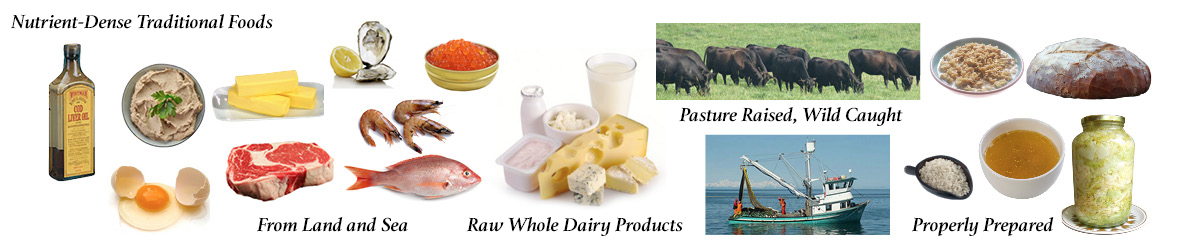
Fiber Menace gets a Thumbs Up, but the book is not without flaws. The book becomes repetitive in the later chapters in the descriptions of various diseases caused by eating the way the doctors tell us to. And Monastyrsky’s audience would have been better served with a concise presentation of what to eat. He is firmly in the WAPF camp, recommending butter and small amounts of cod liver oil, but in this book he fails to emphasize the healing effects of bone broths, fermented foods, medium-chain fatty acids and liberal amounts of the fat-soluble activators A and D. (His book in Russian, Functional Nutrition, does emphasize these foods, and Monastyrsky tells us that he will be translating these sections into English and posting them at his website fibermenace.com.)
The author does warn his readers not to eat anything that your great, great, great, great grandparents wouldn’t eat . . . but our forebears did include high-fiber foods like grains, legumes, fruits and vegetables in their diets. They could do this without ill effects because they knew how to prepare these foods by soaking and sour leavening or, in the case of vegetables and even many fruits, by cooking, and because they did not weaken the mucosal tissue by following a low-fat vegetarian diet.
Monastyrsky warns readers of problems when switching to a low-fiber diet. It is important to gradually cut down on high-fiber foods and make sure you are getting adequate fats and foods that build the intestinal flora. As stools are smaller, the urge to eliminate will be less pronounced, so it is very important to pay attention to the “urge” signal; otherwise stools may harden and cause constipation. Interestingly, he points out that a healthy stool is easy to pass, rather small in diameter and is mostly composed of bacteria leaving the body rather than protein residue–the human digestive tract is designed to digest proteins completely. He stresses the fact that it is not necessary to consume fiber to have regular stools as we have been led to believe. Some of the healthiest cultures had very little fiber in their diets.
Dr. John Turner, DC, CCSP, DIBCN, who lectures with me on building health through traditional nutrient-dense foods notes that, “My training as a physician included many hours of nutrition, but fiber was only mentioned in regards to the effects of a deficiency. Never once did any of my professors consider the possibility that too much of what has always been considered a ‘good thing’ could have such harmful or far-reaching consequences. The author’s detailed description of the trauma imposed to the gastrointestinal mucosa by the expanding fiber is a vivid reminder that returning to the basics of GI function and logically thinking through what our bodies actually are designed to do with the food we eat, should be the first step on anyone’s journey to recovery from digestive disorders. Thanks to the insights in this book I have slowly begun to change my approach to common patient symptoms, which I traditionally would have treated by suggesting increased fiber and more water to correct! So far the results are promising.”
Many thanks to Konstantin Monastyrsky for writing this important book.
This article appeared in Wise Traditions in Food, Farming and the Healing Arts, the quarterly magazine of the Weston A. Price Foundation, Winter 2006.
🖨️ Print post
I recently read Fiber Menace and am still procesing all of the information and considering how this could improve my digestive issues (mostly constipation and slow transit). I too wish there would have been some recommendations of what TO eat the book. I don’t take fiber supplements, am gluten free and have never done well with processed fiber, so a lot of what he said resonated with me…but yet I feel like I need some more guidance and now feel worried about still getting too much fiber even from vegetables (usually cooked) and small amounts of fruits. You mentioned you follow a nutrient dense diet that is naturally low in fiber. Could you give me some examples of typical foods you are eating?
“I was very interested in this author’s perspective as I also suffered a life-threatening digestive illness and recovered through eating a nutrient-dense diet, which happens to be a low-fiber diet. For years, I ate lots of fruits and vegetables–mostly raw–and ate tons of grains and faithfully drank eight glasses of water daily. I ate some meat and dairy but avoided fat–and definitely no butter! I developed severe intestinal damage from undiagnosed celiac disease and a hiatal hernia.
The material presented in Fiber Menace makes me wonder whether my digestive disorders–which led to intestinal damage and severe malnutrition–may have been caused by all the fiber I was eating, rather than gluten intolerance.”
You might be onto something. I have a similar story– I gave up high-fat diary, and because that was the only source of fat in my diet (I always ate lean meats), I ended up on a low-fat, high-plant foods diet, drinking soy and almond milk instead of regular milk, and lots of high fiber fair such as whole grain, fruit smoothies and vegetables.
I ended up with EXACTLY the same digestive problems–celiac disease and hiatal hernia, both discovered by colonoscopy, endoscopy.
I was also taking LOADS of iron pills around the time of my diagnosis (Dr. recommended, did not help with digestive issues). I have often wondered if my celiac was really caused by gluten, or some type of mineral-imbalance and a low-fat diet. In addition to the non-heme iron I was loading up with, wheat products are also fortified with iron, and especially ferrous sulfate, which I was also trying to eat alot of.
Basics:
Eat everything organic: it is not necessarily that much more expensive.
Find a local organic farm. Organic vegetables are twice as nutritious, largely free of poisonous herbicides and pesticides, will not be GMO.
It is even more important that your meat be organic.
Your health is beyond financial valuation.
Ferment your vegetables: excellent for health and digestion. It is very easy to ferment your own vegetables.
Explore Dr. Dadamo’s genotype food choices.
I am afraid that Constantine book come to late for me,I have been, in a photogenic diet -of sorts. and my b.m. get progressive worst , last week i almost went to the ER for impaction,,constipation,i took magnesium liquid solution resolve the immediate problem but I still have constipation n , more than two days with out a B.M. is scaring.
Two days ? Try a week to 10 days, and that’s my normal..
Mario,
Look into zero-carb. way of eating.
I would recommend sticking to raw animal products like steak tartare for example possibly eggs (only dairy if you can handle it) and only eating when hungry if you have massive constipation problems, that should help with creating very soft stools
I like the book fiber mennace it makes sence to me my problems are I have yet to meet a GP who will help more than give me laxatives he wouldn’t help me understand or do a plan fo low fiber diet. My own sole efforts are hampered by lack of knowledge and 74 years mostly wrong and limited knowledge. I go wrong and soon feel a sense of defeat, but believe one day I can and will succeed at the moment I don’t know how to get myself off the ground how to calculate dietry fiber,what to eat or really how to put together a plan. I bought a book seemed mostly to be dairy. Fist week seemed okay then all went wrong well week 2 seemed to then suddenly seemed to assume it was time to restart on high fiber. Your pretty much on your own even though more and more information is on the Internet. I like this site it’s positive
Most doctors wouldn’t know what to say or how to help as they know nothing about nutrition (how the Globalists want it). A holistic nutritionist or a functional or orthomolecular doctor (treat with supplements) would help.
A most welcome and worthwhile book. In places it reminded me of DeLamar Gibbons’ m.d. book ‘A Self Help Way To Treat Colitis And Other I.B.S. Conditions’ in which he points out the disadvantages of fiber as well as the problems caused by fructose and lactose + alcohol sugars.
If on a wp diet What is the food to consume to address constipation if you have it (if not consuming fiber ) and or prevent it
This post on “Fiber Menace” by Konstantin Monastyrsky really opened my eyes to the potential downsides of fiber in our diets. It’s refreshing to see such a critical perspective on something that’s often taken for granted. I appreciate the research and insights shared here—definitely gives me a lot to think about regarding my dietary choices!