

 🖨️ Print post
A former World Wrestling Entertainment star has become a farmer…and a hunter, butcher, homesteader, and children’s book author. What led to the transformation? Histamine sensitivities played a part, but there’s more to the story than that. Sarah Rowe, known as Valhalla in WWE, today shares what influenced her to leave that career in the rearview mirror. She discusses her healing journey and why she has more peace today than ever before. She also reveals what continues to inspire her to “choose hard” when it comes to farming…and life.
Follow Sarah on Instagram – @sarahrowe
Check out our sponsors: Green Pasture, MASA Chips, and Optimal Carnivore
—
Watch the episode here
Listen to the podcast here
Episode Transcript
Within the below transcript the bolded text is Hilda
Mother, wife, regenerative farmer, hunter, butcher, wrestler. This is episode 567. Our guest is Sarah Rowe. Sarah is best known for her career in World Wrestling Entertainment, WWE, as Valhalla, but she has shifted in recent years. She is now all the things I said a moment ago, in addition to being a children’s book author. What provoked the transformation? Sarah tells her story, including the years of struggling with histamine sensitivities, which she mistook at first for allergies. She talks about how she addressed these and has recovered completely, naturally, by the way, why she left WWE, and the beauty and blessing of where she is at.
—
Early Struggles With Allergies And Histamine
Welcome to the show, Sarah. I’m so happy you’re here. I can’t wait for people to learn your story. Let’s start with when you were a teenager and you were struggling with rashes and hives and a stuffy nose. How did that feel, and when did you figure out what was going on?
When I was in high school, I had a cold or what I thought was a cold for six months. My nose was stuffy, I just felt under the weather, I didn’t feel good. My mom finally took me to a doctor and they were like, “No, it must be allergies.” I went to an allergist and got on allergy shots and I just thought from then to probably I was 29 that I just was suffering from allergies.
As my life progressed, it just got progressively worse. I was so reactive to being outside, to eating any foods. I went hard into showing up twice a week to get allergy shots, being on antihistamines, just habitually on antihistamines and taking 3, 4 times the recommended dosage because I’d been on them for so long that they just weren’t working. I was just miserable as far as breathing and my skin and it was just all bad.
I think I found your show first, and then I found the Weston A. Price Foundation. I was looking for just a holistic, because I went to the holistic route, like, “Maybe I need herbs and supplements.” It’s a very American mindset of being like, “If I could just take one thing, I would feel better. If I could just find that medicine or that herb or whatever, I’d feel so much better.” However, that just wasn’t the case. Obviously, it took a whole body transformation and a whole life transformation. Your show eventually led me down that road and now, I can happily say that I am a few years deep of no antihistamines whatsoever.
Your skin looks amazing. You don’t look you have rashes or hives or any of the things. Plus, you said earlier, you told me your nose was so stuffy, you were mouth breathing all the time, which isn’t good either.
I legitimately couldn’t breathe. I had a runny nose, obviously, but the swelling was the worst part where I couldn’t even use a neti pot because my nasal passages were just so swollen. With histamine stuff, your body is super reactive in the morning and at night. I call them histamine attacks. I would have one in the morning when my cortisol would rise when I would wake up, and then I would have one at night when my cortisol dropped.
For a while, it seemed like my “allergies” were so random. I went to an allergist one time and I didn’t pop on any of the allergy tests. They were like, “Sometimes it takes longer to figure out. It takes more than what we put into your skin.” I was like, “It wasn’t even coming up.” They’re like, “Are you supposed to be allergic to everything?” I even brought up a histamine intolerance to the doctor. He’s like, “There’s no such thing as that.”
You’re kidding me. That’s what he said?
I didn’t go back after that. I’m desperate at this point. I can’t breathe. It’s been over a decade. The more stressed, I got the worst it got. I had a stressful event happened in my life in high school. I want to brush over those. We can get back to it if you want. I got hit by a train in a car accident in high school and my mom at the time was struggling with narcotics abuse. It was a very stressful time of my life and that’s when my symptoms started, when I was the most stressed, oddly enough.
You knew it wasn’t an allergy thing. You started to make some connections. You realize the allergy meds weren’t doing any good. As a matter of fact, they were sending you in the wrong direction. I can’t believe they were saying also, when you started to put the dots together, “This might be a histamine issue,” that there was no such thing as a histamine intolerance. Actually, for our readers, tell us what you found out about that. What does that mean to have a histamine intolerance?
It can mean a couple different things. Essentially it is that, for whatever reason, whether it be environmental or diet, because there’s histamine in a lot of things, like, almost everything, like anything. Fermented, anything aged, a bunch of different foods. Certain foods make your body release histamines. Certain foods just have histamine in it. Some people can only tolerate so much histamine in their system before their body has an allergic response.

A lot of people’s response can be they can’t sleep. Some people, their nose is stuffy, some people, they get high, some people, their stomach gets upset. It all depends because we all have different stories and different past and different bodies. It will present differently in different people. I like to think of it as like we all have a bucket in our body because my stuff seems so random.
One day, I could eat this food and then the next day, I couldn’t. It took my body several days to digest histamine, so I would eat a glass of milk which has histamine in it and then I would have some aged beef, like a dry-aged steak, and that would be just too much to push my body over the edge. If I had those things far enough apart, they wouldn’t give me a reaction.
Having them in close proximity to one another, it would give me a reaction. It took me a long time to figure out what was going on because I wasn’t getting any support from the medical system that I was seeing. It’s on Google obviously, everything is, but you have to know what to search for. I finally stumbled across something. Every person can attest to this. If you’re desperate, eventually, you will find what’s happening.
Discovering Holistic Solutions And Diet Shifts
Yes, we’ve had so many people on the show who were like, “My doctor told me I’d have to be on these meds for the rest of my life and I decided that wasn’t going to be my story,” and they flush them down the toilet. They are desperate but they’re also like, “This isn’t the answer. This is a band-aid.” tell us, what was the answer for you? You found the show, you found the Weston A. Price Foundation. What were some shifts that you made that helped your body heal from this?
At first, I was like, “Okay, I need to change my diet. I need to give my body the fuel it needs to be able to have the nutrients in my body to digest histamine.” to digest histamine, you need copper and retinol. It’s a very important thing to digest histamine in your stomach. If you’re stressed, copper and retinol are very readily used to help your body, in simple terms, become unstressed.
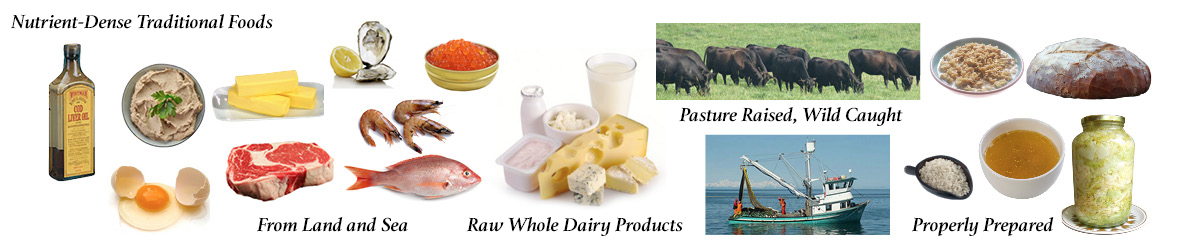
I was having to eat or supplement copper and retinol with cod liver oil. I started taking cod liver oil religiously. I could tell when I was supplementing it, my body would crave it and it’s not something that’s necessarily tasty. The fact that I was like, “I really want to take this every day,” was good. I started just going down the food list and really seeing, but I was having a lot of issues with the fermented foods like fermented vegetables, even sprouted grains, fermented grains.
All this stuff and even dairy products or meat that’s been aged a certain amount of time, I was having a lot of trouble. I talked to this girl and she had actually mentioned that my gut health was in such poor standing from a probiotic standpoint that even though I was reacting to these foods, I just needed to suck it up and just eat as many of it as I can because there’s something in that food that my body needs.
To this day, I eat fermented foods. For lunch, I just had rice, sardines, kimchi, coconut aminos, and raw milk and some butter. I crave fermented foods every time I eat. My body knows that I need them. The Weston A. Price food list, I send to so many people that because a lot of people seem to be struggling with autoimmune stuff.
Our bodies are divinely made and I firmly believe, I can speak for myself especially, that the body can heal itself if you give it the things it needs to heal if you give it natural things and you give it things it knows. It can heal. I considered just fasting until I didn’t have any more, but I was either pregnant or breastfeeding, so I couldn’t go that route and obviously not supply nutrients to my children. I had to go where I just stuffed fermented foods in my face until my nose wasn’t stuffy anymore.
That’s really what you did? You leaned in instead of leaning away. You decided to give your body what it needed even though it was like, “Help.” you pushed through and so now you don’t have all the stuffiness and now you don’t have the rashes and it dealt with it. It dealt with it and received what you gave it and flourished.
Yeah. I definitely have a lot more better days than I do bad. Hydration also. I can’t skip that. Hydration is a huge component. If you breathe in something in your nose that your body doesn’t like, it will usually send water to flush it out. What if your body doesn’t have the water it needs in itself? It will send histamine. I try at least to drink 96 ounces of water a day, if not more, because it seriously affects my histamine, especially my nose.
If I wake up in the middle of the night and I’m still breastfeeding my baby, so he’s up all the time. If he wakes up, my nose will get stuffy because my body sends histamine. Not always, but if I don’t drink enough water that day, I have to get up, I have to put salt in my mouth, let the salt dissolve and chug as much water as I can physically put in my body at that moment and it gets better.
If the body doesn’t have enough water, it will send histamine to compensate.
Wrestling On The Road And Its Impact On Health
All right, so I love this story, but I’m trying to picture you as a professional wrestler dealing with some of this histamine intolerance. Were you wrestling in the time when you were struggling with the rashes and the hives and the stuffy nose and all that?
I did and it made it so much worse. My wrestling name was Valhalla. I was a Viking priestess on WWE television, Monday Night Raw. There’s no off-season. You’re on the road 300 days a year and that is I’m in Australia, I’m in China, I’m in Japan, I’m all around the US. That travel every day, planes multiple times a week, traveling, not sleeping, and as much as I hate to admit it, a woman’s body isn’t made a man’s body as far as damage being able to withhold in my experience.
I’m not able to withhold as much damage as my husband can and not express stress. My body doesn’t know I’m in a fake fight. It knows, “We’re in danger, we’re falling, we’re getting hurt.” I had so much stomach issues on the road. I was not my best health-wise. Staying up late at night and not sleeping, not hydrating how you’re supposed to. I would try to bring food, but there’s only sometimes only so much you can do. I was just not eating how I’m obviously eating at home in my homestead, just my food that I grow in my backyard, cows, sheep, and chickens included.
Transitioning From Wrestler To Homesteader
How did you go from being a wrestler on the road to a homesteader?
Actually, I just dove right in. Not carefully at all. When COVID happened, they let go 150 wrestlers. I was one of those wrestlers at the time that got let go. My husband was still hired, I got let go, so we were like, “Let’s have a baby.” I’ve always wanted to grow my own food. I come from a family of farmers that used to rent land to farm on but they were very much traditional agriculture farming, like corn-fed Red Angus, all the stuff.
I knew I wanted to get back to that, but I wanted to do it differently because I know what I know and I listened to the stuff on the podcast and just knowing things in general. The day I got fired, I started looking into starting a farm here because we had the land. We bought a place with twenty acres of agricultural fields that was previously used for corn. I’m like, “Let’s plant some hay, let’s get some cows.”
We got some Highland cows that we still have and we slaughter and butcher and everything right on our farm. The animals are born here and they die here and we cut them up here and eat them here. It’s very daunting because I don’t know what I’m doing. I have a book. I literally have a book and the cow and I’m like, “Okay, this is what we do. This book says this.” it’s a little intimidating, but so far so good.
It sounds to me, Sarah, and I’m only just getting to know you, but that you’re the kind of person that likes to go into things wholeheartedly. You’re like, “Okay, I’m wrestling right now. I’m changing my diet, I’m feeding my family.” Really, what was that transition for you? To leave the road, to leave that life, to be let go, to start a family, to start a farm.
When I was on the road and I thought about becoming a mother and becoming a farmer, you’re like, “That sounds so peaceful. What if I never want to come back to wrestling? What if I just want to stay at the farm?” I got fired, had a baby, got rehired, and then I just left the company permanently. My contract expired and I’m not renewing it. At first, I was like, “I don’t want to come back to wrestling. Maybe I just want to start a homestead and be a farmer and a mother.”
Once that happened, my body wasn’t used to that peace. I was scared of it and I never felt I was doing enough. I’m at home with my baby. My husband is from a beautiful Catholic family where most of the women in his family are just mothers. Ray is used to that. He’s used to mom stays home, homeschools the kids. That’s comfortable for him. He’s cool with that.
I did not grow up with that reality. My mom had her struggles. My parents worked and the women didn’t stay home and take care of the kids. The kids went to daycare and then went to public school and all this stuff. I wanted to do that, but I didn’t want to do that. My body wanted to do that, my brain was like, “No, we’re fine, we’re here, we’re chilling.” I was like, “No, I feel I should be doing more.” I started a weightlifting business that I let go and I just did a bunch of stuff I shouldn’t have been doing.
It took me a while to settle into the peace and the hard work that being a farmer and a mother brings because it’s a slow life, it’s a seasonal life, and I wasn’t used to being slow. I was used to life happening to me and me not letting life happen. To take responsibility of my days and to not just go with what someone was telling me to do, that I was being the one telling me what to do.
It was a hard transition. Now through my faith and I have two sons now and I’ve been doing this for a while now, so we’re past that four-year homesteading make or break timeline, yeah, it was scary. It was scary for me to put my worth into something that was not so much bigger than me, that was me.
Finding Purpose Through Faith And Family
Yeah, it does make sense. You must have had so much adulation from fans and stuff too and so there’s an adrenaline rush that comes from that that I’m sure was missing after you milked the cow and there was no applause.
It was such a hard transition but so needed. As we can see with my life, I do have no chill. To have to sit down and slow down and be intentionally present was extremely hard for me. I was never alone for a long time. I was always on the road, always with someone, always traveling, always doing something. When I was home, I was like, “Okay, I’ll turn on the TV, watch some trash TV, eat some junk food, be on social media, it’ll be fine.”
Now I’m raising a kid, I’m like, “I don’t want my kid to just watch TV. I don’t want my kid to know what social media is. It sounds awful, but I don’t want my kid to have to be me. I don’t want them to have to go to sleep watching TV, I don’t want them to do all these things.” My children and my husband are slowly sanctifying me in a way that I turn into the best version of myself that I’ve ever been and I am much more proud and content with Mom and farmer Sarah than I was with WWE superstar Sarah, that’s for sure.
Educating Children And Embracing The Farm-To-Table Life
It’s like you’ve come home to, like you said, the best version of yourself. That reminds me, you are investing in your farm, you are investing in your children and the future, but I feel like your vision is even broader, Sarah, because you’ve written a children’s book, haven’t you?
Yeah, it’s called From the Farm to our Table. It’s about two little kids who wake up, have breakfast and go do chores with their mom. Along the time of their doing their chores, they’re talking about where their food comes from. I thought it was a thing missing in a lot of farm books. We know chickens lay eggs, we know people have pigs on the farm, we know there’s cows on a farm, we know there’s chickens on a farm, but why are they on the farm?
They’re on the farm most likely to get eaten. This book, in a gentle and fun-loving way, opens that discussion from parent to child like these animals are here for a reason. The only animal on my farm that does nothing is my pit bull Roach that lives inside the house. We call her our hospitality liaison because she doesn’t do anything else. Every animal on this farm from our sheep to our chickens to our cows to our livestock guardian dog outside, they all serve a purpose. It’s important to talk about that and to know that there’s a weight that’s behind your food.
Every animal on this farm—from our sheep and chickens to our cows and livestock guardian dog—serves a purpose.
That’s why it’s important for me from the animal’s comfort standpoint to butcher and slaughter at my farm to make sure they’re not being shipped off somewhere. I’ve tried it, don’t like it, and but it’s also important for me to be regularly reminded of it and for my kids to know that something has to die for you to eat.
Also, for us to live. Life is about that cycle. I always feel it’s a beautiful exchange. Tell me what you think of this. The farmer tends to the animal, cares for them, and then in return, the animal gives its life. It’s a give and take.
Yeah, 100% it is. If that relationship isn’t there, then everyone suffers. The animals suffer, we suffer, the world suffers, the ecosystem suffers, the circle of life suffers. There needs to be people who can legitimately pull the trigger. There needs to be both sides of that spectrum. Every time I go to butcher a cow, it’s not hunting. Hunting, you go out there and your adrenaline’s pumping and I have to be my best and the deer has to be at its worst for me to kill it. It has to be having the worst day of its life, I have to be having the best day of my life.
With the cow, I know it’s going to die. I don’t know if the deer’s going to die when I’m hunting. My adrenaline, my heart’s beating. When we go and slaughter a cow, harvest a cow, I know it’s going to die. There’s no adrenaline. It’s a somber experience. We try to invite our friends over for people to experience it because I really, truly believe that that conversation needs to be had and that you need to be present for it at least once in your life to know if you eat meat, even if you don’t, it is a life you’re taking but it’s giving you life.
The shot is very somber, very sad, lots of prayers, tears, and then the community part comes in. We all get together, we all get the cow out, and once we start processing the cow, it becomes a jubilation, almost. You see the beautiful meat that this animal has provided, you see the color of the yellow fat that the pasture has provided, you see that we butchered this animal at its prime.
The meat is a deep, robust purple color. As I said, the fat’s yellow because they’ve been eating Vitamin A on pasture. It’s a beautiful, healthy animal. It’s going to make you a beautiful, healthy person because that’s what’s going to be fueling your body. All of our friends come out and it’s a beautiful community experience. The kids get involved. I’ve already butchered a cow and a sheep with Ezekiel on my back and he’s only ten months old, so he’s right there in the mix.
Ethical Farming Choices And Personal Responsibility
Talk to us again about why this choice to slaughter and process the animals on the farm as opposed to shipping them off. Give us the contrast between those two experiences for the animal.
I’ve done both. I’ve shipped animals off before and I’ve butchered obviously at home before and my heart can’t take them. Maybe if I regularly put my cows in a trailer and they regularly went places and they were used to all the hustle and bustle of being transported and going to different places, that would probably be an exception. For my cows personally, they’re Highland cows. They’re very feral. I interact with them, but I’m not petting them. I respect this thing’s 2,000 pounds with horns. We share a space but we have our own space.
For me to put them on a trailer, I’ve never had to take any of my cows off-site to doctor them. Thanks be to God, they’ve never needed major doctoring. I’ve only given one cow antibiotics once and it didn’t even help because it wasn’t what was wrong. They’ve never been transported before. I don’t want their last day to be their worst day. I don’t want their last day us corralling them putting them in a trailer then getting driven to a processing plant or an abattoir somewhere.
I know a lot of great butchers. Some are great, but I put one cow before and we weren’t ready to butcher so we sent her off, her name was Biscuit, and it was awful for me. She was scared, she was going all out. She kept hitting the sides of the trailer. When cows get nervous, they poop. She was pooping everywhere and sliding. Me and my husband looked at each other and were like, “We can never do this again.” If we can’t take on the load we have here where we’re always ready to butcher a cow if something goes wrong, we need to have less.
That’s where we’ve been operating. We’re trying to find our balance between sheep and cow because we eat a lot of meat here and so I don’t want the last day of the animal’s life to be its worst. That’s why we butcher here because I can put some treats out for them. I can put some alfalfa down or whatever. At a line, they all come up and eat because I feed them every day. They’re lined up, we shoot it, it drops, and the other cows don’t even care. It’s so weird.
They step back because the gun is loud and then they’re like, “Never mind,” and they come up and start eating again and they’ll start trying to drink the other cow’s blood because I’m sure there’s minerals in it. It’s like, “Have some respect, your friend just died.” They don’t care. They have no vice or virtue. They don’t care.
Yet, we do want to treat them as humanely as possible, as you’ve said. I have friends who have had similar experiences as you have. They’ve sent their cattle off to be slaughtered and the thing is you can’t even go in with your cow. Let’s say you went with Biscuit. They wouldn’t let you in, and then they give you all these packages of meat after and you can’t even be really sure if it was Biscuit or somebody else’s cow.
The slaughter part from a learning how to do standpoint is easier than the butchering part with all the cuts. I am tempted every time because I’m very intimidated by the butcher process. As I said, I’m learning from a book. We had some guys from Hand-Hewn Farm close to here. They’re professional, beautiful artisan butchers. They need to be paid for their time, obviously. They’re professionals. We had them in once or twice and then we butcher ourselves now and it’s an intimidating process to break down a whole cow.
You’re not supposed to start with cows because they’re so big, but that’s what we had, so that’s what we did. I’m tying off their bung better now and I’m excited about that. I’m like, “I tied off their bung correctly, yay.” it’s a big joke because it’s a very silly part to get excited about. It’s intimidating process so every time I know I’m about to do it, I’m like, “Should we send them off? I don’t know. I’m scared to do this.” I’m like, “No, I need to do it. I need to take that responsibility. I need to choose uncomfortable so I don’t make them uncomfortable.”
You said you have people come so how did you lock into or connect with a farming community, like-minded people in your area? How’d you do that?
The Hand-Hewn guys, I just found online. Everyone else, they’re not farmers, whatsoever. I’m training them to help me. It’s the blind leading the blind sometimes, yeah. You know Tara Couture, Slowdown Farmstead. My husband says if I ever go missing, he’s going to go to her house because I’m obsessed with her. I love her so much. Her book Radiance of the Ordinary, beautiful. Read it right now.
She is a big inspiration for me as far as home butchering and why she home butchers. Life is hard in general. It’s really hard when you’re butchering and slaughtering an animal. When I’m choosing hard, I try to inspire myself with listening to your show and listening why I’m choosing to eat the way I am. I choose hard with slaughtering so I’ll read Tara’s stuff to try to remind myself why I’m choosing hard.
It’s for the animal’s benefit, it’s for my benefit. I’m very thankful for shows yours and for Tara, for people like me. I don’t really know what I’m doing and I am out here no one around me really farms the way I do. It’s hard to not just be like, “I’ll just send the cow to the butcher like everyone else does,” because it would be easier, and there’s an allure to that but I just can’t.
Serving Family And Community Through Farming
You choose something that’s hard in the moment but the benefit outweighs the drawbacks, eventually. It’s the same thing with anything, almost. A lot of people work out. Why do they exercise? They don’t like it in the moment necessarily but they want to be strong for as long as possible. With the choices of food, yes, we could all go buy fast food but it leads you faster to your death is what I think. You’re choosing hard and that’s really ultimately best for you, for the land, for the animals, and for your family.
If animals don’t eat what they’re supposed to eat, they get sick. If we do not eat what we’re supposed to eat, we get sick. I know my animals aren’t sick, I know they’re eating what they’re supposed to eat, I know I’m supposed to eat these animals, so I won’t get sick. Health begets health. I love serving my family. It’s my favorite thing to do ever. I love serving my husband and my children. I strive every day to serve them perfectly. I pray every day I serve them perfectly.
If animals don’t eat what they’re supposed to eat, they get sick. If we don’t eat what we’re supposed to eat, we get sick.
Me providing food for them that is of that caliber is me doing that. It’s part of me providing a home that nourishes them, mind, body, and spirit and I take all parts of it very seriously. Obviously, I left wrestling to solely focus on those things. I really just try to cultivate an environment where everything that lives at my farm is nourished and taken care of from life to death. That involves me harvesting our own animals.
That is a high calling and I’m glad you pray to attain it. I think it’s a beautiful thing but I imagine, because you said your family of origin was tricky and complicated and kind of dark in some ways, there must be naysayers in your life that are like, “Why are you doing that, Sarah?” What do you say to the naysayers?
My Paw-Paw once told me, “Cows have to eat corn. They have to. They’ll die if they don’t.” I’ve always been very weird. I’m the kid who grew up in Louisville, Kentucky. Four days after I graduated high school, I flew to Japan to become a wrestler. First time ever on a plane, flew to Japan, lived there for three months. Everyone knows I do what I want to do and I do weird things, but if you ask me, I have a dang good reason why I’m doing it.
I’m like, “You want to know why I do this? Let’s talk for four hours,” because I don’t just do things. I make sure I’m obsessive. My husband jokes I’m like, “I’m a scholar. I love learning.” I’m currently reading six books. I like to have fiction and nonfiction. I like to have stuff that inspires me from religious standpoint, from a farm standpoint, from a mom standpoint. You want to get into four-hour discussion, we can, but if you don’t, then just don’t say anything to me and let me be weird.
Final Advice: The Importance Of Finding Peace
They know don’t expect ordinary with Sarah Rowe. I love that so much, Sarah. Now, as we wrap up, I want to ask you, and I know you’re coming at this from a different angle. Just your own personal story you told us, wrestler to homesteader, all the things and still learning the ropes. If the reader could do one thing to improve their health, what would you recommend that they do, Sarah?
Find peace because stress does terrible things to the body. Anything that you have genetically that is looming on you or haunting on you or anything that is under the surface and that can be brought out will be brought out with stress. Anything you can do to find peace. My faith brings me a lot of peace and my family brings me a lot of peace but just whatever you need to do to truly find that peace.
Find peace, because stress does terrible things.
I went through a lot of long time where I was scared to eat. I was so reactive. Every time I would eat, I would get stressed. If I’m stressed eating, my body’s going to take in everything I’m eating as a danger, as a red flag. Find peace in what you do by any means necessary because it’s just going to lead either to your health or to you being unhealthy.
Stress expresses in ways in your body that can be very detrimental as I know from my poor stuffy nose. It’s stress-related that I can make worse with food but at the end of the day, it’s stress that I wasn’t respecting my body’s calls for help that it was too stressed until it got to the point where it wouldn’t be ignored. Thank God it wasn’t cancer or it wasn’t something terrible. Granted, breathing’s great. Highly recommend breathing. It just yelled at me until I started listening to it and it told me I needed to be at peace and I am now and I’m so much healthier.
Thank you so much for your time, Sarah. On behalf of the Weston A. Price Foundation, it has been a pleasure.
Thank you.
—
Our guest was Sarah Rowe. You can find her on Instagram at @SarahRowe. Now for a review from Apple Podcasts. Sean McCarty said, “This is my favorite podcast and simply put it this way, listen, learn, grow.” Sean, thank you for this review. It means so much. We want to get the word out about this show. Please keep it up. You, too, can rate and review the show. Just go to Apple Podcasts, click on Ratings and Reviews, give us a bunch of stars, and tell the world why they should listen. Thank you so much for reading, my friend. Stay well, and remember to keep your feet on the ground and your face to the sun.
About Sarah Rowe
Best known for her career in WWE as Valhalla, Sarah Rowe is actually so much more. She is a wife, mother, farmer, hunter, butchering and most recently, an award winning children’s book author. Instead of traveling the world and wrestling she is now nesting into her regenerative homestead and living life off of the fruits of her labor.
Important Links
- Sarah Rowe on Instagram
- From the Farm to our Table
- Radiance of the Ordinary
- Wise Traditions on Apple Podcasts
🖨️ Print post

Leave a Reply