

 🖨️ Print post
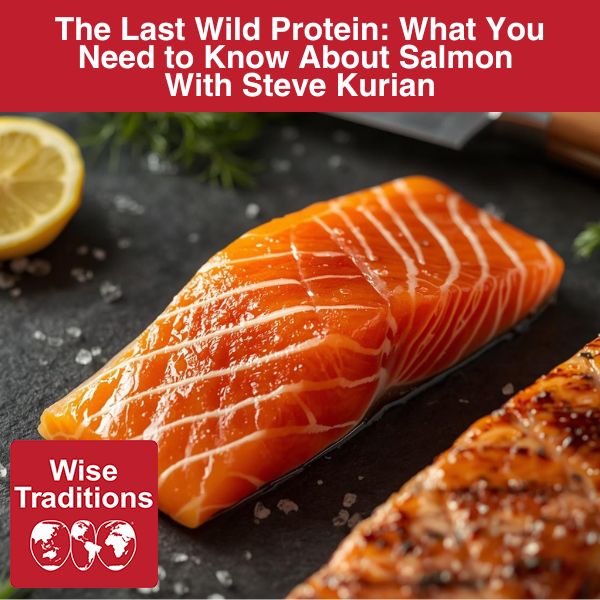
What if one of the most powerful foods on earth comes from a place so wild, so untouched, that it still operates exactly as nature intended?
In this episode, Steve Kurian of Wild for Salmon shares the story of a life-changing summer spent on the remote shores of Bristol Bay, Alaska—living by the rhythms of the tides, the weather, and one of the largest salmon runs on the planet.
The conversation explores what makes wild salmon so unique—from its extraordinary life cycle to its essential role in nourishing entire ecosystems—and why this pristine food source stands in such stark contrast to modern, industrialized alternatives.
Steve also offers a glimpse into the realities of commercial fishing: the long hours, the dangerous conditions, and the deep respect required to harvest food in a truly sustainable way. Along the way, themes of connection, stewardship, and traditional foodways emerge—inviting a deeper look at how we source, prepare, and value what we eat.
This episode is a reminder that food is not just fuel—it is part of a living system. And when that system is honored and protected, it has the power to nourish both people and the planet.
Visit Steve Kurian’s website to learn more
Join the Nourishing Our Children closed Facebook group
Check out our sponsors:
Nutrition Therapy Institute “Get 50% off your first course” and
Paleovalley “Get 15% off your first order.”
—
Watch the episode here
Listen to the podcast here
Episode Transcript
Within the below transcript the bolded text is Kendall Nelson
What if one of the most nutrient-dense foods on earth still depends on a way of life that is physically grueling, deeply seasonal, and increasingly rare in the modern world? What can we learn from those who are still willing to live close to the rhythms of nature harvesting food directly from wild ecosystems rather than Industrial supply chains?
Each summer, thousands of fishermen travel to Bristol Bay, Alaska. One of the last great intact salmon fisheries on the planet to take part in the harvest that sustained traditional cultures for generations. Behind the beautiful images of wild salmon is a demanding reality. Long days on the water, unpredictable weather, tight fishing windows, and an ongoing effort to protect the fragile environments that make this food possible.
This is episode 577 and our guest is Steve Kurian, Co-founder of Wild for Salmon. Stephen’s wife Jen built their family business around bringing truly wild sockeye salmon from Bristol Bay directly to consumers across the country. With a background of Forestry and years of collaboration with biologists and conservation groups, Steve has become a strong advocate for protecting this extraordinary ecosystem, helping raise hundreds of thousands of dollars to preserve one of the world’s most important salmon habitats.
In this episode, we explore what it’s like to live and fish off the beaches of Bristol Bay, why wild-caught salmon is fundamentally different from farm seafood, and what traditional foodways from Alaska’s native communities to the ancestral cultures documented by Dr. Weston A. Price can teach us about stewardship resilience and true nourishment.
Before we get into the conversation, I want to invite you to become a member of the Weston A. Price Foundation. The Weston A. Price Foundation is a member supported group. In other words, we can only do education, research, and activism with your help. There is no other way. Please become a WAPF member. Go to the Weston A. Price Foundation website and click on the Member Yet button. Use the code Podcast10 to join for $30 a year. Thanks in advance and welcome to the family.
—
Steve, welcome to the show.
Thanks, Kendall, for having me on. I’m excited to be on the show.
I’m so excited to have you here. I want to start the show by asking you to tell a little story about the magical summer you spent in Bristol Bay that changed the course of your life. What happened that summer? What did you feel or experience there that made such a lasting impression on you?
I had graduated from college and took a job in Idaho. I got talked into leaving my state job in Idaho and going to Bristol Bay, Alaska for the summer to commercial fish. I was with this old retired airline pilot and his wife who was Malaysian. I jumped at the opportunity because I’ve always wanted to go to Alaska. Bristol Bay is an amazing place in Western Alaska. It’s almost like Russia. There’s not a lot there. There’s 400 native population in the Town of Naknek, where we set up camp.
We literally spent the summer on the beach of Bristol Bay commercial fishing for sockeye salmon in a little plywood cabin. It was back to basics like living off the land by the rhythms of the tides. The weather and the daylight. It’s amazing to have all the daylight that you get in Alaska in the summertime. I found myself being completely engulfed in the salmon run and fascinated by what was happening. All summer, we were eating salmon.
I had never even seen sockeye salmon prior. Probably not even a wild salmon. Letty was cooking up a storm of wild sockeye and I fell in love with the fish. I fell in love with the ecosystem of Bristol Bay. We did some sport fishing. We got to go up the river and experienced the ecosystem and how untouched it is by man. I grew up hunting and fishing. I love the outdoors. I spent a lot of time outdoors. It was a perfect match for what I was looking for. Once we got towards the end of the season, I fillet a bunch of fish and brought them back home to share with my family. That connection changed my whole direction in my career and what made me passionate about it.
That was back in 2001, right?
2002.
The Story Of Starting The Wild For Salmon Business
In 2002, you did that. What happened from there? You brought this fish home. You shared it with your family. How did your business start?
Basically, the business started for the three cases of wild sockeye that Jen and I fillet on the beach. We fillet those fish up thinking we’ll take them home for our friends and family. We’re excited to share. Once I got done working for the summer, we drove back home to Pennsylvania. I was working with a forester friend of mine who had an on-farm farmer’s market. He was like, “Steve, why don’t you try bringing some of those to my Farmers Market and sell them?”

It was just far from what I would have thought I would have done with that cooler of fish. I got a little cardboard sign and went to the farmers market. I was sheepish about what am I doing here? Why am I selling these? Everybody was amazed, because being in rural Pennsylvania or landlocked. There’s not a lot of wild salmon on the market back at that time. They sold like hotcakes. I was in the middle of working in forestry and commercial fishing that summer and then started to sell salmon. I was trying to figure out how to make life work. Jen was teaching and she was like, “I’m not giving up my teaching job until you get something stable.” It took off from there.
For the readers who have never been to Bristol Bay before, what’s it like compared to when you were there in 2002?
It’s the same. It’s got the same population. It’s got the same road. There’s a little bit more tourist travel there. It’s become a little bit more tourist destination in the Brooks Falls at Katmai National Park, where all the bears are, to watch the salmon migration once they’re upriver. Nothing has changed. To me, that is what I love the most about it. At times at the end of the season, I’m thinking about leaving to go home. For the last couple years would bring the kids up at the end of the season.
We’ve been fishing for the last week and putting the boat away. We’re doing recreation and enjoying Alaska. Over the years, I’ve found myself sitting there in this gravel boat yard. Most of the fishermen have gone. I love the slow pace of it, the access to the wildlife, and the ecosystem, and sport fishing. I get the whole gamut when I’m there.
The Unique Ecosystem And Biology Of Bristol Bay
Bristol Bay is home to the largest wild sockeye salmon run in the world. Can you explain what makes the ecosystem so unique? Why do so many people believe it should be protected?
Bristol Bay is a gem. It’s on the ring of fire. The only way to get there is by boat or by airplane. The only thing there is the sockeye run and some indigenous populations that have been there for yawns. In the summer, Bristol Bay balloons to 15,000 people. As I said, in the Winter, it’s down to like a thousand within all the different communities right there. My forestry background takes me into this side of it, where you go into the ecosystem and you travel up all the tributaries.
I floated into moose hands and I’ve done sport fishing trips just floating down these rivers. You get to see this untouched landscape. The water goes in every direction because of the way the soil is made up. There’s water everywhere. The fish population is amazing. There’s these large lakes. There’s about five big water sheds that have big leaks that supply the breeding population of sockeye. A place to spawn, rear the young and they return back to the ocean. One to three years later, they turned and came back. It’s this untouched landscape that is full of wildlife. The way I feel like the rest of the world should be. I wish people could experience that to see what real wild pure natural places are like.
How is it being protected? Are there Biologists that are studying the populations and doing counts? Who’s monitoring the salmon and making sure that there’s still millions of salmon coming back each year?
One of the most proud things that I can say about being a commercial fisherman in Bristol Bay is the biology that backs it. We have biologists there. We have State troopers protecting it. We have a lot of data on Bristol Bay salmon. It’s like no other fishery that you can get this much data on how in the Bering Sea, each summer or as the run starts, there is a survey set up. They test fish and they can get the number of fish migrating back to Bristol Bay.
One of the things I’m most proud of as a commercial fisherman in Bristol Bay is the biology that supports it.
They can map it on a graph. You can see the migration happening. They can also take scale samples and figure out which river they’re going to and what percentage. The biologist uses that data to allow us to fish certain tides. They know how big that run is. They also can use the data from previous years to build out a forecast. 2026’s forecast is 45 million fish.
Usually, they’re within 10% of that. It might be that one river might have a little more or a little less. The biologists manage it real time allowing us only to harvest what the excess is. They need an escapement goal which allows the right amount of fish up the river to spawn and die. There’s then nothing eggs to start the whole population again. They’ve done an amazing job.
I’ve heard the salmon also feed the ecosystem. You mentioned the bears. I had a wonderful opportunity a few years ago to go to Alaska for the first time. I went into the park and face to face with the bears, which was absolutely spectacular. It’s one of the best things I’ve ever done. They’re dependent on the salmon. What else is dependent on the salmon? We’ve got humans that are dependent. We’ve got the bears that are dependent. How else did the salmon feed the ecosystem?
You’ve got eagles, fox and all kinds of other animals like that and small animals. To me, it’s the ecosystem. They’re feeding the young. I’m not an expert on this particular topic, but all the fish that spawn and die, they root. That protein goes to the bottom of the river and it pushes a ton of energy, which allows bug life and all the little food that the fry eat. Those fish are allowed to rear themselves because of that. That’s the most amazing part. The other animals get bits and pieces. It’s that re-nourishing of the water system that allows the feed those to fry and allow them to live 1 to 2 years in the freshwater before they migrate to the ocean.
Can you paint a picture for me of what it’s like to be a fisherman? What happens on the boat? Why is your fishing special? The method that you have. Why is it ecologically important to fish the way that you do?
First, we follow the rules and make sure that we’re abiding by what the biologist is doing. A day in the life of the fishermen is, there’s usually two tides a day. The fish come in on those tides. They let us fish for roughly eight hours and then we’ll shut down. We’ll sleep for a couple hours, and then we’ll fish the next tide. It’s a cycle of living with the tide, the weather, the sun, and the salmon migration. That is what most interests me.
My father was a custom butcher. I had a lot of experience dealing with processing meat. I think of it as one of the same, of taking care of that protein. Once those fish come on our boat, we bleed them. We have rubber mats on the floor of the boat to keep them from being bruised. They then go directly into refrigerated sea holds that have a water temperature of like 32 to 39 degrees. Those fish are in there while we’re fishing. We then offload them to another tender that has the same refrigerated system.
They get taken right to the processing plant. Those fish are filleted and blast frozen within 30 hours of being harvested. Locking in that freshness is the key to any seafood. It’s been the biggest hurdle over the years for grocery stores and big stores to get over. It’s like figuring out how to keep that fish as fresh as possible until the end user opens it. I eat it on the boat and when I get home. Months later, I’m eating another fillet. I cut it out of that vacuum pack. That is the first time it’s been thawed since it was harvested. The quality is amazing. The technology that is around that has been improving year in and out. It provides us with a great product year-round.
I read on your website that if I were to order salmon from you, I’m the third person who has touched that salmon. That sounds pretty special.
Yes. The harvester processes it and then it comes back out of our shipping, then to the customer.
How is your fishing practice different from say the average commercial fishermen? What would you see if you were on one of their boats?
Quality And Stewardship In Commercial Fishing
The whole fishery is a whole getting better but it’s always been a competition production-based fishery. Early on as I started to sell salmon and talk to customers and wanted to provide the very best. It became very obvious to me that you need to take care of every fish. You’re not kicking them in the fish holds. You’re not making sets that are too large. You have to bring them on board and let them sit on the deck.
You’re handling them as if there is a food source and somebody’s going to eat this fish. The Bay, in general, is improving as we go forward in time. When I first started, there were bolts without refrigerated systems. There were guys that nobody would bleed their fish. They would not care if their deckhands kicked the fish. We hold a very high standard and think of those fish that we’re going to serve to our customers. When you put that mindset on, it changes. What is changing fishermen as a whole is the ability to understand that it’s a food. It’s not a commodity that you’re there to harvest.
What is really changing fishermen as a whole is the ability to understand that fish are food, not just a commodity—and that shift changes everything.
We get our fish from a dealer in Alaska as well through a friend of ours. I can’t imagine buying it in the grocery store to tell you the truth. I don’t know if this is true or not. You’ll have to tell me. I’ve heard that the fish that you would get in the grocery store may have been caught in Alaska, but then shift to China in order to be prepared then shift back. Is that true or is that a rumor?
No. That was true back in like the 2010s. That was a popular method for the processors. It’s changed a bit. Some of the salmon species do get that and like the pinks and the keta salmon species for sure. There’s some sockeye that gets reprocessed in China. More and more, it’s starting to go through the domestic market and come from Alaska to Seattle and into the market. As a whole, we’re getting better. There’s less of that, but they’re still a portion of that.
What I think of differently is the product that we put up and like-minded fishermen put up is the number one grade. There’s always a number 1, number 2, and a number 3 grade. When buyers are buying, certain people are going to take the premium. Certain people are going to be like, “I’ll take the next level down.” That, to me, is what I see the biggest difference when I go in the box stores and I look at it. There’s a whole method of taking a number 2 or a number 3 quality fillet and chopping out the number one portions. We take number one fillets and cut them into number one portions. That’s what I believe is the right way to do it for our customers.
Wild Versus Farmed Salmon And The Purity Of Protein
I’ve also heard that if you eat farmed-raised salmon, it’s like one of the worst foods you can eat. If you eat wild salmon, it’s one of the best foods you can eat. Can you talk a little bit about that?
My experience in Bristol Bay and seeing this epic ecosystem where these fish are raised on phytoplanktons, zooplanktons and crustaceans. All these super foods in my mind that are short-lived. There’s no opportunity for mercury to build up. Salmon aren’t long-lived. It’s one of the purest wild proteins out there. I look at a farm-raised, and I’m like, “This thing needs to be put in a pen.”
It could be genetically altered. It’s raised in pens like livestock. It has antibiotics. Pesticides to control sea lice. It’s fed corn, soybean or whatever they’re putting together from the farms. They’re also out there stealing the wild fish food to grind up and feed them also. There’s so many different angles there that I disagree with and don’t feel like. If you have the option to choose, wild salmon is so superior in my mind. Only because when you stack those two ways that are raised together, it’s not even a question for me.
If you have the option, choose wild. Wild salmon is, in my mind, far superior. When you compare the two side by side, it’s not even a question for me.
Tell me a little bit more about the idea of it being the purest protein. Why is salmon so good for us?
You’ve got the antioxidants, high protein, and Omega-3 fatty acids. You’ve got the cleanliness of wild seafood that’s raised in the wild without being tampered by humans. It’s so pure. You fillet those fish in that brilliant red. I can see why the indigenous people of Alaska can sustain themselves through the winter and why that made sense. It’s negative 40 all winter. They’re living off of salmon that they’ve dried.
Dr. Weston Price wrote about traditional cultures that were sustained by local nutrient-dense foods and strong ties to place. It sounds like in Bristol Bay or witnessing one of the last truly wild food systems on Earth. How does the native lifestyle there compare in your mind to traditional societies that Price documented?
As things are civilized, it’s changed and it is changing. To me, that is a little bit of sadness, in my opinion, because we’re influencing the way they eat. I’ve got friends in Bristol Bay that are native and they grew up in Naknek. They eat a lot of traditional foods. In Alaska, I was moose hunting and I got to spend a couple days with them. I harvested some ducks and geese. I was debating whether I was going to freeze them and bring him home with me but I was like, “I’m going to cook them for the family and we’ll eat them up.”
I plucked the geese and ducks. I put them in the oven with the hearts, liver, and gizzard. I didn’t think anything of it. The 93-year-old aunt was living with him. While I was out doing something else waiting for the cook time, I came back and they had already gotten into the heart, liver, and gizzard. They were laughing. They’re like, “This is so funny that a White man would leave the gizzard heart and liver in a native household and think it was not going to be touched.”
I love that. I love that connection between the aunt who was 93 and her stories of growing up on the Alaska Peninsula. They are just eating what they have around them. To me, that is the way it should be and the way I tried to raise our family and provide our family. Whether we’re hunting, fishing, or gathering, or raising our own animals. It’s the purest way.
You mentioned earlier that your father had a butcher shop or that he butchered his own animals. It sounds like you were raised eating in this way. Were you raised eating organ meat? What was your childhood like?
We’d have customers when we butcher chickens. They didn’t want the heart, liver, and gizzard, so we would have a dinner of heart, liver, and gizzard. It wasn’t until I went to college and I walked in the grocery store. I looked at the shelves until I realized how good of a childhood I had. We always had something that we were butchering. My dad made scrapple. My grandmother made souse and head cheese. I grew up eating all of those things and I carry that on to my family. We still butcher our own pigs. We make scrapple and bone broth, which is something I’ve taken from my childhood and moved into my life.
You grew the business. You started off living off the grid, on the beach and then you decided to become a commercial fisherman. You then brought the salmon home and shared it with your friends in the farmer’s markets and stuff. What has that grown into? I’m envisioning your father had the butcher shop and now, what do you have? What are some parts of your business that we may not know about?
My father had a little 12X12 shed with some running water that we started in. It grew a little bit from there. For me, we started selling salmon out of our basement. We had 30,000 pounds that we sold out of our basement with our little freezer truck. We then bought a 5,000 square foot building closer to town and opened up a little seafood store. We were doing our wholesale deliveries buying clubs and farmers markets. Over many years that we’ve been growing it, now we have about 25 employees.
It’s about 14,000 square feet. We have a cafe where we serve wild Alaskan sockeye and other Alaskan seafood. We have a very clean and healthy menu. We’ve got a retail store glass case full of wild frozen seafood. I’ve designed that to allow us the place where we can cook food for people, serve them, and introduce it to them, then have the seafood in the case for them to take home. Also, connect them to the eating wild, the feeling of living wild and the wilds of Bristol Bay. Pull out the parts of how important it is to have clean proteins, clean water, and a clean environment. Those things are all super important to me as I grow the business and part of our mission.
Business Growth And Conservation Efforts Against Pebble Mine
As you grow the business, I believe you are also contributing financially to protecting Bristol Bay. Can you tell me about that?
We’ve been donating to Bristol Bay through the 1% of the planet for the last 7 or 8 years. We’ve donated close to $250,000. It goes back to Trout Unlimited, Bristol Bay Chapter. They use that money to lobby against a mine company that wanted to put the biggest open-pit gold, copper, or silver mine in headwater to Bristol’s rivers. We’ve donated that money back because I always felt very strongly like we’re taking this resource.
We have to give something back. We have to do our job to protect. That’s been a mission that we’ve gotten behind. I feel privileged to be able to do that. I feel like our customers value that as well. I even flew into the headwaters of where they’re trying to put Pebble Mine and did a moose hunting. It floated out of there and harvested a cool moose. I lived off of that for two years. Another great gem of Alaska is being able to harvest wild food and bring it back and supply to your family.
What would happen if Pebble Mine was not stopped or it started its business? What would happen to the salmon population?
In the immediate time, probably not much. As it was built in the Earthen Dam, that’s 2 miles wide and 700 feet tall, it was put in place to hold back the mining water forever on the ring of fire. At some point, that would be a disaster. We’ve seen it in British Columbia and in the Pacific Northwest. To me, as my forestry degree, I don’t see where wild salmon can coexist with man at the level that we bring in the lower 48. Anything that we can do to keep Bristol Bay wild is one of my main goals.
Raising Children To Follow The Fishing Lifestyle
That’s certainly admirable. I want to pivot a little bit and ask you a little bit more about your home life. I understand you’re raising two children. Are you raising them to follow in your footsteps with the fishing business? What are their interests?
They both have been to Bristol Bay lots of times. They’ve been working on the back deck the last week of the season. Ava is about ready to start, probably spending her summers on the boat. They loved to hunt, fish, and cook. They’re my biggest competition for eating heart, liver, and gizzard out of any birds. We are fists. They are fully living the lifestyle.
When we talked earlier, you talked about how when you were first starting the business and you were spreading the salmon out to your community. You were going to people’s houses and maybe even into the Amish community. You were comparing it with a lot of similar people that are invested in Weston Price. Can you talk to me about that a little bit?
It’s funny how this comes full circle after many years. Through that farmers market that we started with, everybody was focused on food and health. They tied me into the Weston A. Price chapters in the Lehigh Valley and then Gettysburg. We started going to those chapter meetings once a year, rendezvous, if you will. We would deliver.
We would come with our salmon truck and deliver salmon. Stay for the day. Do the festival or the classes that they were teaching? It was a big component of early starting up. It was the Weston A. Price chapters in the 2000s. That’s continued to grow. We also wholesale to some Amish farms that then sell grass-fed butter, raw milk and wild seafood. That’s been a strong component of our business as well as we’ve been growing. I felt like I maybe lost track a little bit about Weston A. Price in the business sense. We’ve fully absorbed how we eat and think about that on a daily basis based off of the style that was developed by Weston A. Price.
Earlier, we made the connection of the work that Dr. Price did and how it’s similar to the salmon fishermen. You were talking about the fact that you’re tied in a little bit with the native community up there. I believe they have something called Fishtival. Will you tell me what that is?
The Native Alaskan Fish Festival And The Epic Journey Of Wild Salmon
That’s what it is. We started one here a while for salmon. Every August, when the fishermen come home, it’s a festivity to recognize the fleet coming back and the safety of the fleet. That’s what they do on Bristol Bay. It’s set up in a gymnasium. All the native Alaskans will have their smoked salmon, pickled salmon and canned salmon for sale. It’s a great little event in this very small community celebrating all the salmon brought to them.
I always buy at least one or two fish that have been filleted. They still have the tail on and they drape them over a rod. Smoke them and dry them for like five days. To me, it’s red gold. It’s like you’re ripping these dried jerky pieces that have been smoked for five days and chewing on that. It’s amazing. The journey of that fish of being born in the rivers, going to the ocean, spending that time there and then migrating back to only spawn and die. Restart the cycle.
You’re eating this fish in this peak primus. As those salmon come back to Bristol Bay, they quit eating and they’re living off of the protein that that body has built. To me, that’s what makes wild salmon so epic. Their bodies are at a peak point in their life where they’re going to quit eating and live on this journey to spawn and die over the next two months. Their body can handle that. That fascinates me.
It reminds me a little bit of the humpback whales that make their way from Alaska to Hawaii. I’m always mesmerized by the fact that they don’t eat for their entire journey or at least mostly don’t eat. They go there and they calve. They’ve got to raise the baby for a while and they have to make it all the way back to Alaska. It’s amazing what Mother Nature allows for these animals.
It’s untouched. We don’t have to farm it. We don’t have to do anything. We have to manage it and keep the water pristine. Keep it from being developed. That will be there as a source of wild protein forever.
As we begin to wrap up, I want to ask you another question. You mentioned that the Fishtival was in celebration of the safe return of the fisherman. How dangerous is it for you to be doing this job?
I feel pretty comfortable. We have seen everywhere from 1 to 5 people a year get killed in the fishery in a matter of a month. There’s roughly 1,300 boats. You have to be paying attention. The weather gets gnarly. We’re working around the clock. We’ve worked as long as 72 hours straight. Get a couple hour nap and go right back to fishing. The hardest part of the job is the grind and being able to be on a boat for 35 to 45 days and fish around the clock and love it. On top of that, being saved.
Typically, when the weather is gnarly, we fish in 50-mile-an-hour winds and 10-foot seas. The fisherman was pushed by the weather. It’s some of the best fishing. You never want to sit out, but it is where guys think their boats they could put too much fish on or they get in trouble. It’s part of what I love about the adventure of the fishery. It’s that wildness and untamed spirit if you will. It’s also dangerous.
The good thing is there’s a lot of boats in the vicinity. With all the technology of radios, if somebody has a problem, you can usually scoop somebody else out of the water pretty quick. It’s gotten a lot safer. People wear a lot more life preservers than they ever did in the past. In many years, it’s definitely getting a lot safer. That’s good.
I’m glad to hear that, for sure. I want to ask you the final question of our interview. It’s what I like to ask my guests at the end. If the readers could do one thing to improve their health, what would you suggest that be?
I would suggest eating wild as much as you can. Whether that is wild seafood, wild animals, wild vegetables, or wild plants. Add that in. That’s what I like to do. I fill my freezer with venison and salmon. I think there’s a real cultural piece that we’re missing with the connection with our food from having to harvest it, take care of it, and put it in your freezer, then make a wonderful meal with it. There are so many benefits to what you’re eating. The camaraderie of going through that practice of butchering some animals, and the care that you take, and the appreciation you have when you get to the dinner table. All that in a nutshell has a lot of them.
Beautifully said. Steve, I want to thank you for joining me on behalf of the Weston A. Price Foundation. I hope to have you back to talk to us again sometime soon.
It’s great.
—
Our guest was Steve Kurian, co-founder for Wild for Salmon. You can learn more about Steve and his work bringing truly wild sockeye salmon from Bristol Bay to families across the country at Wild for Salmon. This conversation was a powerful reminder that some of the most nourishing foods on earth still come from intact ecosystems and from people willing to live and work in relationship with the land and water.
Whether it’s wild seafood, pasture-raised animals, or seasonal foods grown close to home. Reconnecting with real food sources can help restore not only our health, but also our sense of place and responsibility. If you enjoyed this episode, please share it with a friend. Leave us a review and consider supporting the Weston A. Price Foundation. Thank you for reading. Be well, be nourished, and be free.
About Steve Kurian
Captain Steve Kurian is a Bristol Bay commercial fisherman and co-owner of Wild for Salmon, a family-run business dedicated to harvesting and delivering premium wild Alaska sockeye salmon directly to customers across the United States. With decades of experience on the water, Steve is deeply connected to the rhythms of the Bristol Bay fishery, where he captains his vessel each summer during the sockeye season. An avid outdoorsman, he and his family live closely connected to the land and sea, embracing an ancestral approach to diet and lifestyle rooted in whole, nutrient-dense foods and seasonal living. Together, they have built Wild for Salmon to bridge the gap between fishermen and consumers, emphasizing quality, sustainability, transparency, and a deep respect for the resource.
Important Links
- Steve Kurian on LinkedIn
- Steve Kurian on Instagram
- Wild for Salmon
- Trout Unlimited
- WAPF Membership Ad
- Nourishing Our Children
Episode Sponsors
🖨️ Print post
Leave a Reply